
Small Drone Attacks Are Killing More Civilians Than Ever Before: I Made a Map About It
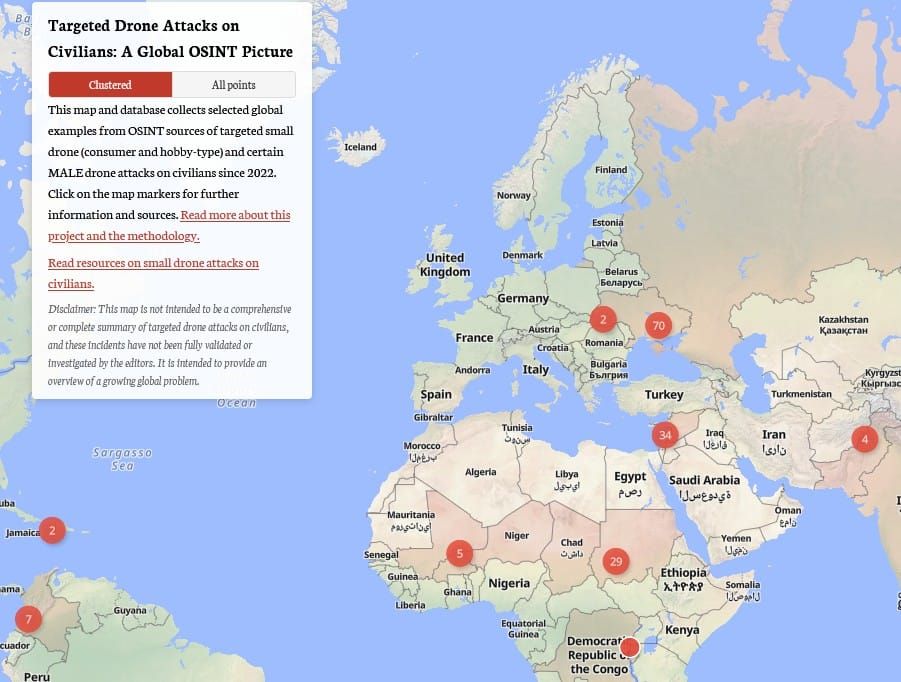
Around the world, armed groups are intentionally killing civilians with small, inexpensive drones. And they're committing these murders at totally unprecedented rates.
The figures, when they're available, are sobering. Per data from the UN Human Rights Monitoring Mission in Ukraine (HRMMU), 577 civilians were killed and 3,288 injured by short-range drones in 2025, a whopping 120 per cent increase from 2024. In Sudan, UN data found that over 500 civilians were killed in drone strikes form January 1st to March 15th of 2026, while in Myanmar, military junta drone strikes appear to be killing more and more civilians.
Disturbing as these trends in drone warfare are, I've noticed that many people still seem largely unaware of just how bad the situation is - or that these incidents are occurring on a truly global scale, extending beyond the three nations I mentioned above.
At the moment, while a number of organizations are collecting excellent open source data on small drone attacks on civilians on a regional or country basis (such as ACLED, the Yale Humanitarian Research Lab, AirWars, Tochyni, Myanmar Peace Monitor, and many others), I have yet to come across such a project that's 1. primarily focused on small, short-range drone attacks and 2. attempts to publicly map these attacks on a global basis.
That's why I decided to make a map.
Specifically, a map that draws from open-source information to aggregate incidents, resources, and information about the nature and scale of small drone attacks on civilians - producing a global sample of what this burgeoning human rights problem looks like globally.
A few caveats are in order.
My goal with this map isn't to produce a truly comprehensive, thoroughly verified, or quantitatively-complete database of targeted attacks on civilians with small drones. I'm not trying to collect every single example of a small drone attack on a civilian that ever happens anywhere.
I also will be actively adding past incidents to this map as time goes by, as well as those that have just occurred - so if there's a past drone attack you're aware of that hasn't appeared here, it's quite possible I'll be adding it soon.
Nor am I attempting to thoroughly investigate or perfectly geo-locate each incident. That's beyond my powers as a single individual without any current institutional affiliation (though I am certainly looking for a new job and affiliation right now).
While I apply a basic sniff-test to each incident based on my well-over-a-decade of experience analyzing drone tech and geopolitics, I am, in the end, just one guy.
Therefore, this map is intended more so to present an overview of what's going on with small drone attacks on civilians globally. A window. A snapshot.
Hopefully, in the future, I and others interested in the horrifying reality of targeted drone attacks on civilians will be able to attract more support, resources, and funding to allow us to truly do more quantitative and complete work on solving this problem.
But for now? This is what I can offer.
Biases and Points of View
As is the case with any project produced by mere mortals, this one comes with biases and a distinctive point of view.
For starters: I'm largely focused on attacks on civilians with small, short-range drones, which means weaponized drones you can buy at the store, or drones that can be assembled from relatively easy-to-get component parts.
Why do I care about this specific type of drone attack on civilians, and why do I think it's important to be as precise as possible about what kind of drone is being used?
I believe that a key reason why we're now seeing so many targeted drone attacks on civilians is because very cheap drones have made this type of noncombatant-directed terror far more accessible.
And for this reason, I believe that when we report on and analyze drone attacks, we should strive to be as specific as possible about what kind of drone was used, who was using it, and what, exactly, they were doing.
I also believe that this process will help us better match how a drone attack takes place to the drone used. Already, in the course of this project, I've noticed myself picking up on certain details (such as the use of the verb "dropped" versus the verb "fired") to indicate what type of drone was potentially involved.
From a civilian protection perspective, I believe these details are important because different types of drones threaten and kill people in markedly different ways: defensive tactics that might work against one sort of attack may well fail against another.
And since cheap consumer and hobby-type short-range drones are far more recent additions to the global battlefield than the medium-altitude long-endurance (MALE) drones that dominated the War on Terror era, I think it's crucial we collect as much information as we can about the constantly-changing ways in which combatants use them.
To elaborate further on why I've placed my focus on smaller, cheaper drones for this project:
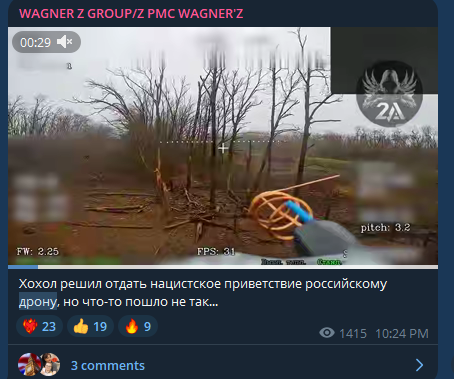
While cheap consumer and DIY hobby drones have been available for well over a decade, Russia's full-scale invasion of Ukraine in 2022, which Ukraine met with a brilliant defensive strategy that involved many consumer and hobby-type drones, really planted the idea in the heads of combatants around the world.
As soon as the war began in 2022, we also saw a Cambrian explosion of combat footage both collected by and about drones on Telegram and other social media platforms, coupled with vast amounts of technical information about how to weaponize consumer and hobby systems for very little money.
It didn't take long for these small drone tactics battle-tested in the Russo-Ukrainian War to filter out to the rest of the planet. While some combatants did use small drones to target civilians at earlier dates, it was in early 2024 that civilians in both Ukraine - especially in the Kherson area - and civilians in Syria truly began to experience a disturbing surge of "human safari" type attacks.
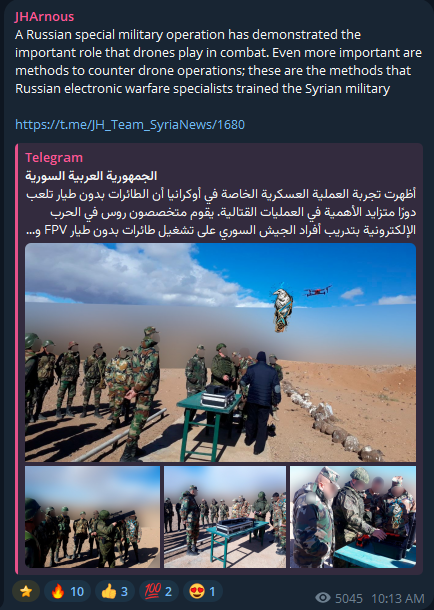
Indeed, it's possible that the seemingly simultaneous uptick in these attacks in both Ukraine and Syria in early 2024 might even be linked, considering that we have solid evidence that Russian fighters trained Assadists to fly consumer and FPV drones. However, it remains difficult to say for sure.
In these "safari" type attacks, obvious civilians and civilian targets are stalked and killed by low-cost drone platfoms - usually either so-called FPV kamikaze drones (modified racing-type hobby drones), and consumer drones (often made by Chinese companies and which many people own for civilian purposes) which have been modified to drop explosives. The targets often include elderly people, children, obvious civilian vehicles, ambulances, and buses. And in some cases, those carrying out the attacks post videos on social media of them doing it - occasionally permitting aid workers to match up a drone attack they responded to with the drone's-eye-view of the incident, in what must surely be one of the most distressing new experiences of the 21st century.
According to people I've spoken to who have experienced these targeted drone attacks, while they may lack the massive destructiveness of attacks carried out by more heavily-armed medium-altitude long-range (MALE) drones, the experience of being stalked by a tiny murder-robot piloted by some unseen person who wants to kill you is profoundly psychologically distressing. And since these drones cost very little to either make (as is the case for FPV kamikaze drones) or purchase (as is the case for bomb-dropping consumer drones), determined assaliants trying to wear down the resolve of civilian populations can just keep producing or purchsing them. And killing with them.
Personally, I was alerted to this disturbing increase in targeted drone attacks on civilians when a representative from the White Helmets civil protection group in Syria reached out to me in early 2024, wondering if I was aware of any validated best-practices or guidance on what civilians and aid workers should do to anticipate and avoid drones. Unfortunately, I didn't have any good answers for them. A key focus of my work since has been on filling that gap.
However, this database project isn't entirely dedicated to small short-range drone attacks.
In some cases, I will include attacks here that appear to have been conducted by relatively inexpensive medium-altitude long-range (MALE) fixed wing drone platforms, especially if such attacks appear to be 1) novel in the way in which they are conducted or the location in which they take place and/or 2) appear to have occurred in coordination with smaller consumer and “DIY” drone platforms.
Still, these attacks just aren't my primary focus right now - and many other organizations, like those I linked to above, are doing a good job of mapping and documenting them already.
There are also many attacks recorded in this database in which it's simply not clear what kind of drone was involved. I will edit these entries as further information comes in. But as it stands, open source information inherently contains quite a bit of ambiguity surrounding which drone platform did what.
In an effort to navigate this confusing territory, my central spreadsheet includes a column called "DroneType," which I use to add information about the specific drone when available, and "SmallDroneUsed", which I use to indicate if I believe a small drone, like a FPV or multirotor drone, was clearly or possibly used in a given incident. On the map, this status is indicated by different colors, as seen in the legend box on the far right.
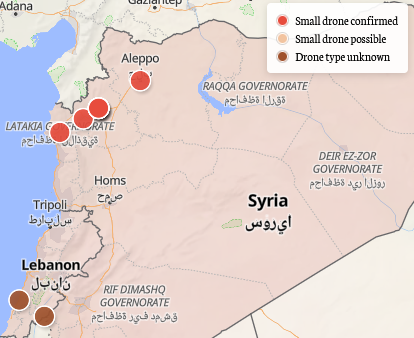
It's quite possible I'll alter this methodology as I go forward, but this where I've landed for now.
Here's a few more caveats and biases:
- I'm focused on shedding light on small drone attacks on civilians in lesser-known and less-reported upon conflicts (civil and international) whenever such information is available. For example, I haven't seen much in international media about recent small drone attacks on civilian targets in Colombia, Manipur (India), or in Myanmar, among other locations. I include them here to try to rectify this situation.
- I'm also focused on including drone attacks on civilians that appear to include an unusual or novel element. I believe such incidents are important to highlight, due to the astonishingly rapid pace of evolution of small drone warfare tactics.
- Finally, I'm focused on featuring incidents that feature attacks on humanitarian aid workers, health care workers, and clearly-marked buildings and vehicles associated with their work. While these attacks aren't my primary focus, they are emblematic of the type of norms-breaking and intentionally reckless behavior with small drones that I'm trying to highlight here.
Why Aren't More Ukraine Attacks on this Map?
Ukraine is currently experiencing the largest amount of targeted attacks of civilians and aid workers with small drones in the world.
I would certainly like to include all such attacks with small drones by the Russian armed forces on Ukrainian civilians on this map, but identifying and validating every one of them is simply beyond my current capacity as an individual.
This means that at this time, only a selected number of these attacks in Ukraine are included on my map and in my database.
If you'd like to see a superb and up-to-date map of "human safari" type drone attacks in Kherson, check out Tochnyi's beautifully visualized resource here.
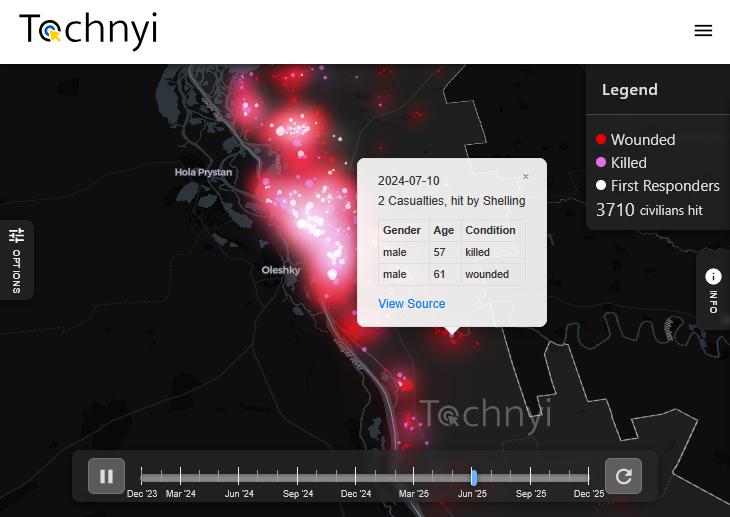
I am actively seeking partners who might be open to sharing their validated and geo-located data on small drone attack incidents on civilians in Ukraine (or anywhere else) with me, for inclusion on this map. Please get in touch with me if you would like to discuss further.
How Does this Map Work?
How does this project work, on a technical basis?
I input incidents and resources into a Google Sheets backend, which you can view here. I use an admin tool to sync incidents from my spreadsheet to my online SQLite database, and I've also got some simple geocoding logic built in: if the geocoder fails, I manually geolocate where the incident took place myself.
I'm using the MapLibre GL JS library and OpenFreeMap to display the map, which has some basic time-slider functionality - more extensive filtering is coming soon, although I'm biased to keeping the map window as clean and fast-loading as possible. I'm using a somewhat-modified version of Bellingcat's AutoArchiver software to further back everything up.
In some cases, the database include more general reports, articles, or resources related to targeted small drone attacks on civilians that aren't linked to a single, discrete incident. These links all get displayed as cards on the Resources page.
A Few More Thoughts on Small Drone Attacks on Civilians, and Why I'm Doing This
Back in the gauzy far-off epoch of the 2000s and 2010s, during the peak War on Terror years, many analysts and academics confidently proclaimed that the then ultra-high tech drones that the US deployed over the Middle East and Central Asia were inherently more ethical, even "humanitarian" technologies than more traditional aerial warfare platforms.
The idea went something like this. High-tech long-range loitering drones permit you to follow and hit targets with much more accuracy than was ever possible before. And this accuracy will thus ensure that fewer civilians are harmed than might have been if you had called in conventional air strikes.
Unfortunately, that old and pleasant logic about the relative humanity of drone targeting depended on a central, optimistic fallacy: that those nations capable of deploying armed drones surely would never want to intentionally kill civilians.
I can see you shouting at the screen about how the United States killed lots of civilians with drones during the War on Terror, which is, of course, completely true.
And yet, things really were rather different back then, both in politics and in drone technology.Unlike today, US leadership wasn't actively bragging about conducting war crimes on social media: our leaders still were at least trying to cling to an ever flimsier fig-leaf of expressed interest in avoiding civilian harm.
Perhaps most importantly, back then, only a very small number of nations - IE, the United States and a few selected allies - had access to deadly drone technology in the first place. Which meant that when people back then talked about the ethics of drone warfare, everyone knew they were really talking about the decisions and choices (good, evil, impressively stupid) of the United States.
Now, of course, we find ourselves in the annus horribilis that is 2026. And no one is writing think tank reports or academic papers about the inherently ethical nature of drone warfare anymore.
Because now, as I mentioned above, many groups have access to armed drones - dirt cheap armed drones, cobbled together from consumer technology that anyone can buy at the store or order online from Chinese retailers. And, as I also mentioned above, many of members of this ever-growing club of combat drone users are now so totally unashamed of using them to kill civilians - including the United States - that they regularly upload videos of them doing it to social media.
A lot of people, including a great many high-end military analysts who made their bones in a more genteel time, didn't really see this era of total drone-focused impunity coming. They probably should have. But here we are.
Nor is it the case that this uptick in targeted drone attacks is happening in isolation. Right now, we live in a moment of a general, terrifying breakdown in ethical norms and overall respect of the laws of warfare.
Increasingly, combatants ranging in power and size from the United States to tiny rebel militias blatantly and constantly flout IHL, and dare someone to do something about it. The vicious misuse of cheap drones on battlefields around the world is thus, in this light, merely one symptom of a far uglier and more pervasive disease.
What Shall We Do About Small Drones Killing Civilians?
We have arrived at a moment in which a historically unprecedented number of kids, old people, and regular folks are now getting blown up by tiny flying robots in the course of just trying to get to the grocery store.
This is an ugly reality. And, I'd argue, a reality that our current human rights and humanitarian aid leaders have yet to adequately grapple with.
While leaders are increasingly putting out statements decrying the ever-burgeoning uptick in attacks on civilians with small drones in places like Ukraine, Sudan, Haiti, and Myanmar, these condemnations have not been accompanied by much action.
I suspect that there is a sense of helplessness going on here. A feeling that in the midst of so much other global suffering and ethical impunity, in a time in which the entire aid sector is battling for survival in the wake of Trump and Musk's hideous decision to destroy USAID, that there is little that can realistically be done about the high-tech specter of murder robots.
I also suspect there's an element of technical intimidation at play, coupled with an understandable fear of legal liability. These platforms are new, many people feel like they don't adequately understand how they work, and (understandably) no one wants to dispense life-and-death technical advice that ends up getting people killed.
But I believe that the time has come to look this awful, buzzing present danger in the eye.
I've spoken to a number of people over the last two years who are living under the specter of drone warfare, or are working with people who are. They want more help with protecting themselves from drone threats than they're getting.
I think there is more we could be doing, collectively, to provide that help.
We need funding to support research and investigative work into these drone attacks, conducted in such a way that they're correctly viewed as part of a growing and global problem, not just a regional issue.
We need to work with people affected by drone violence and with security experts to translate those research findings into practical defensive measures that those on the ground can take - measures that may even include electronic tools, such as using detection devices to pick up on drone signals. We could also release easy-to-translate guidebooks, "dronewatching" handbooks, and other resources that might arm civilians with potentially life-saving information.
Finally, we could, and should, improve how we collect evidence of drone attacks that may constitute war crimes. We need to find better ways to connect drone forensic experts with war crimes investigators. Perhaps we could develop best practices and techniques - such as secure apps - for first responders and other people on the ground, which would allow them to safely photograph and send off evidence of attacks to the right authorities.
In our current era of reckless impunity, I believe that it has become especially important to develop better ways to bring the perpetrators of drone war crimes to justice - and I believe it is important that we continue to believe, as I do, that this will someday be possible.
I'm looking for others who want to share ideas and collaborate on how we can improve civilian protection from small drone threats. Please get in touch with me if that describes you.