
A Few Days in the Basque Country

When you're invited to a September wedding in Southern France, you've got a good excuse to visit the Basque Country. Or at least, that's how my partner and I reasoned when we spent a week there in September 2025.
Let us, a bit late, tell you about it.
I've been to the Basque Country before, albeit, a really long time ago.
This was back during the lost epoch of 2009, when my parents and I went to Spain on a family vacation. The global financial crisis was in full swing, slashing tourism to the bone, which meant we got to experience the alternate convenience and intense weirdness of seeing many of Spain's top tourist destinations emptied out during the peak of summer.
The echoing emptiness of the summer 2009 Spanish tourism scene also meant that I was actually able to get us a reservation at Asador Etxebarri, a e now-legendary shrine to the Basque art of cooking over open flame. That extended lunch ended up being one of the most memorable meals that my parents and I have ever had, from the delectably briny and bug-like barnacles to the transcendentally perfect red shrimp and a great red slab of chuleton, the traditional bone-in Basque rib-eye. (Good god, my blog from back then is still up).
Like most other places we'd been in Spain on that trip, the dining room was empty, other than another couple finishing up their meal with their young daughter, who had an assortment of nude Barbie dolls perched on the table.
The chef-owner's wife, Patricia Arguinzoniz, served us at our table and demonstrated to us the proper protocol for cracking open a barnacle. Even the sous chef, who came to our table to chat, was exceptional. He was a handsome young Australian named Lennox Hastie who quipped to us about how the Spanish love to eat babies, from succulent little lambs to crispy-skinned suckling pigs. Later, he'd go on to run one of Australia's most lauded barbecue restaurants, complete with his own soft-focus Chef's Table episode.
Needless to say, I was not able to get us a Etxebarri reservation this time. But that's fine. Because, just as we found back in 2009, you still have to work really hard to find a bad meal or a bad time in the Basque Country, which stretches over both Spanish and French national boundaries.
The Basque Country is a very easy place to visit, with great tourist infrastructure, lots of hotel choices, and many things to do. We also loved visiting the area in September, a time of year that features excellent late summer weather, but with way fewer crowds than you can expect to encounter during the peak summer months.
There's one caveat: you really need to rent a car to get the most out of it. While the actual region is rather small, it's still spread out, largely rural and mountainous, with somewhat limited public transportation. You could of course simply hang out in Bilbao and San Sebastian, but I believe you'd be depriving yourself of a lot of what this ruggedly beautiful part of Europe has to offer.
here's a quick video summarizing our trip, if you're pivoting to video
As for the greater context of the place? Well, the history and political situation of the Basque Country is extensive, complex, and controversial, and I fear completely fucking it up if I try to go into too much detail.
You should know that the Basque people have one of Europe's most singular and arguably most ancient cultures, they have a complex history of sovereignty and repression by Spain (which was met with separatist movements), and it's now a perfectly safe and very pleasant place to visit, with a very singular local food culture that differs a lot from the rest of the other Iberian culture food traditions.
So instead of having to watch me blunder through the complex thing that is Explaining the Basques, I highly suggest reading Mark Kurlansky's "The Basque History of the World," for a first pass at attempting to wrap your brain around the whole Basque situation.
I can also suggest visiting the San Telmo Museum in Donostia/San Sebastian, which exhibits a huge and well-curated assortment of Basque art and artifacts, presenting a through picture of who these people are today and how they got there.
What We Did
We drove into the Basque Country straight from the airport in Madrid, where we rented a little Audi and drove through the vast and relatively empty plains of central Spain towards the coast.
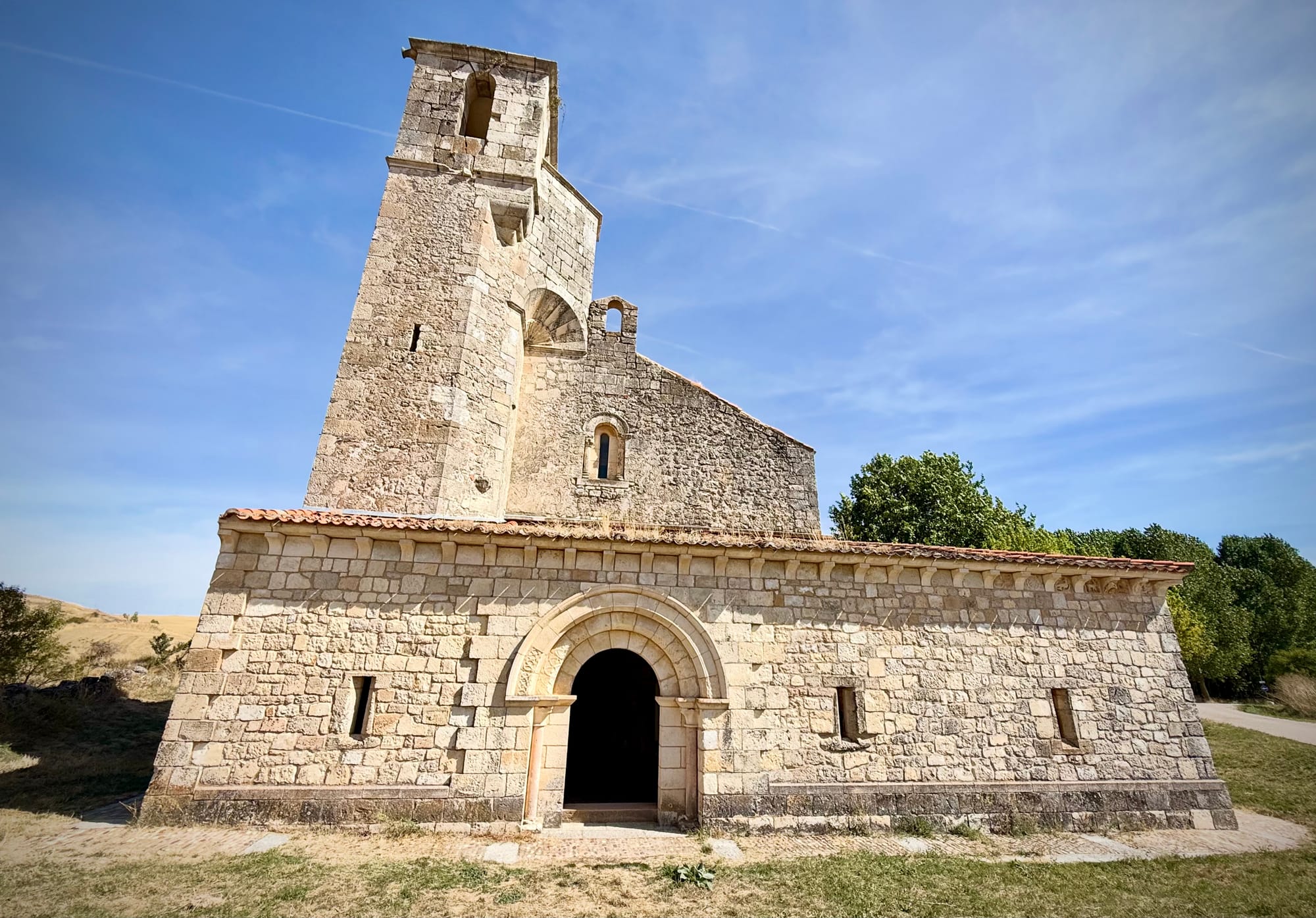
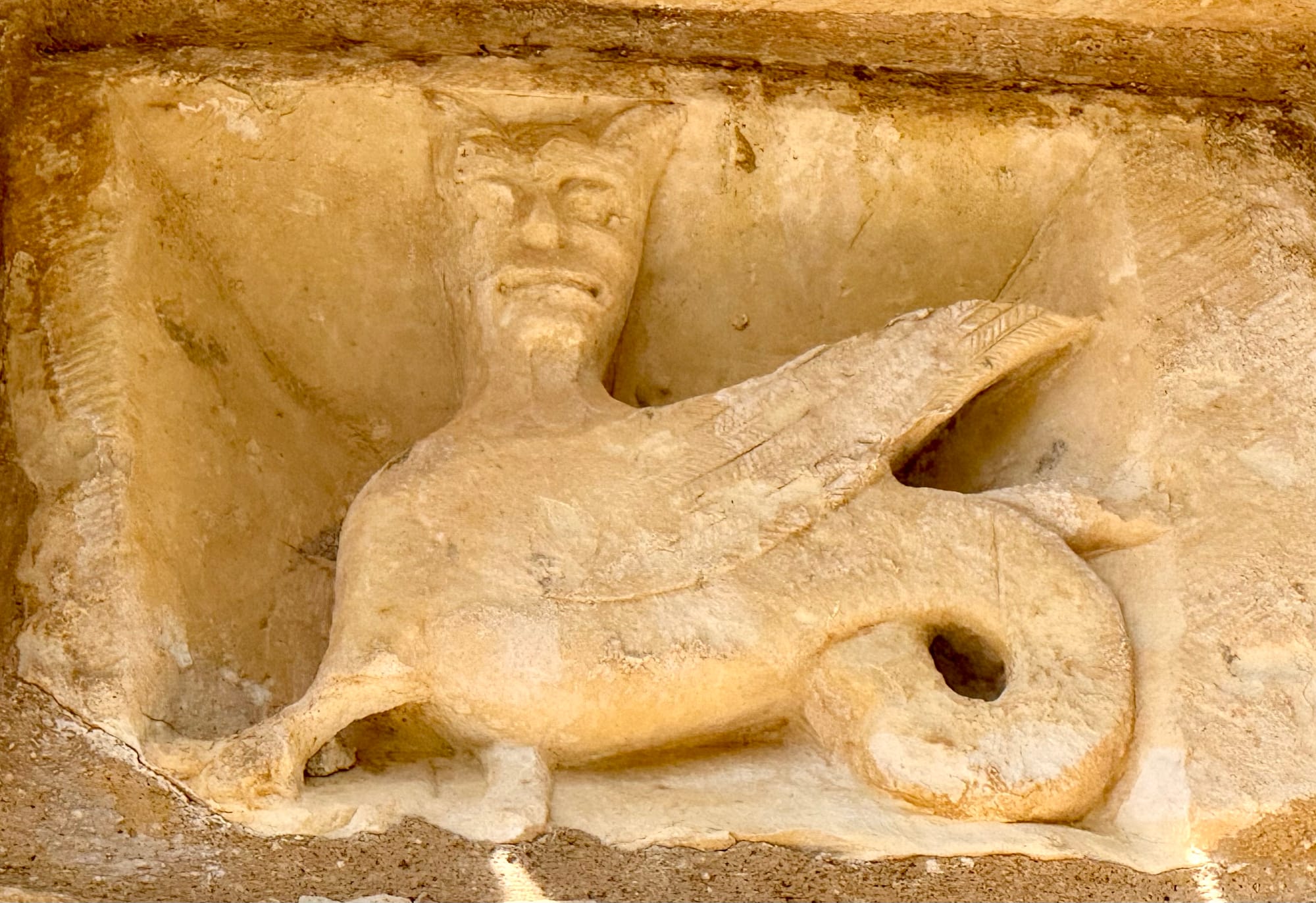
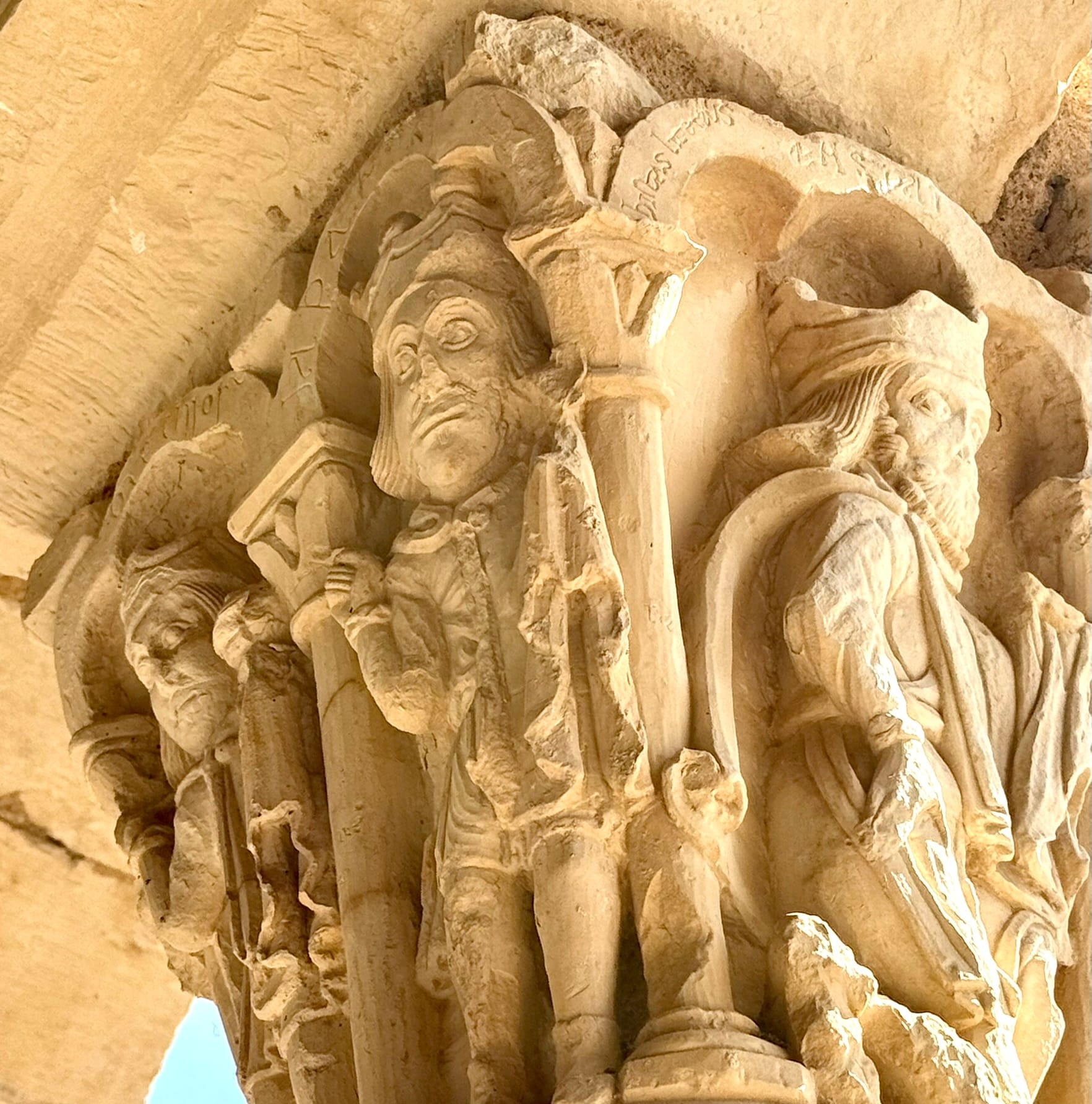
the Visigoth-era Iglesia de Nuestra Señora de la Asunción and some weird little guys carved into it.
We paused to eat at a mountain-top bar and hotel filled with Spanish hikers for lunch, and then we paused again to look at a Visigoth-era church, which presided in its emptiness over an even-older Roman era bridge and the vastness of the dry Spanish central plains. Occasionally, I had to remind myself that we weren't actually in California, even if it certainly looked like we were.
Eventually, the scenery grew greener, and the mountains drew closer in. We had hit the transition point
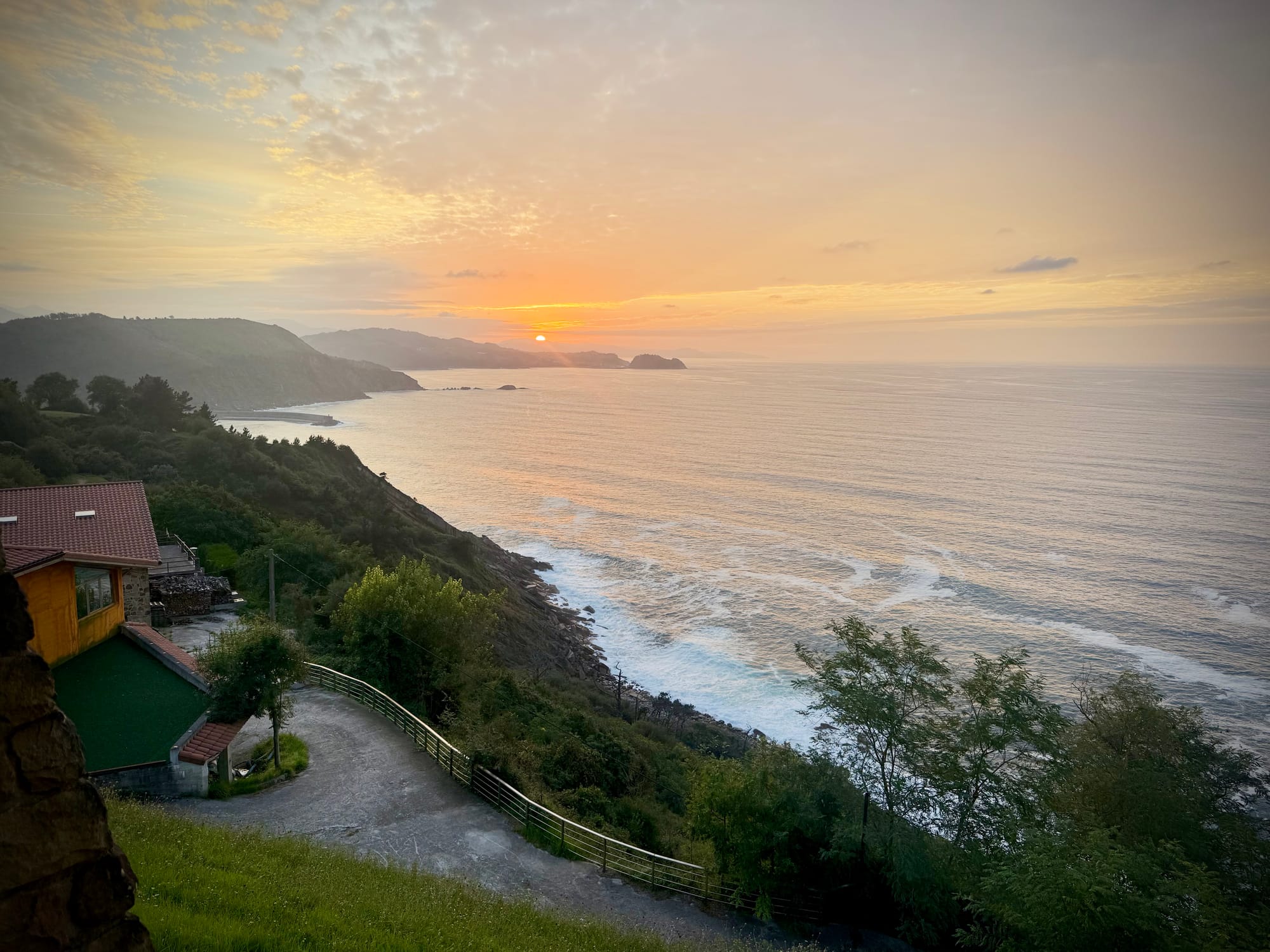
Our hotel, Itxaspe Nekazalturismoa, was situated on sea cliffs on the outskirts of the pleasant fishing town of Orio, in a spot with astonishingly dramatic views of the Bay of Biscay. However, this came with a catch.
To get there, you had to drive along the side of a frighteningly sheer ocean cliff on a very narrow road frequently shared by both livestock and oblivious walkers with their ear-buds in to get there. (This was particularly interesting at night, especially on the occasion where we came across somebody's stray heifer curled up in the middle of the road).
I can imagine someone with a fear of heights simply turning around and booking somewhere less exciting at that point. But we persisted. Once at the hotel, our room was austere (and a little mildewy, as every coastal space is in this incredibly lush ocean-side area), but comfortable, clean, and pleasantly quiet. That night, we would enjoy falling asleep to the sound of the waves crashing on the coast below.
For dinner, we drove into Orio and got an outside table at Baraka Taberna, one of the town’s various gastropubs. I love how the Basque gently poach scallops in olive oil and garlic, and I ordered a batch of those, along with some txakoli (the signature Basque light and dry white wine, which I also love). We also had braised beef cheeks in a cider sauce with the inevitable side of fries, and a pleasant variant on the ur-salad of the Iberian peninsula: tomatoes, tuna, avocado, manchego, olive oil.
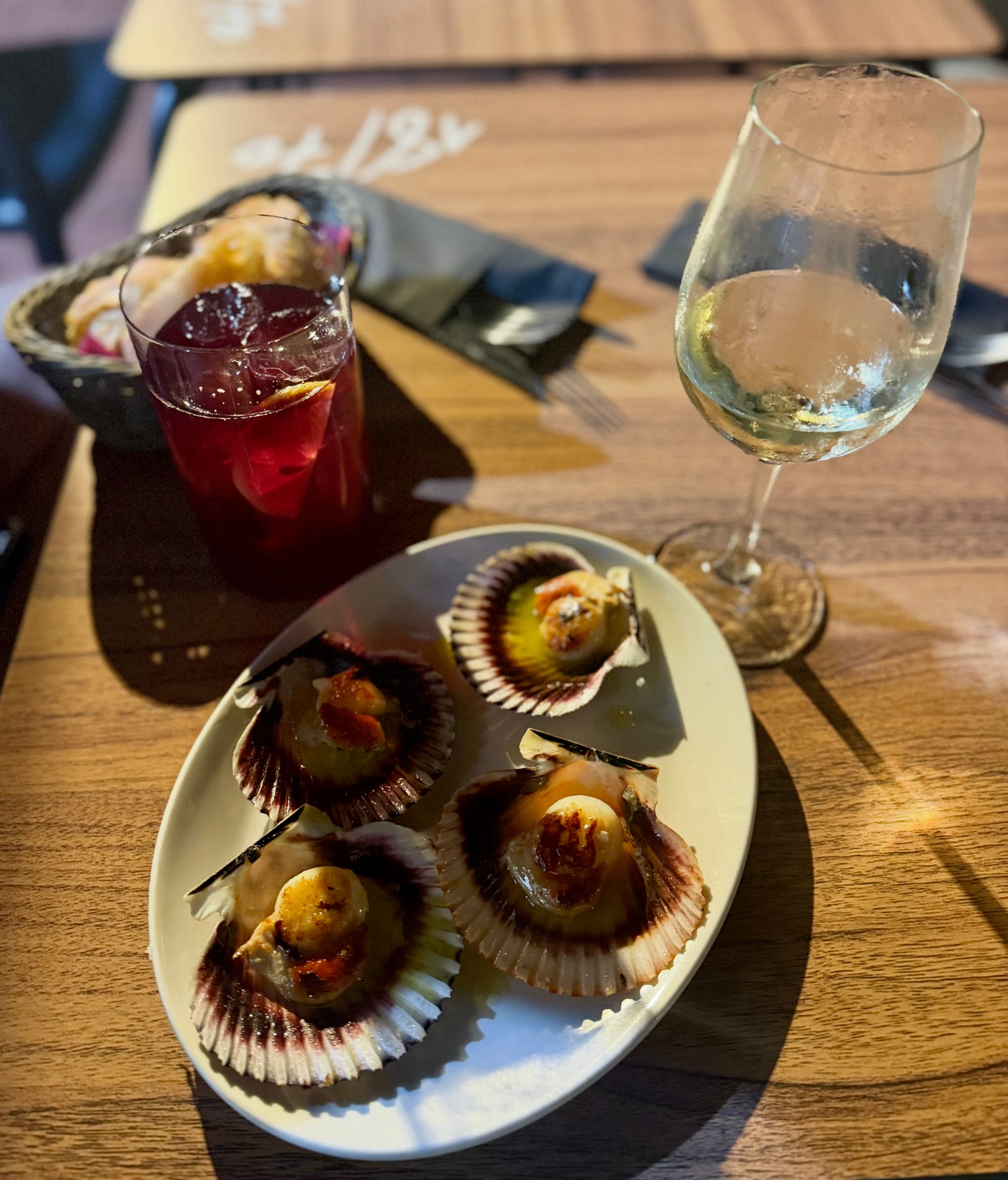
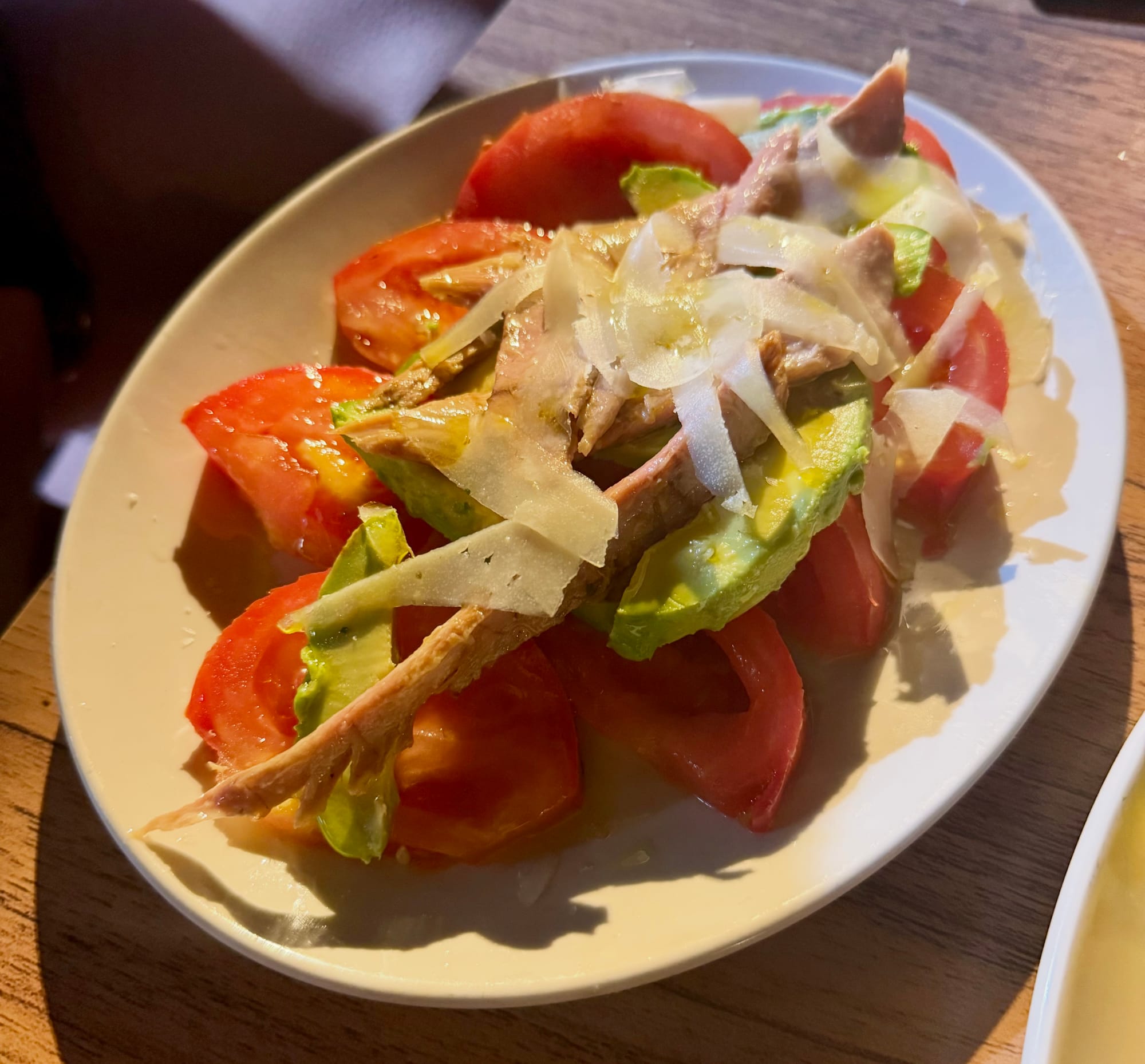
scallops and a minor variant on the Eternal Iberian Salad
Day One: San Sebastian and Getaria
On our first full day in the Basque Country, we drove into the notoriously pretty seaside town of Donostia-San Sebastian, which was heaving with people. Why two names? Donostia is Basque, and San Sebastián is Spanish, and the two now are used at the same time in a condition of slightly uneasy tension.
A related tip: learn to say a few words in Basque while you're here - like "thank you," which is "Eskerrik asko" - and local people will really appreciate it.
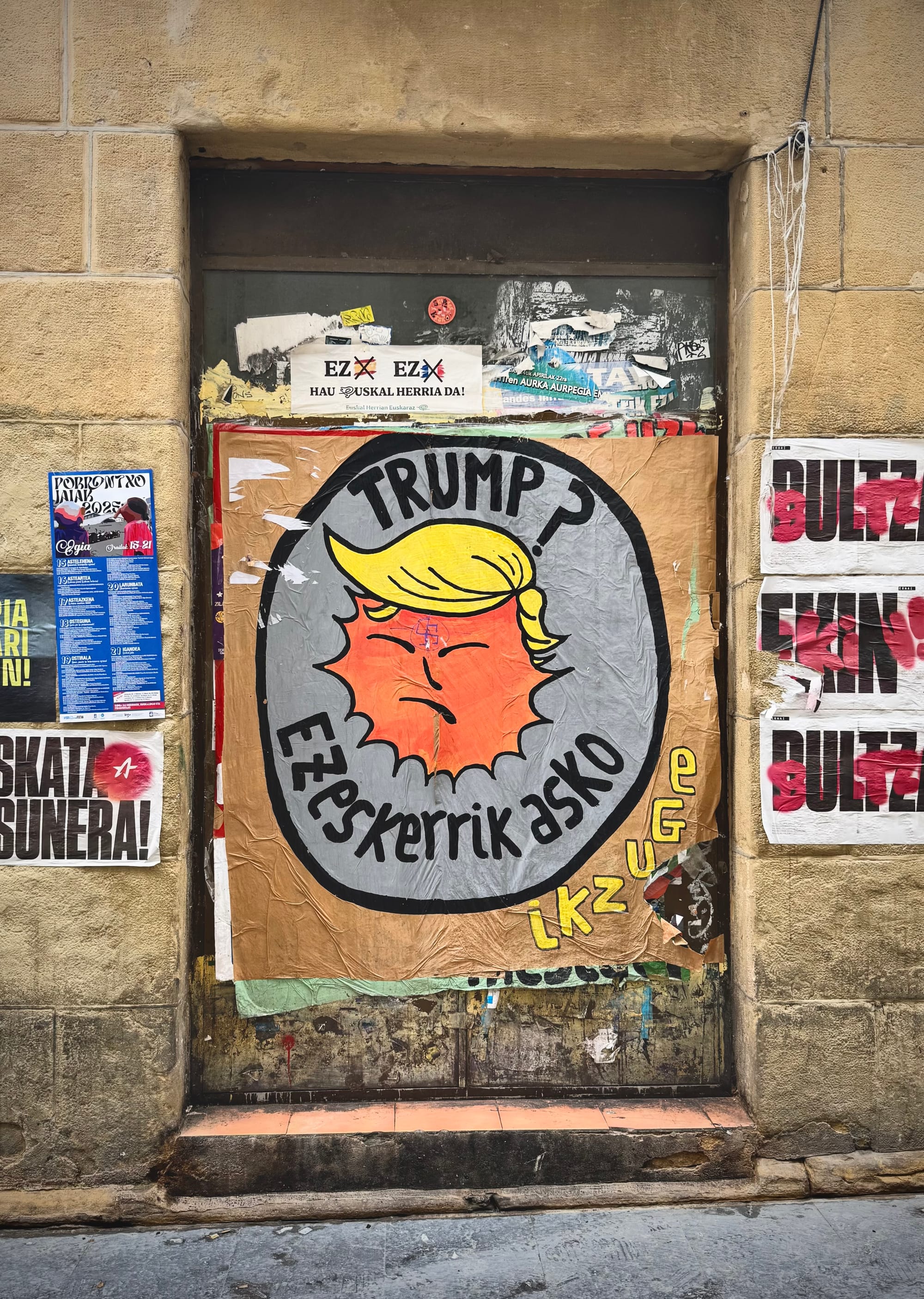
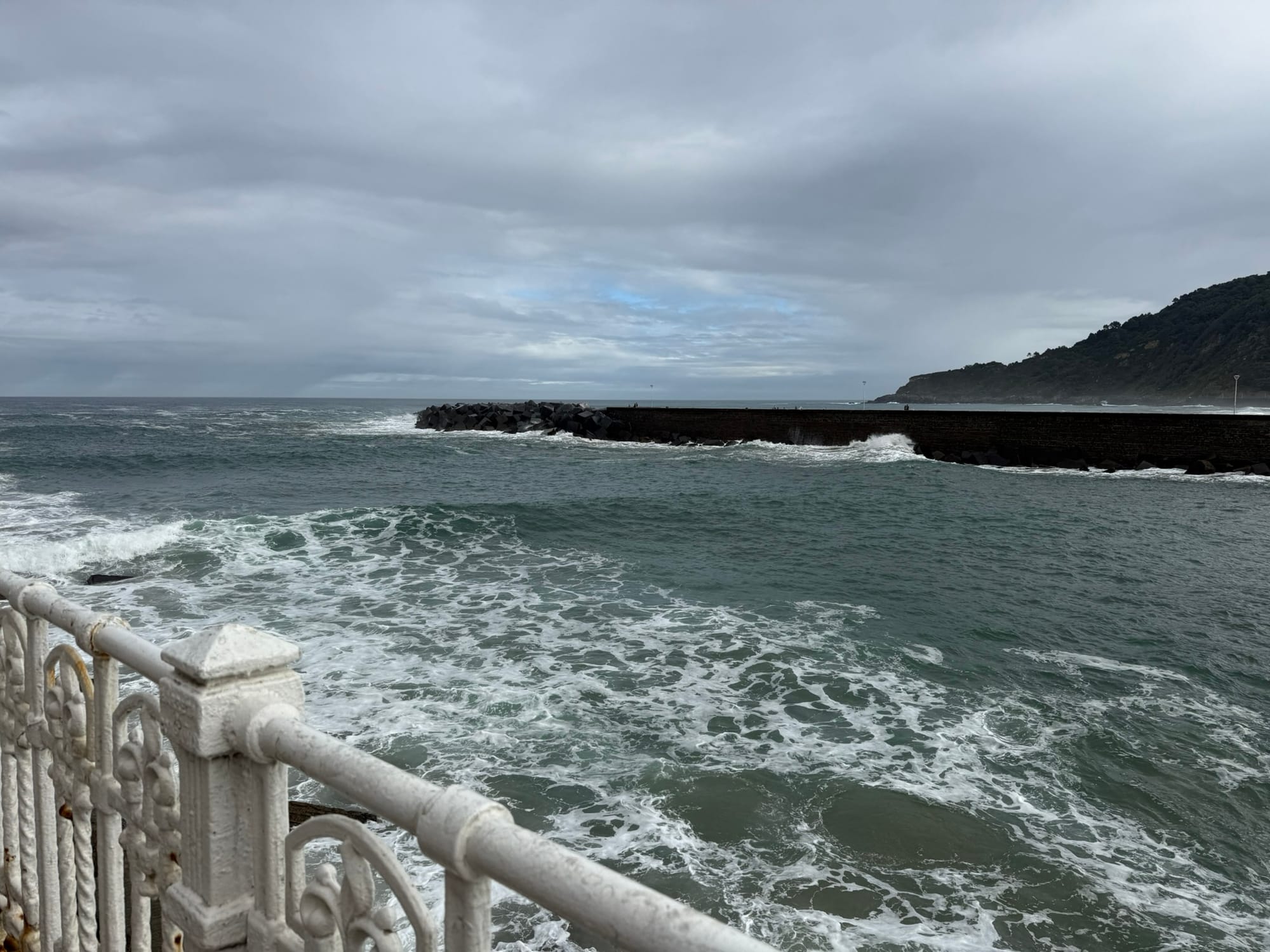
Who mostly weren't tourists: they were pretty much all Basques, congregating in the area for the last day or two of the Euskal Jaiak (Basque Festivities), an annual cultural and food celebration (since the Basques are really, really into food celebrations).
We made it through the cheerful and already-cider-slamming crowds, and first went to the previously-mentioned San Telmo Museum, which is an excellent introduction to Basque history and culture.
I most enjoyed learning about the reign of terror of Antonio/Catalina Erauso, who was assigned female at birth, decided to live life as a man, and proceeded to become a conquistador in South America, a notorious womanizer, a smuggler and murderer, and, oddly enough, someone who still (probably) managed to get an audience with Pope Urban VIII.
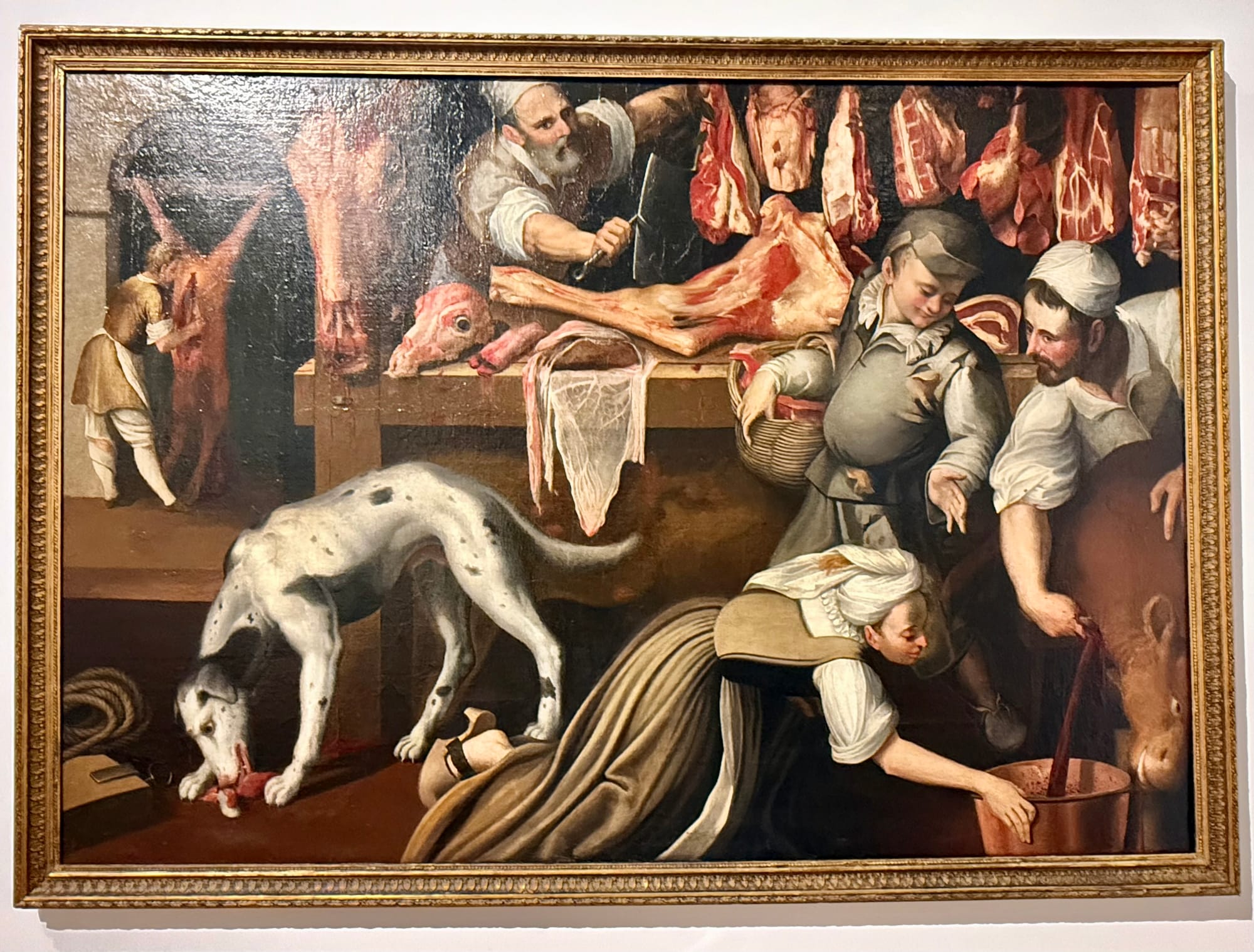
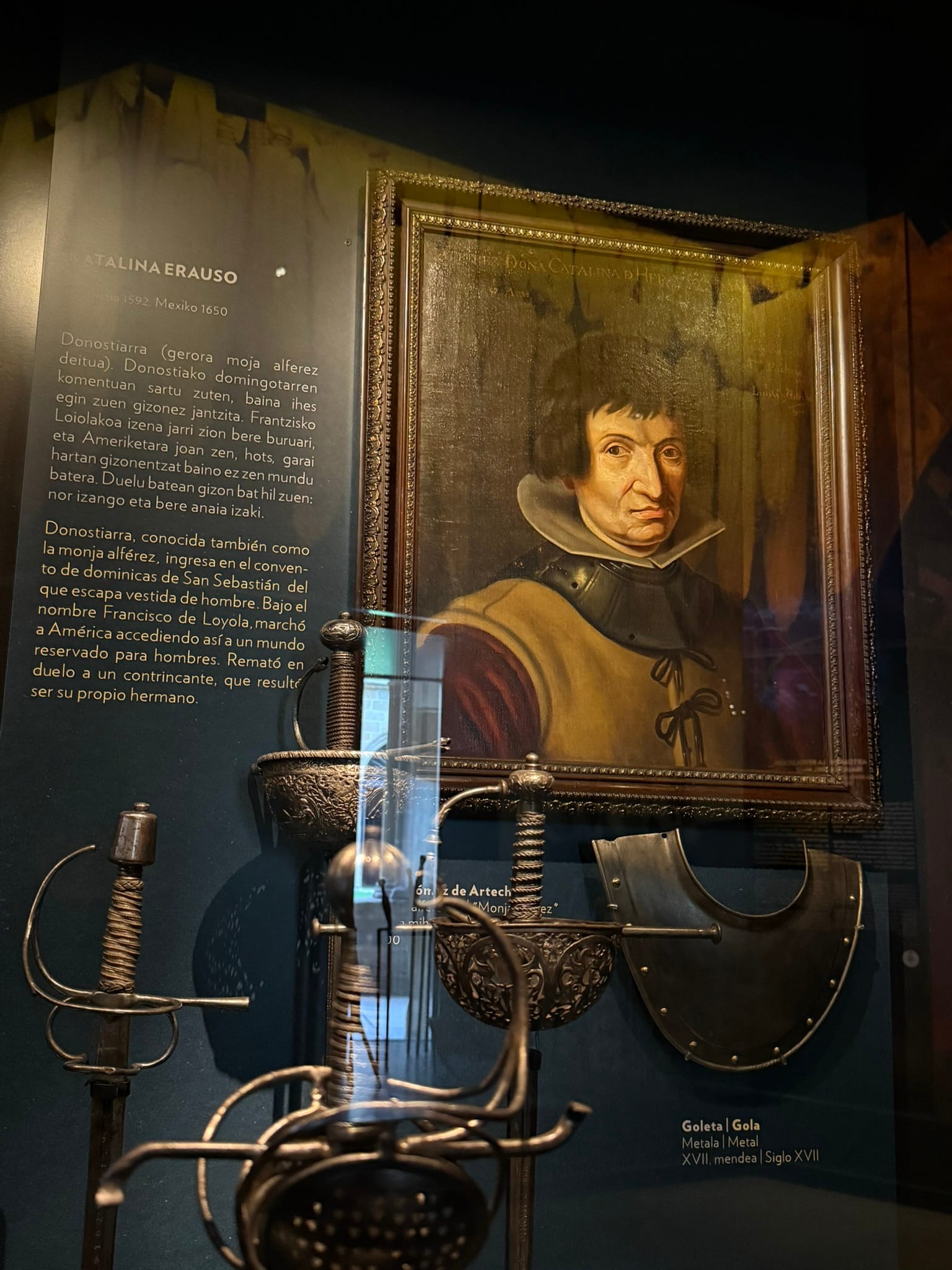
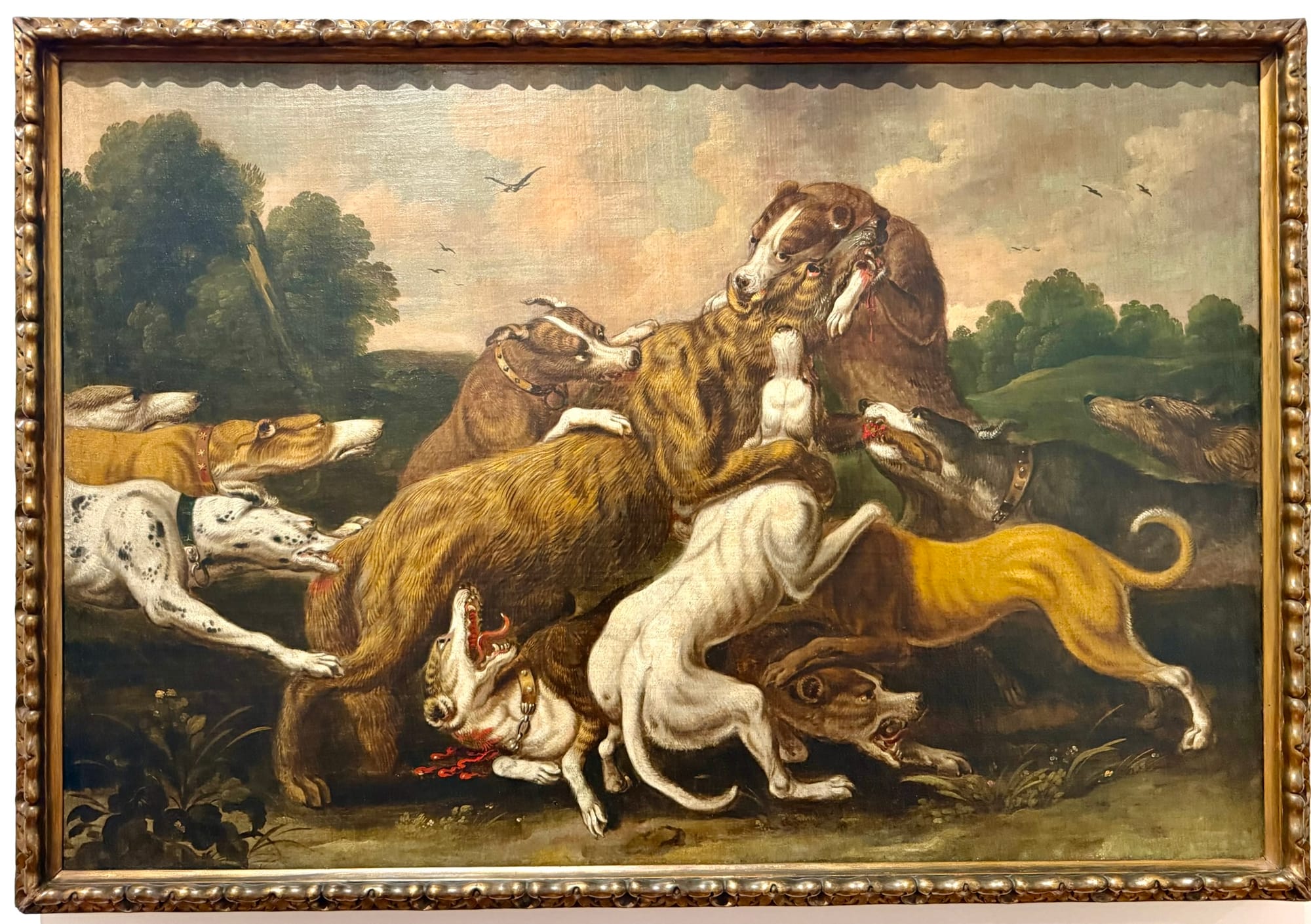
butchery, dangerous trans men, some dogs
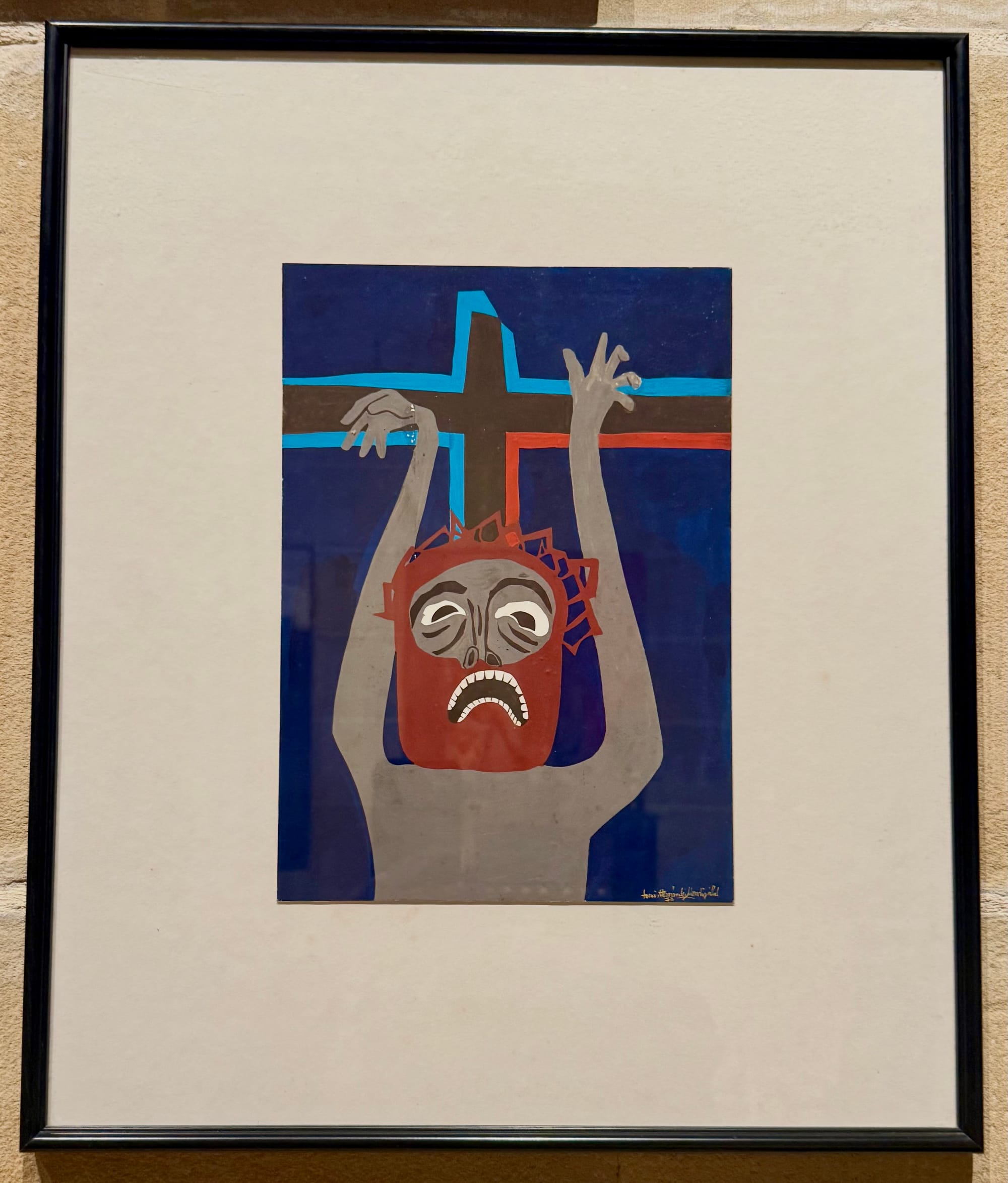
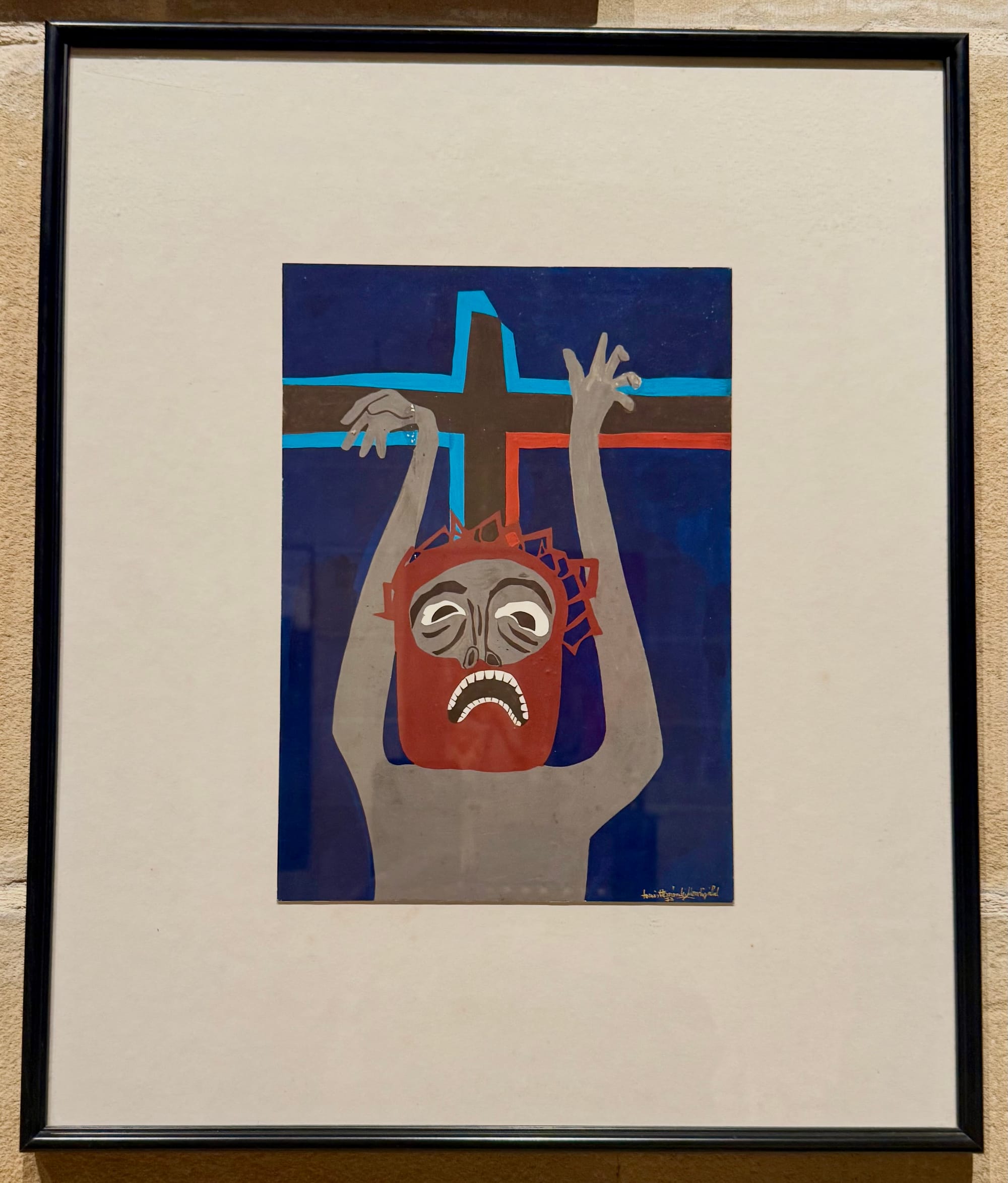
We also swung by San Sebastian’s pleasingly sun-drenched old cathedral, which has a genuinely interesting exhibition of odd and arresting religious art. Here, I saw what is now my favorite artistic portrayal of the crucifixion of Jesus:
As you’d expect from the town’s name, they also had one of those incredibly horny statues of Saint Sebastian (a theme so popular among medieval and early modern artists that you can find similarly slutty portrayals all over Europe):
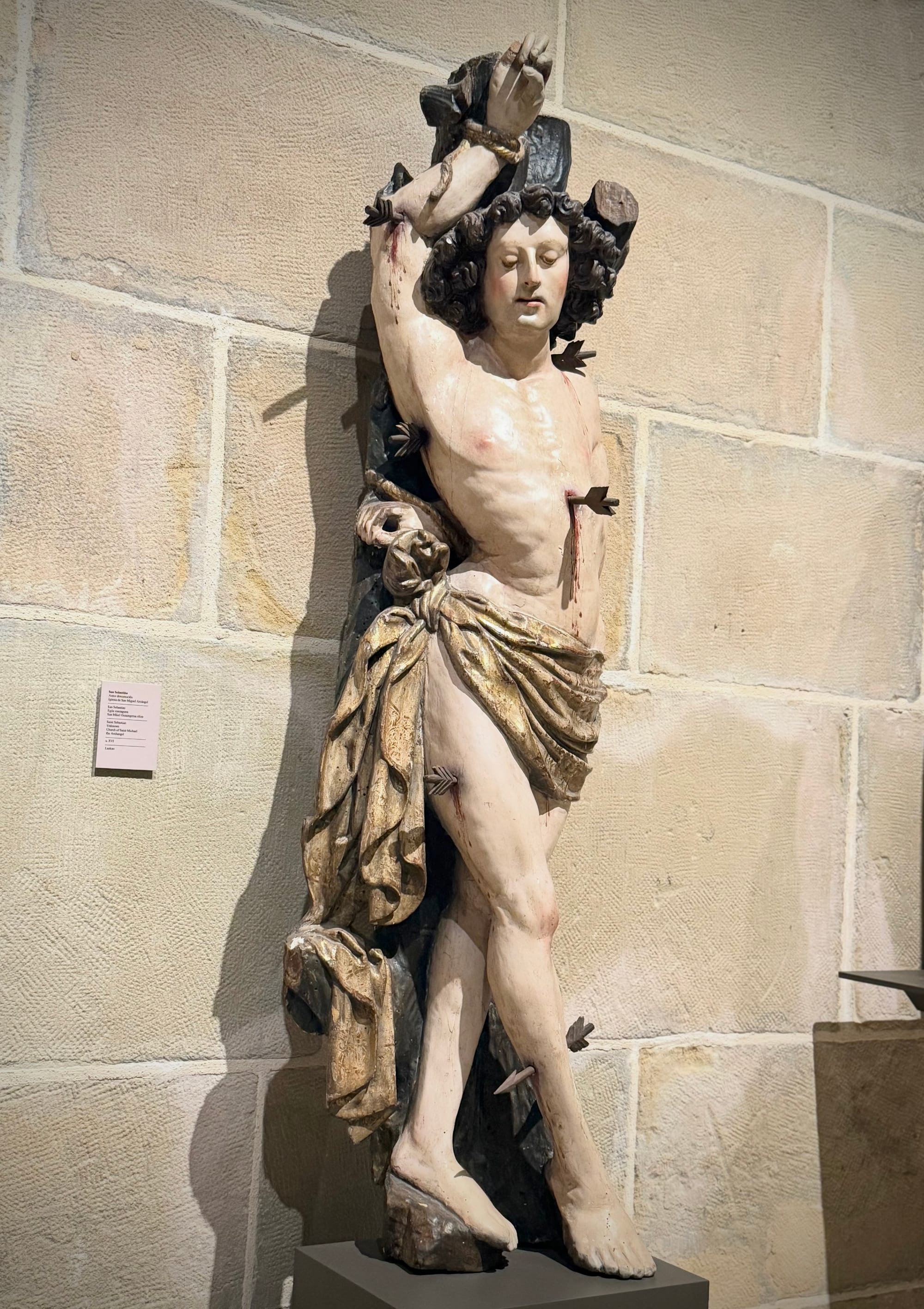
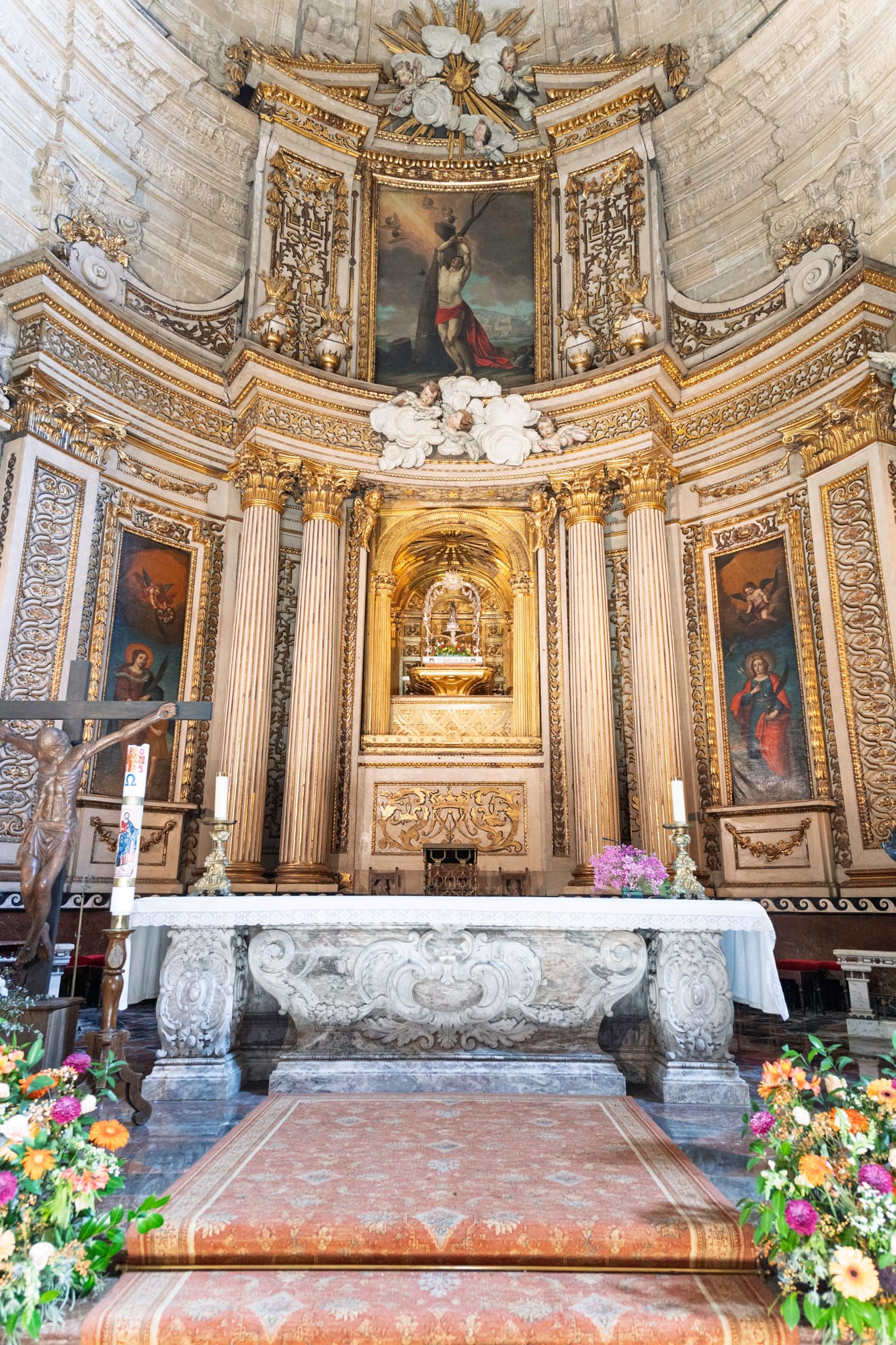
sensual San Sebastian and the less sensual but still quite nice altar
Eventually, we realized that actually getting a seat anywhere for lunch was going to prove functionally impossible, as many local restaurants book out for years during this festival.
So, we got in the car and drove along the coast, admiring the aggressive geology and the lush golden-green of the Basque country hills, which feel more reminiscent of Northern California or Ireland than the landscape of Southern Spain's coastline.
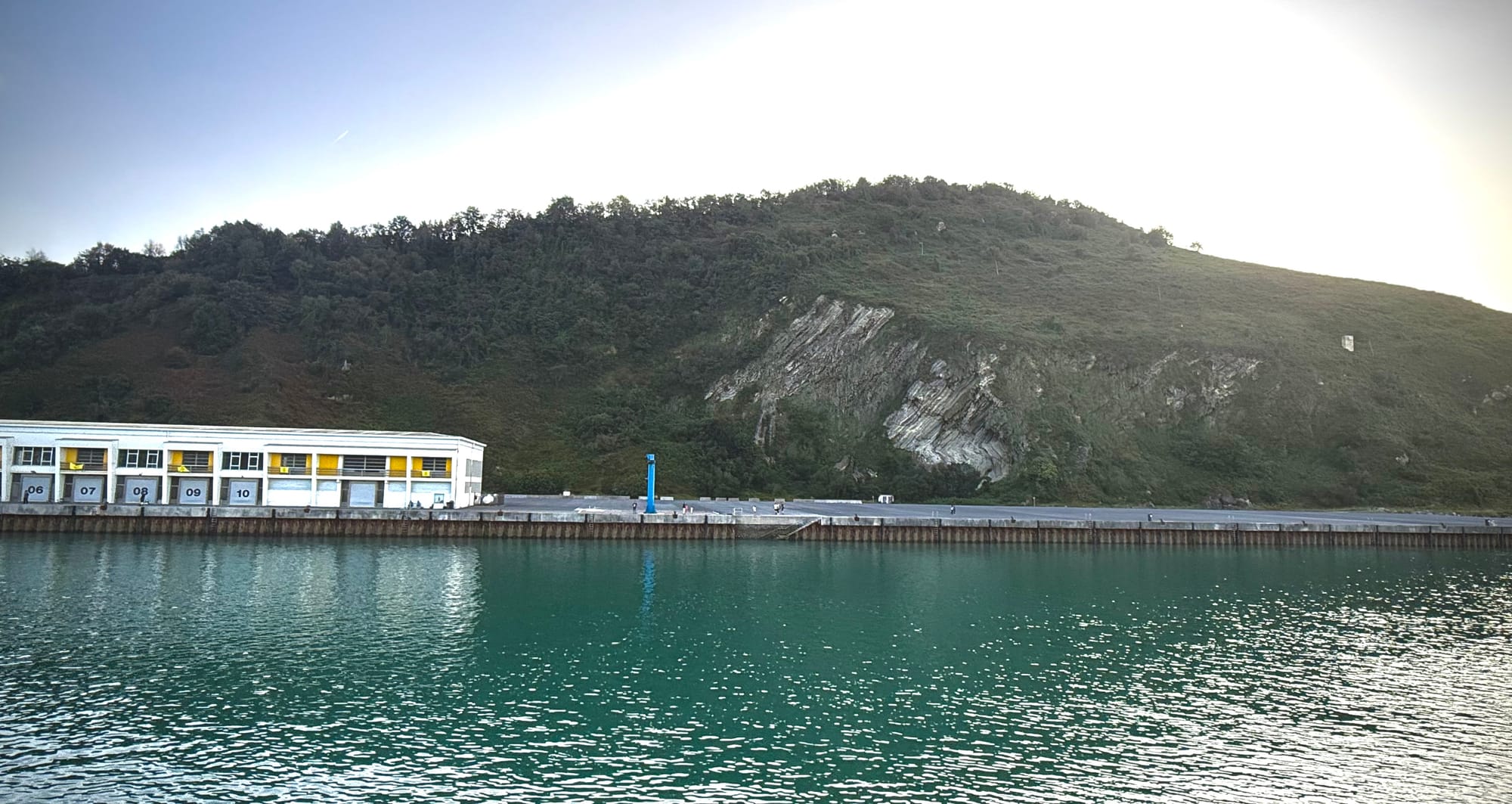
We decided to stop in at the little fortified peninsula town of Getaria, which we could see from the balcony of our hotel room. It's perhaps most famous as the hometown of Juan Sebastián Elcano, the legendary and somewhat mysterious Basque navigator who successfully completed the first circumnavigation of the world - unlike his captain, Ferdinand Magellan, who died in the Phillipines and therefore didn't actually make the entire journey.
Considerably more recently, Getaria became the birthplace of the legendary Basque designer and fashion-house founder Cristóbal Balenciaga Eizaguirre - yes, that Balenciaga - and there's a fashion museum commemorating his work and his life in town. Today, Getaria is a pleasantly well-preserved medieval fishing village, complete with a popular beach and a number of excellent seafood restaurants.
The most famous of these is grilled-seafood specialist Elkano (you can guess where the name comes from), which has a Michelin star and which I was unable to book for our trip.
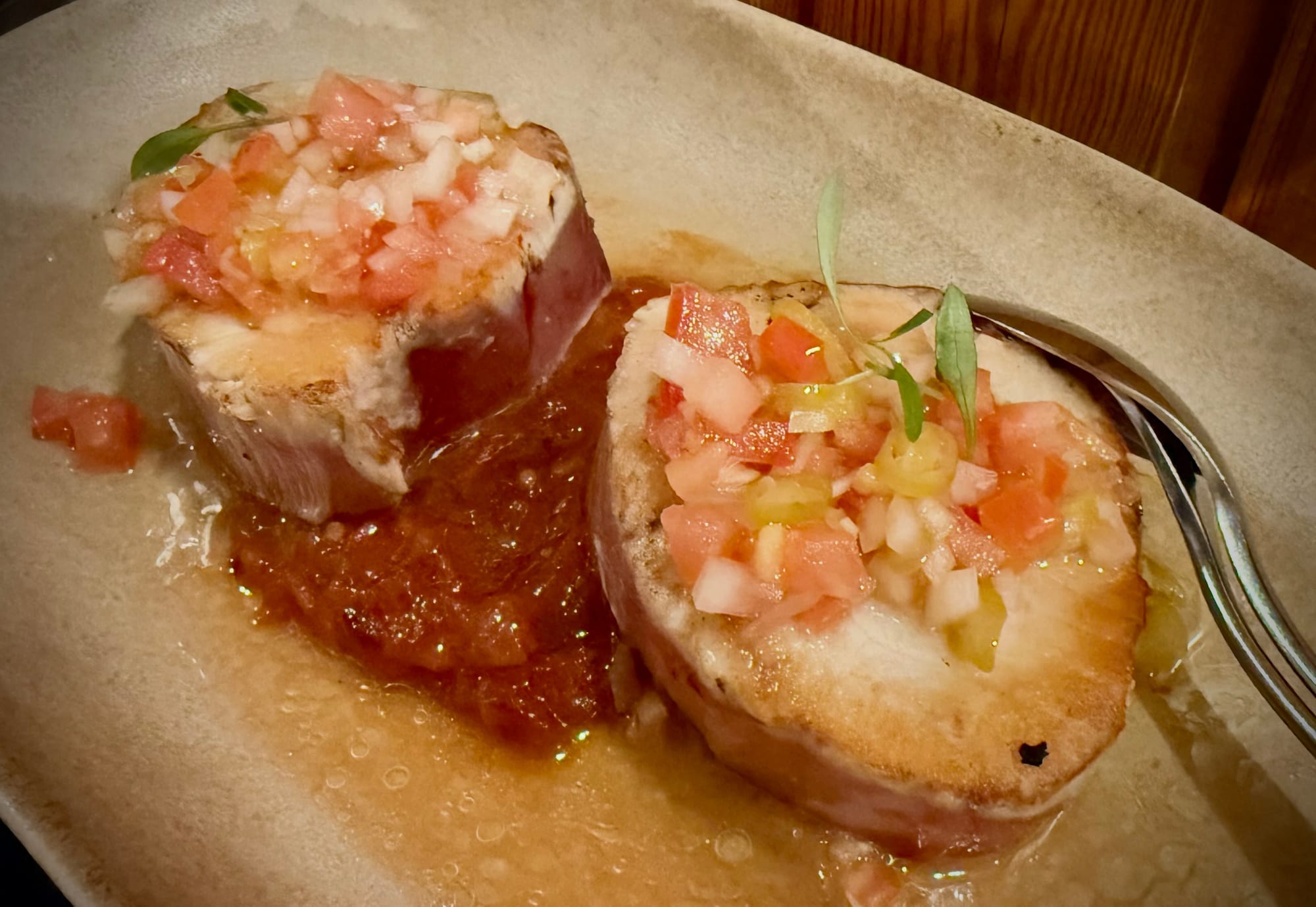
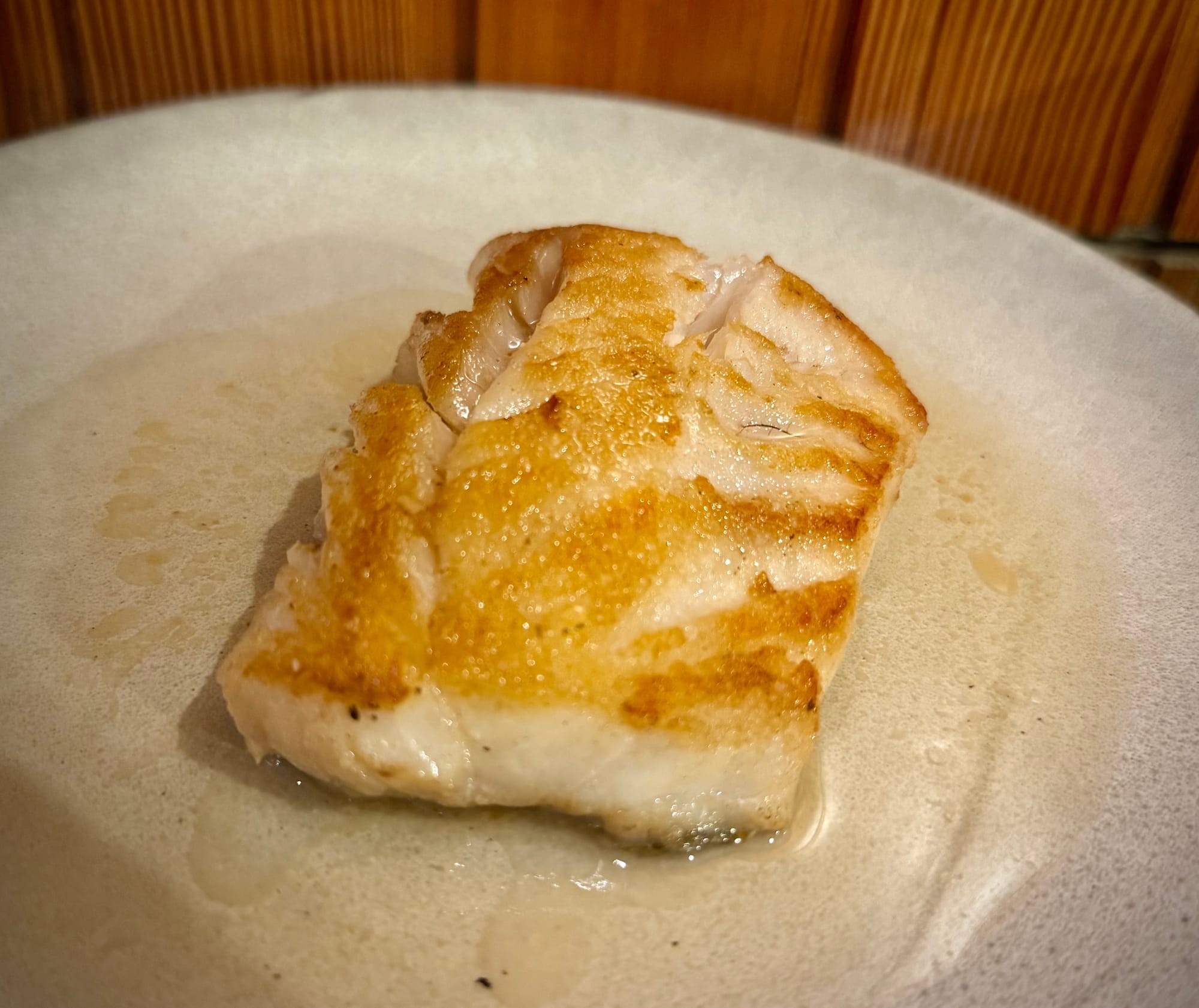
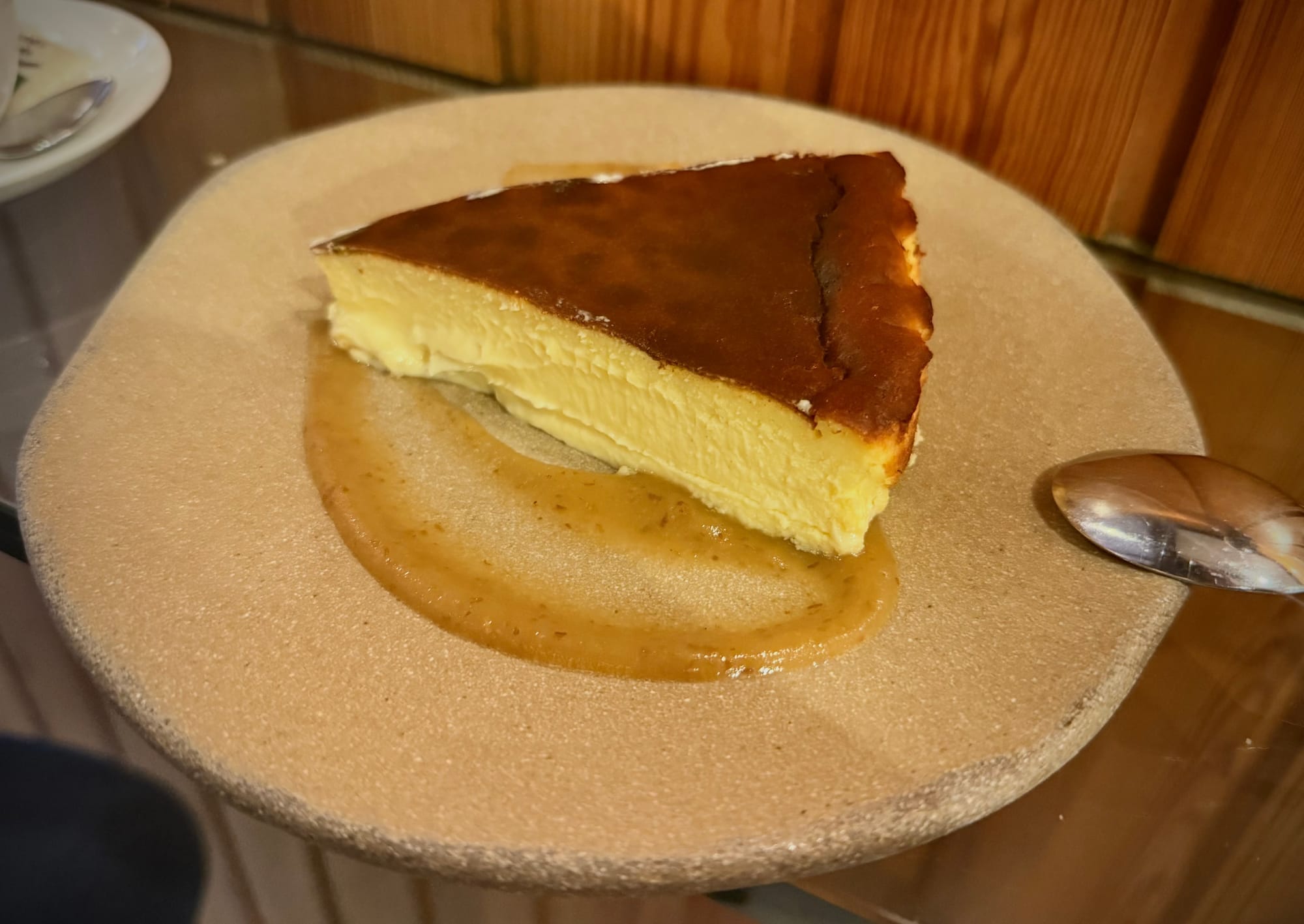
bounty of the sea at Elkano
Very luckily, we were eating a late 3:30 PM lunch, and I was able to get us a couple very cozy walk-in seats at Elkano Txiki, Elkano's more casual, cozy wine bar. We had local seared tuna with a jammy tomato sauce, fried shrimp, a slab of seared halibut, and Basque cheesecake, with the requisite bottle of txakoli.
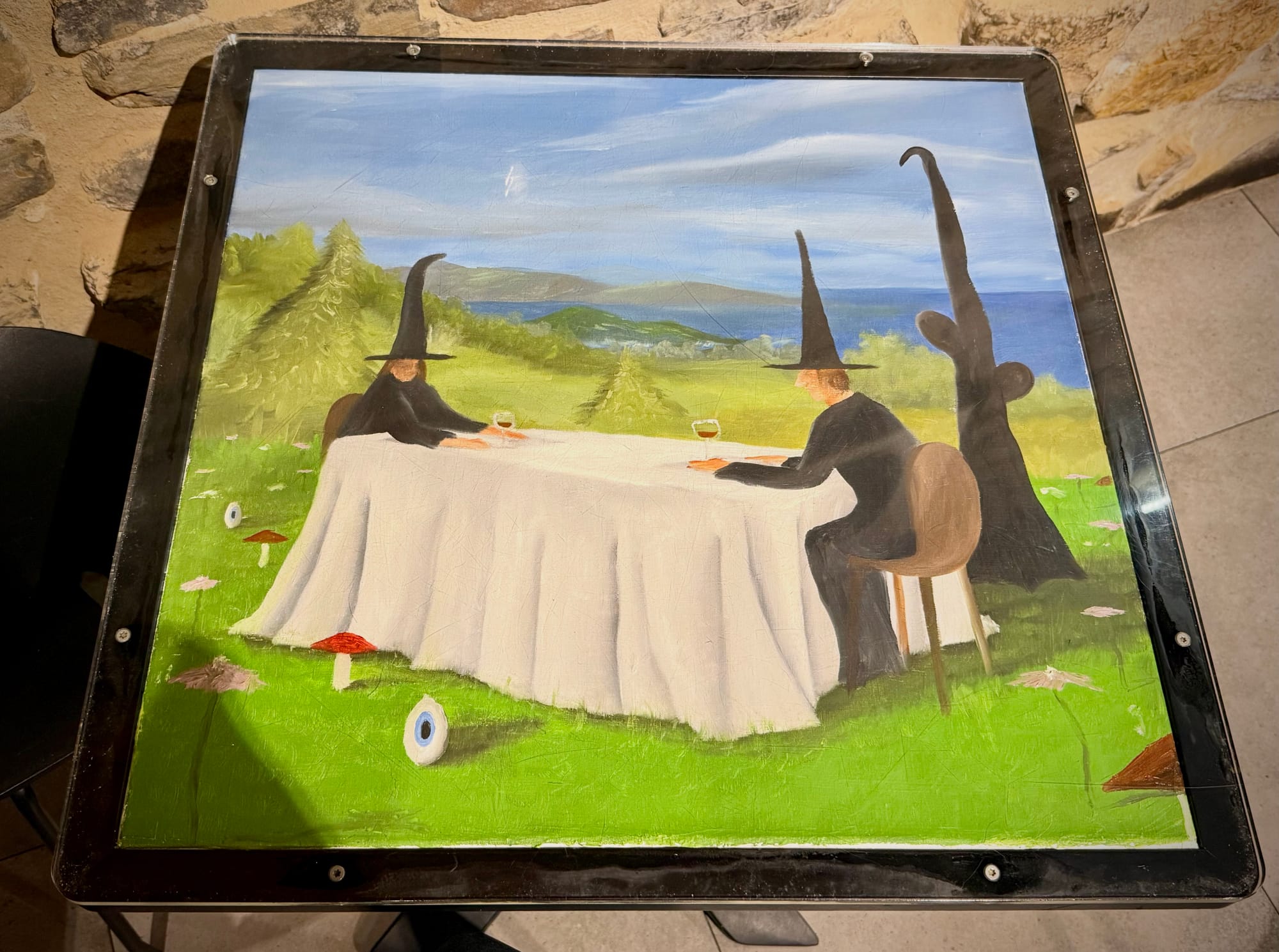
We also admired their witch-themed table. I wish there were more witch-themed tables in the world:
We spent the rest of the day walking around the coastline of Orio and the dramatic shoreline by the hotel, and eventually ended up going to bed early.
Day Two: Ancient Stone Circles and Medieval Hondarribia
The next day, we went to go look at a cromlech. Which is a general term to describe the stone circles that ancient people were wont to build all over ancient Europe. Specifically, we went to this one: Oianleku Harrespila, in the mountains south of Donostia/San Sebastian.
I'm a complete sucker for necropoli, cromleches (is that the right plural world?), menhirs, and other obscure ancient monuments, and to their credit, my partner goes along with this. An antique city of the dead, moldering throughout millennia in place - hey, what's not to like? Who doesn't want to be reminded of the depth of time and the flickering flame that is human existence on vacation? (Perverts, probably).
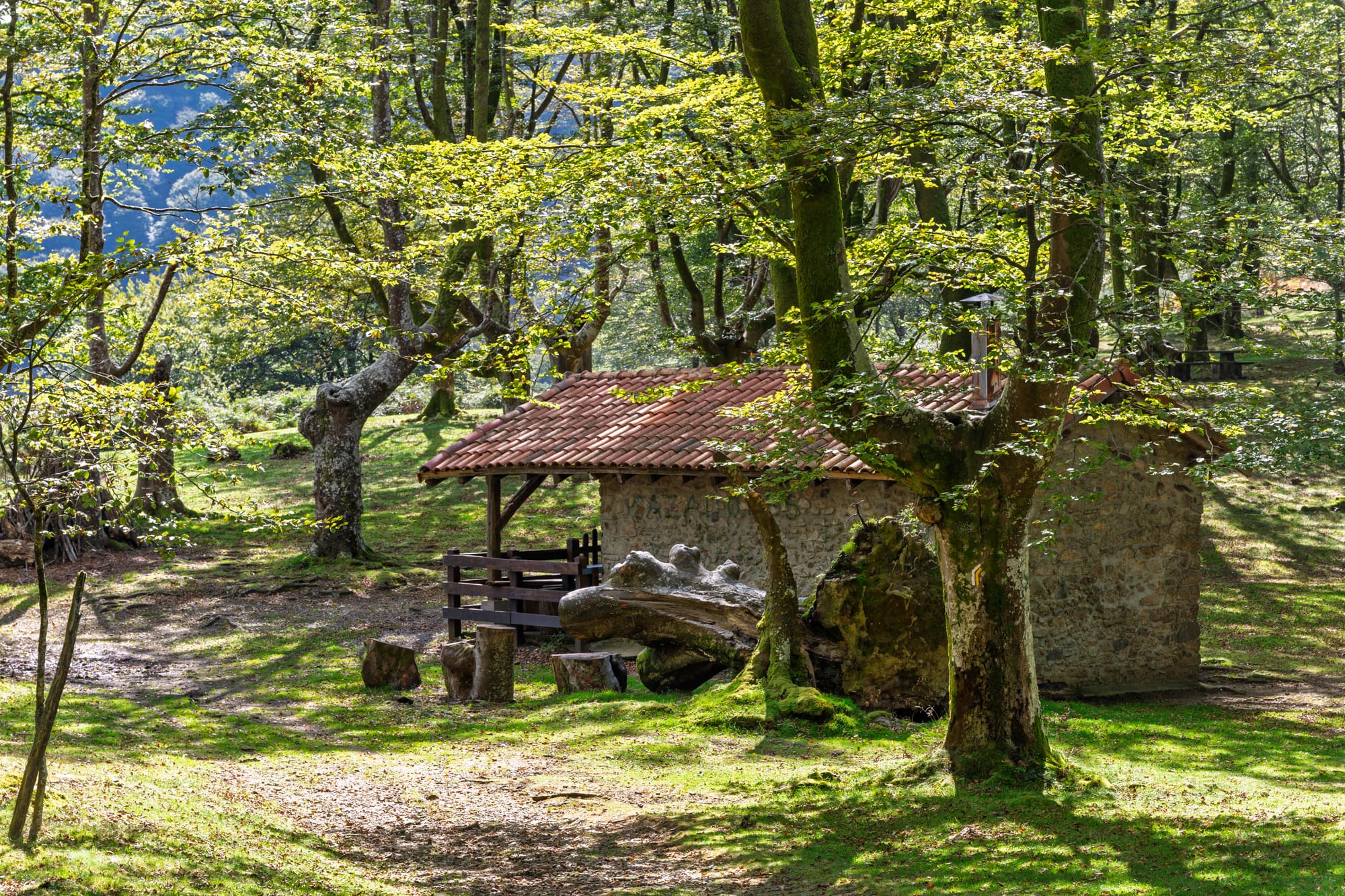
We drove through the mountains up from Orio, passing by antique Basque farmhouses covered in late-summer flowers, dense forests, and the occasional road-blocking herd of goats - scenery that reminded me an awful lot of the mountains of Sonoma County in California.
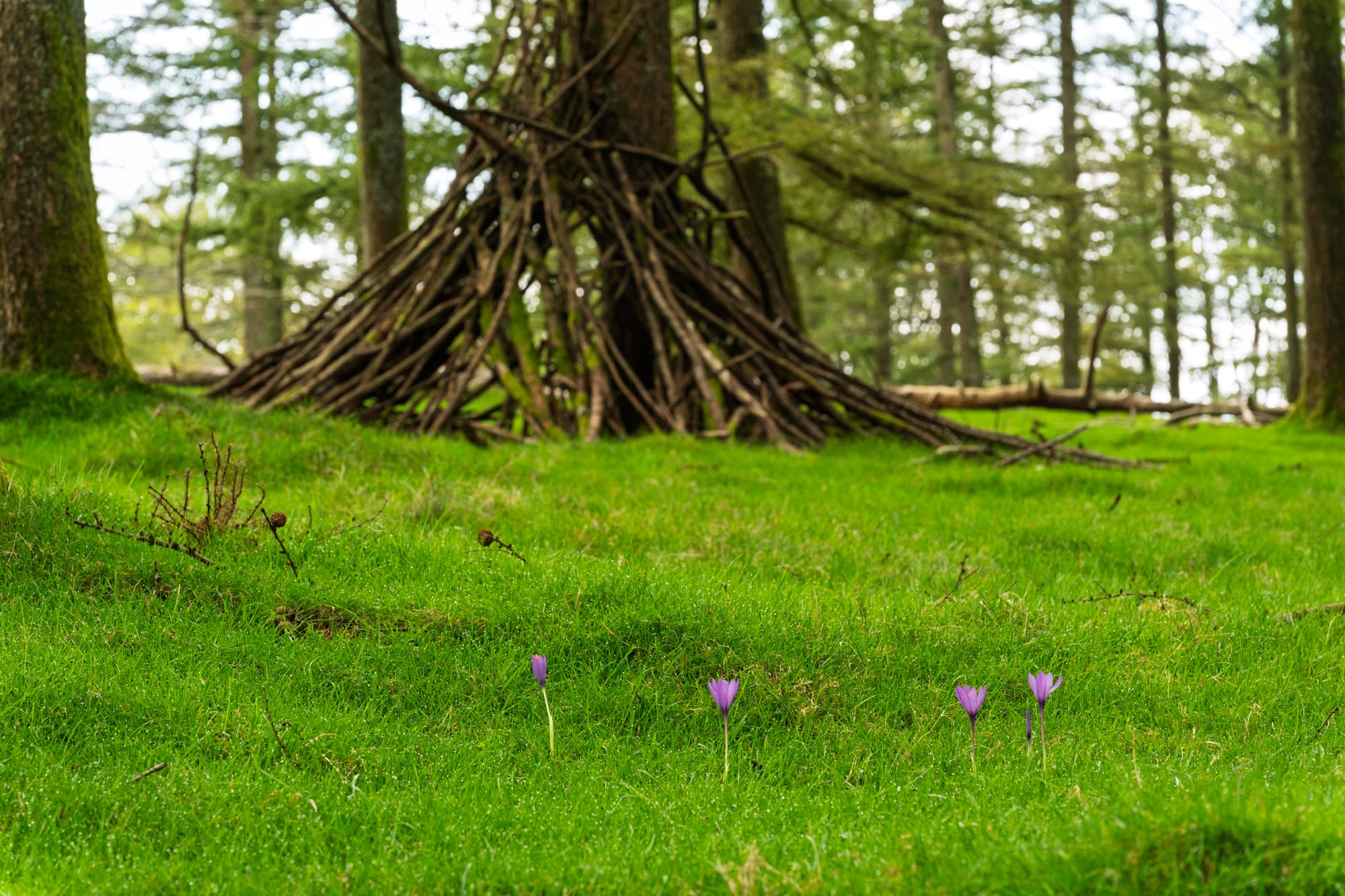
To get to our destination, we parked our car and walked down a very pleasant forest trail, occasionally passed by polite mountain bikers, which wound by an ancient-seeming beech forest and an equally ancient-seeming stone farmhouse before opening up to a majestic view of both stone circle and the high mountains before it.
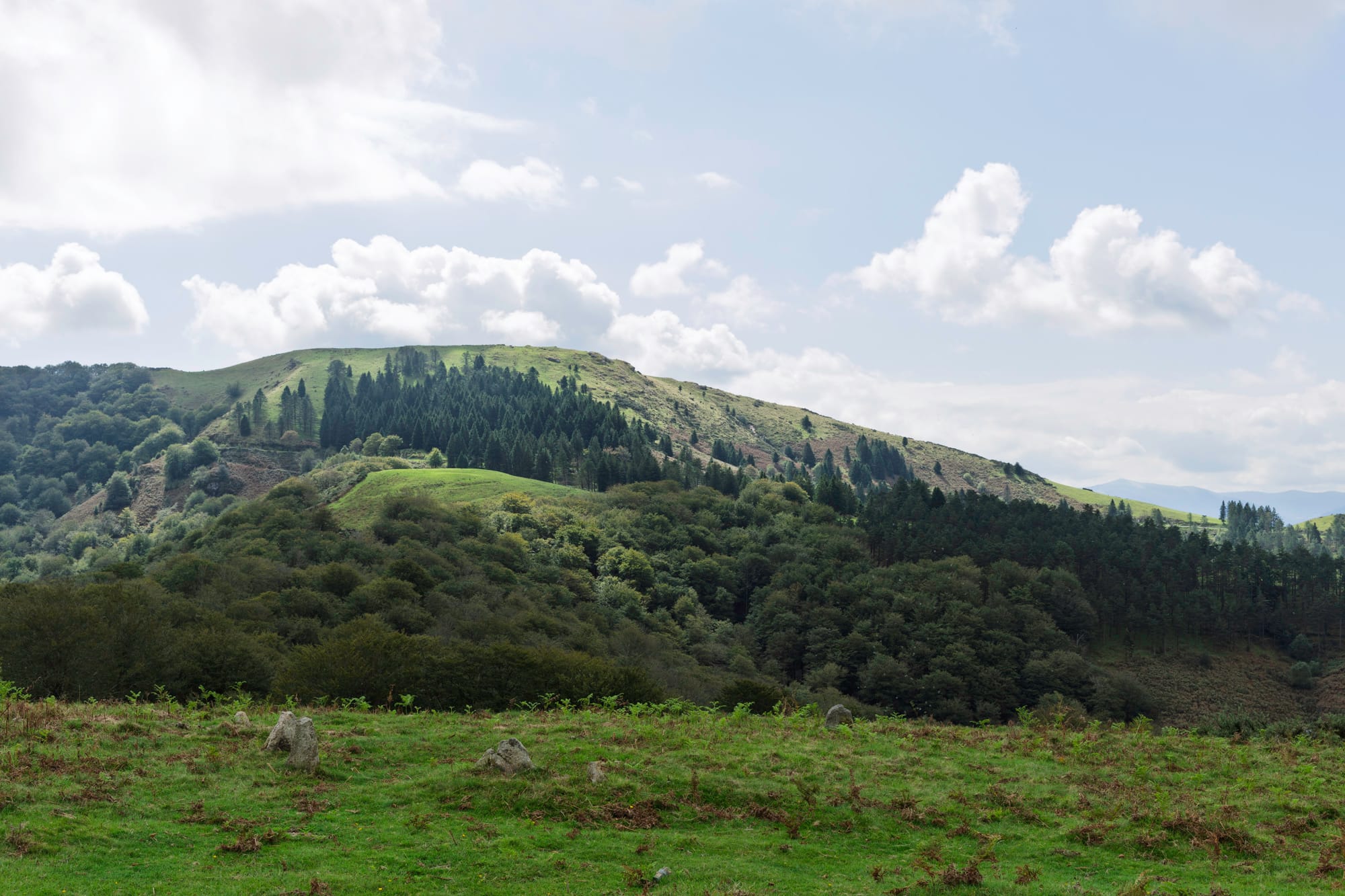
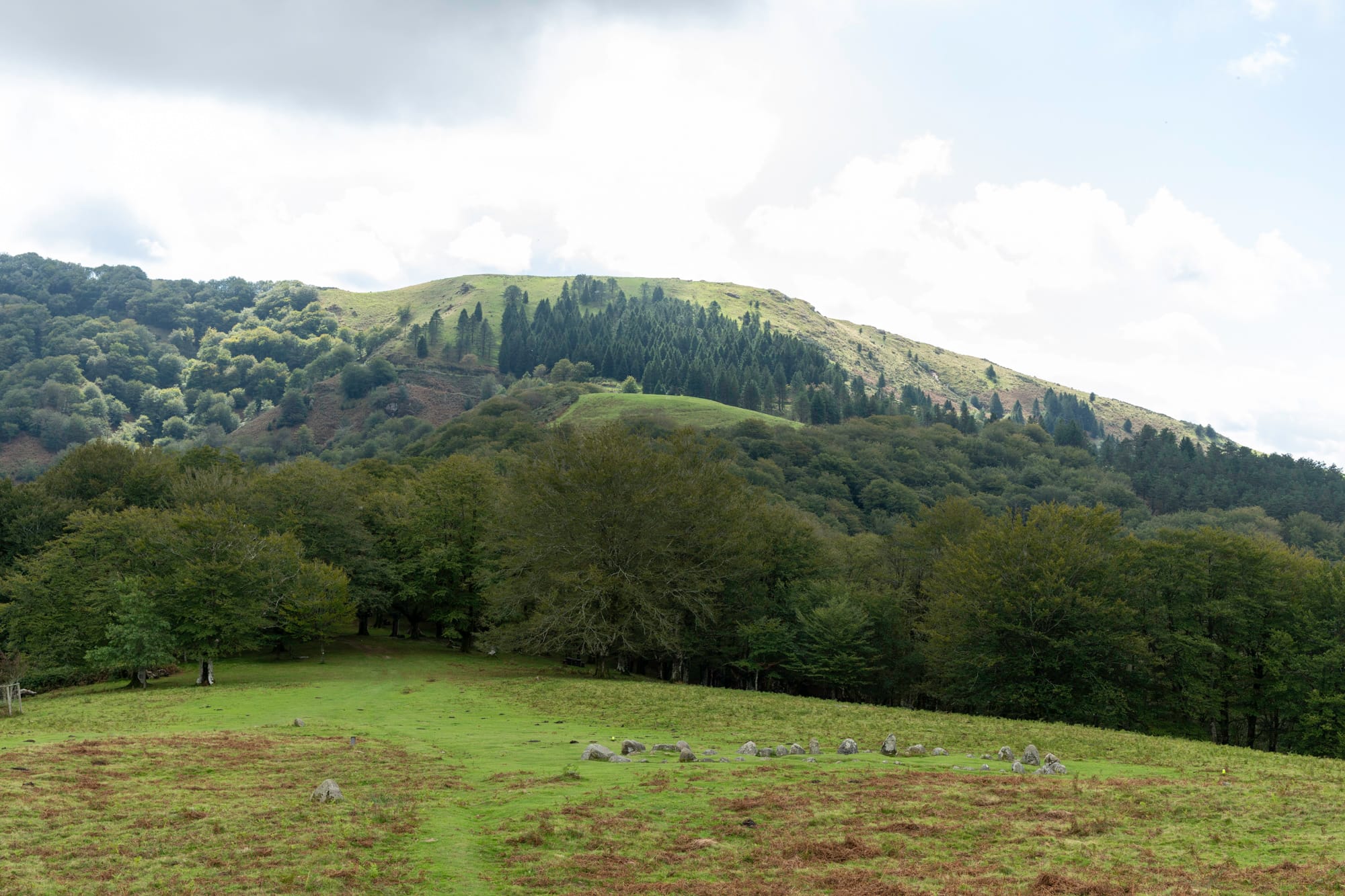
there's a cromlech in there somewhere, i swear (photos by my partner)
I like standing in an archeological ruin and pondering what someone 2000 years before was thinking about when looking at the exact same view: the gods? The next harvest, and the winter to come?
Or, maybe, like me, they were thinking about lunch. We did that next.
With that end in mind, we drove down the mountains and not very far north to the border with France, to the charmingly medieval, fortified, town of Hondarribia - indeed, it's so close that you can see France from the top of the town's hill. (It doesn't look very different, to be totally honest).
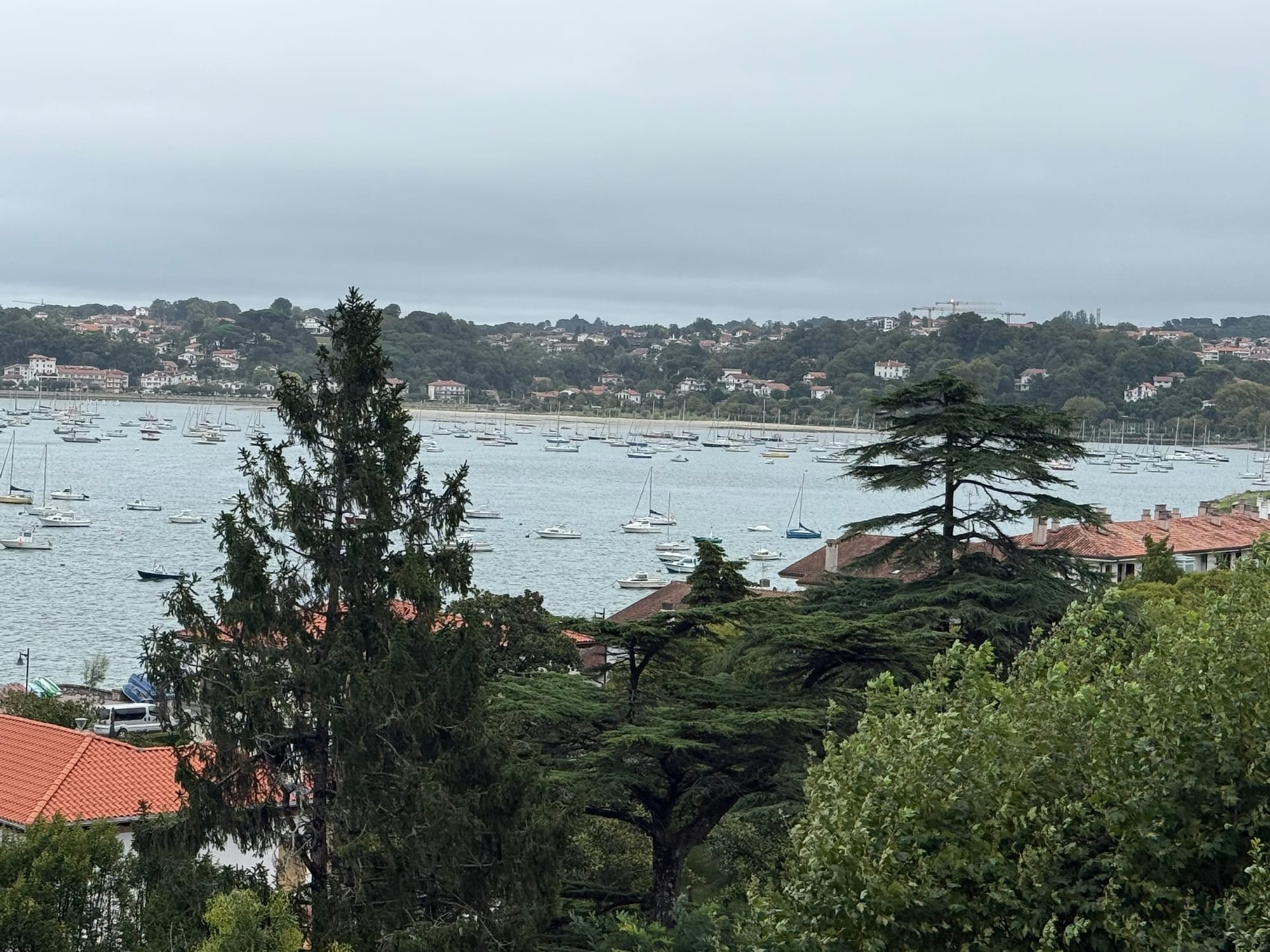
Many of the best-looking restaurants in Hondarribia were already booked up for lunch when we got there, but thankfully, we were able to get seats at a traditional seafood joint named Kupela, situated in an old building once occupied by the Fisherman's Association, before true desperation set in.
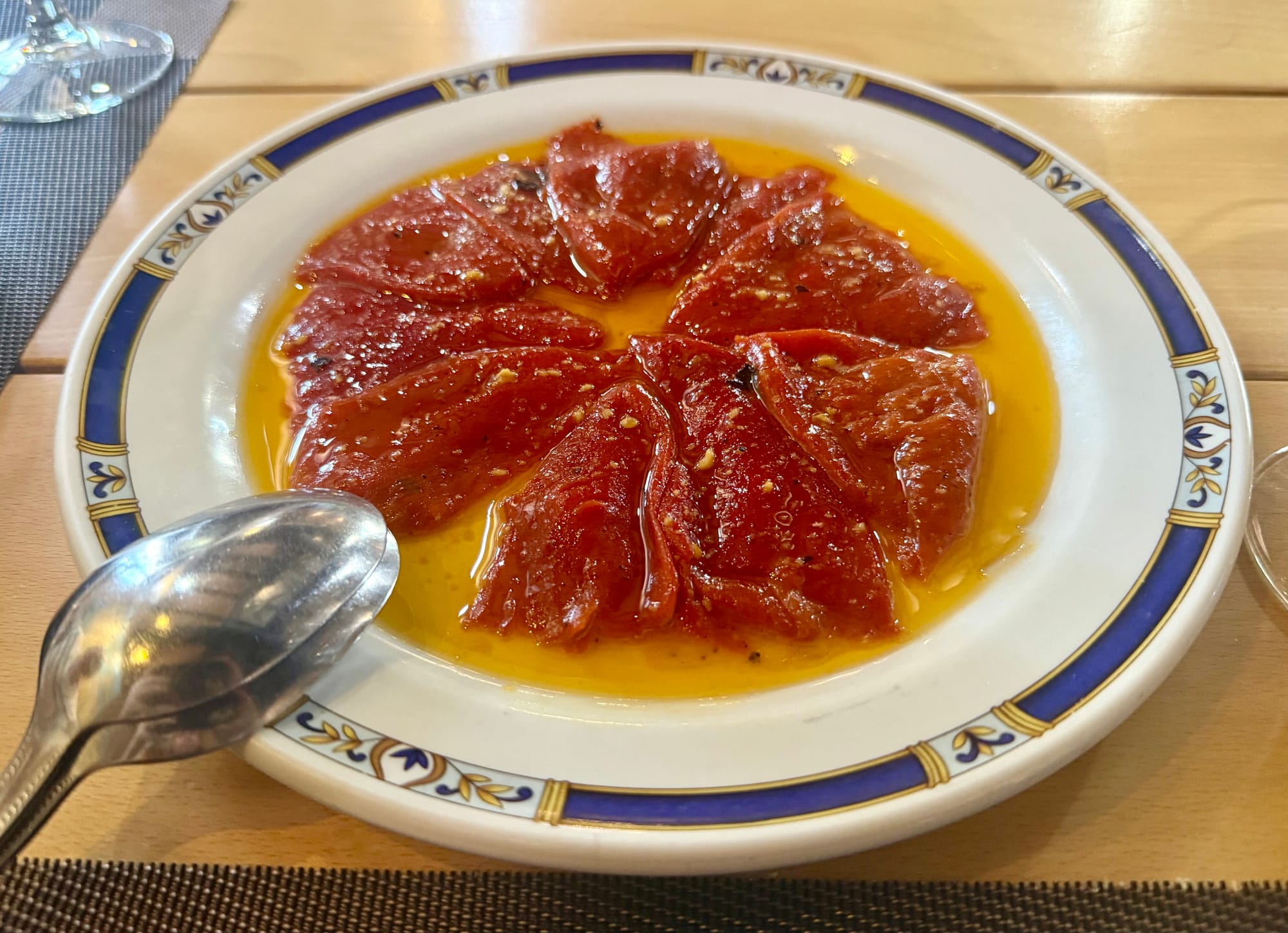
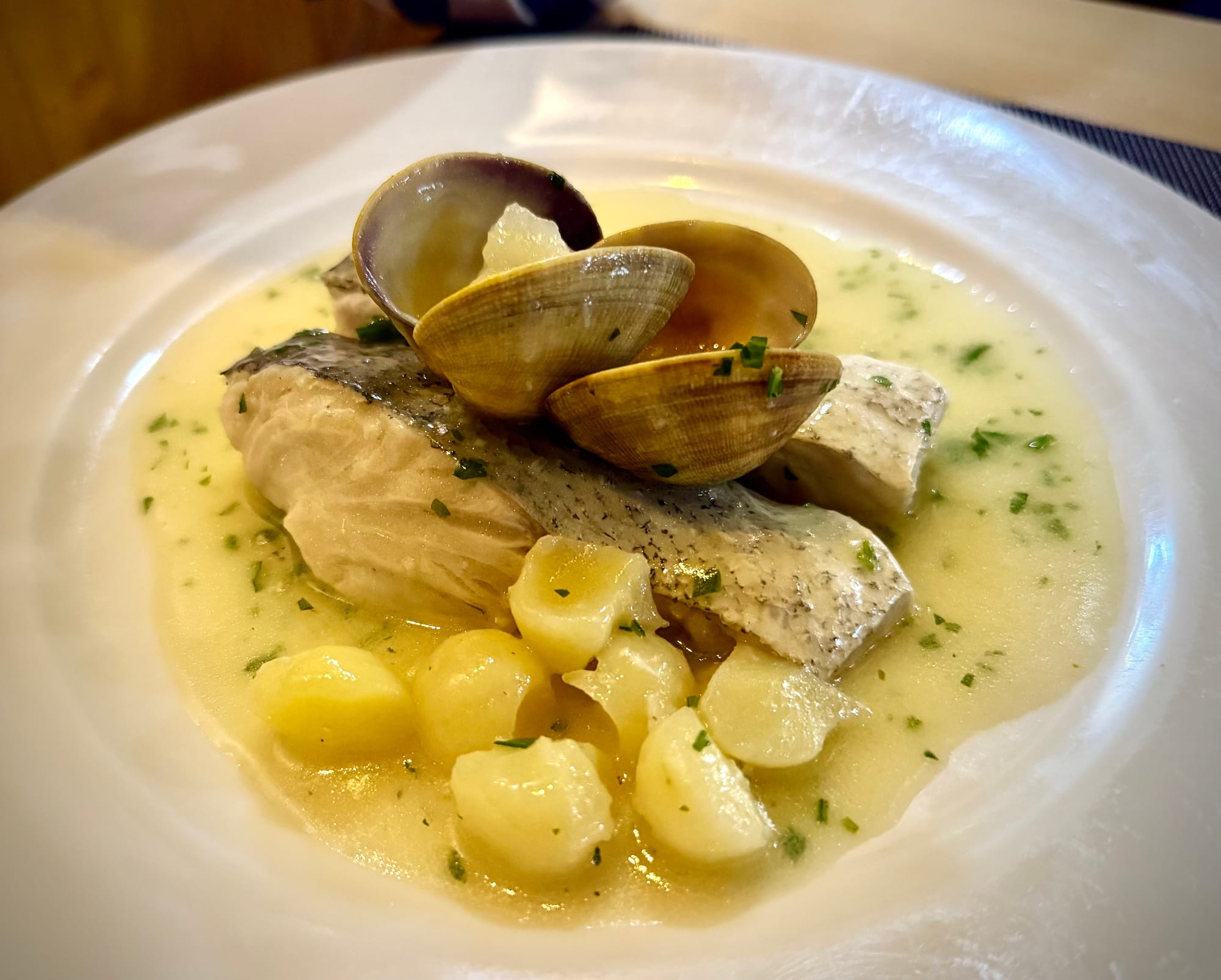
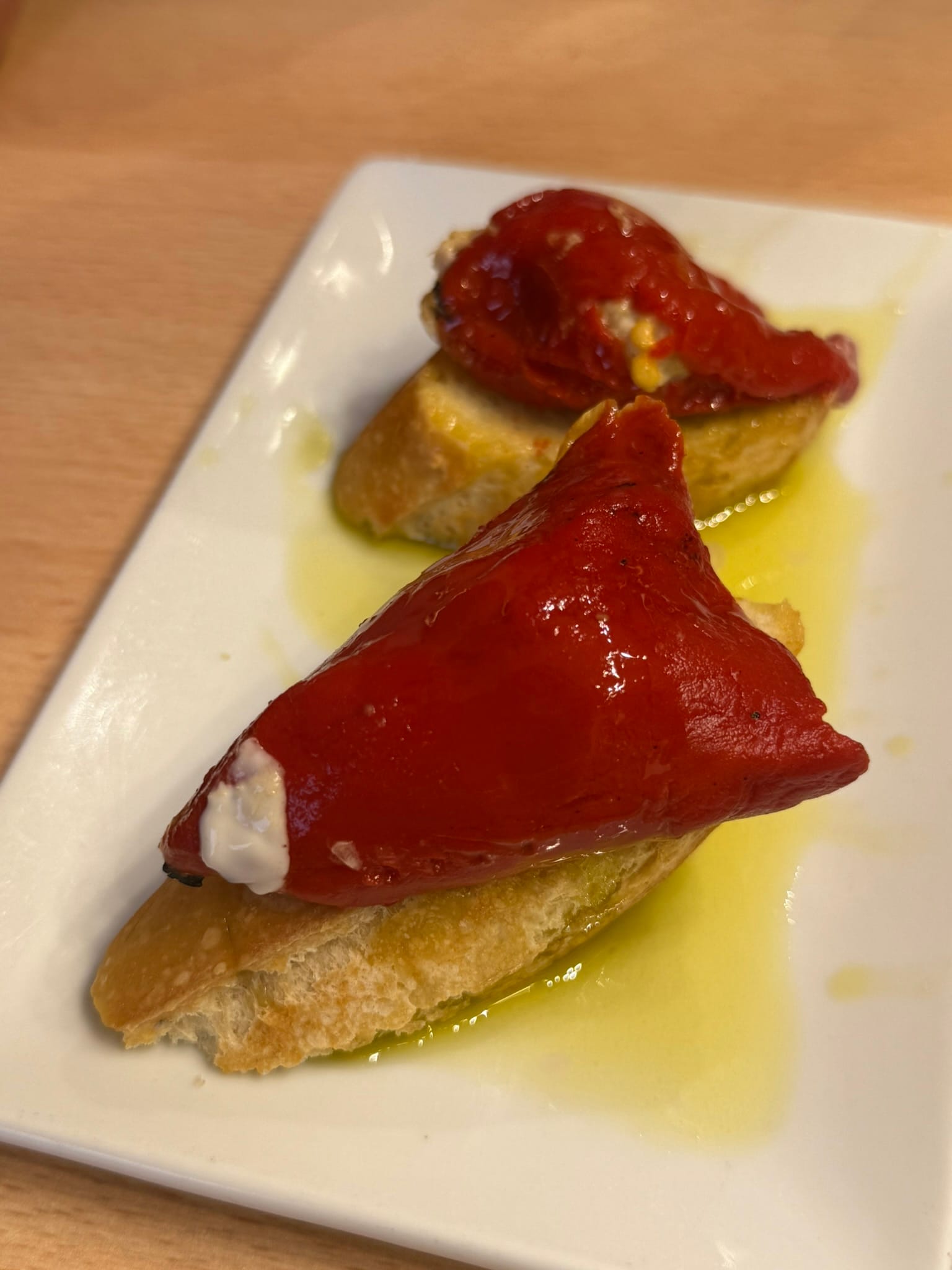
We ordered a lovely serving of Basque red peppers marinated in olive with garlic, as well as hake with clams in a light green parsley sauce (salsa verde, but not the Mexican one with tomatillos and chiles).
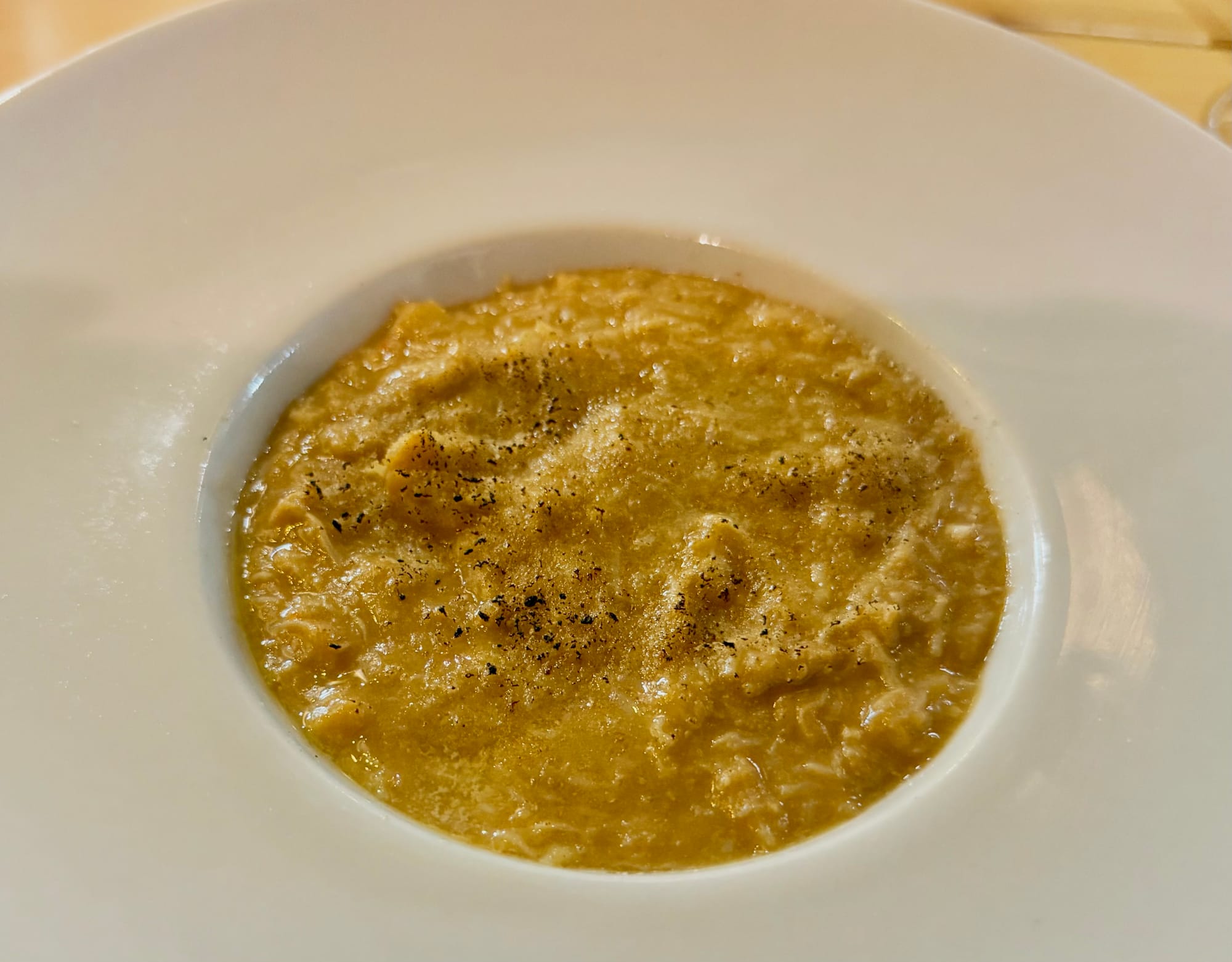
We also sampled Txangurro de "buey de mar" which loosely translates into “spider crab served like the ox of the sea,” as I assumed you'd like to know. In the Basque country, these leggy and aggressive-looking crabs are traditionally picked over and then cooked into a sort of savory gratin or pudding containing white wine, tomatoes, parsley, and butter. It’s not exactly aesthetically pleasing, but it tastes great.
After lunch, we wandered around the Old Quarter of Hondarribia for a while, pausing to look at the town's historic church, its relatively well preserved medieval walls, and the gate of San Nicolás.
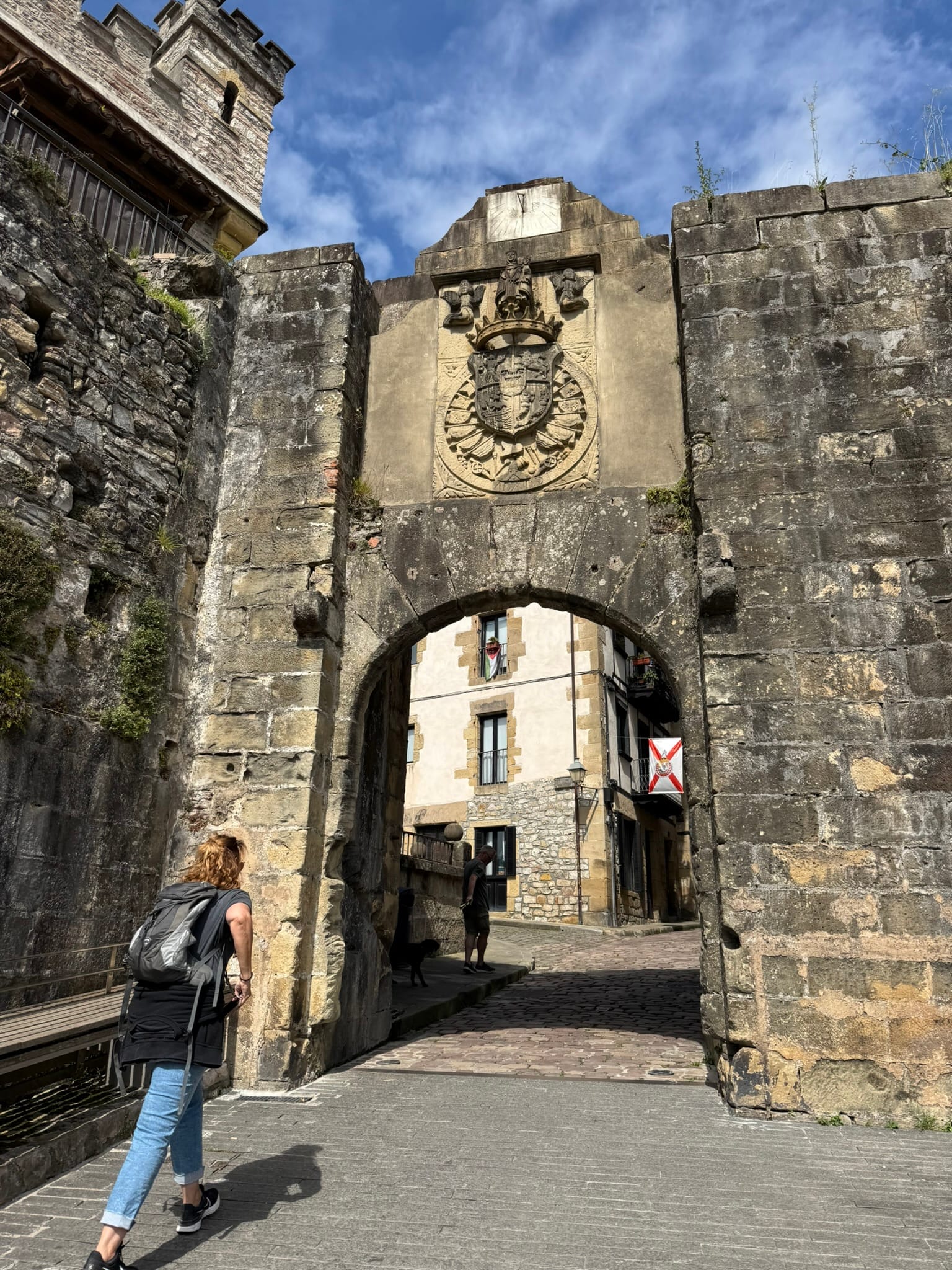
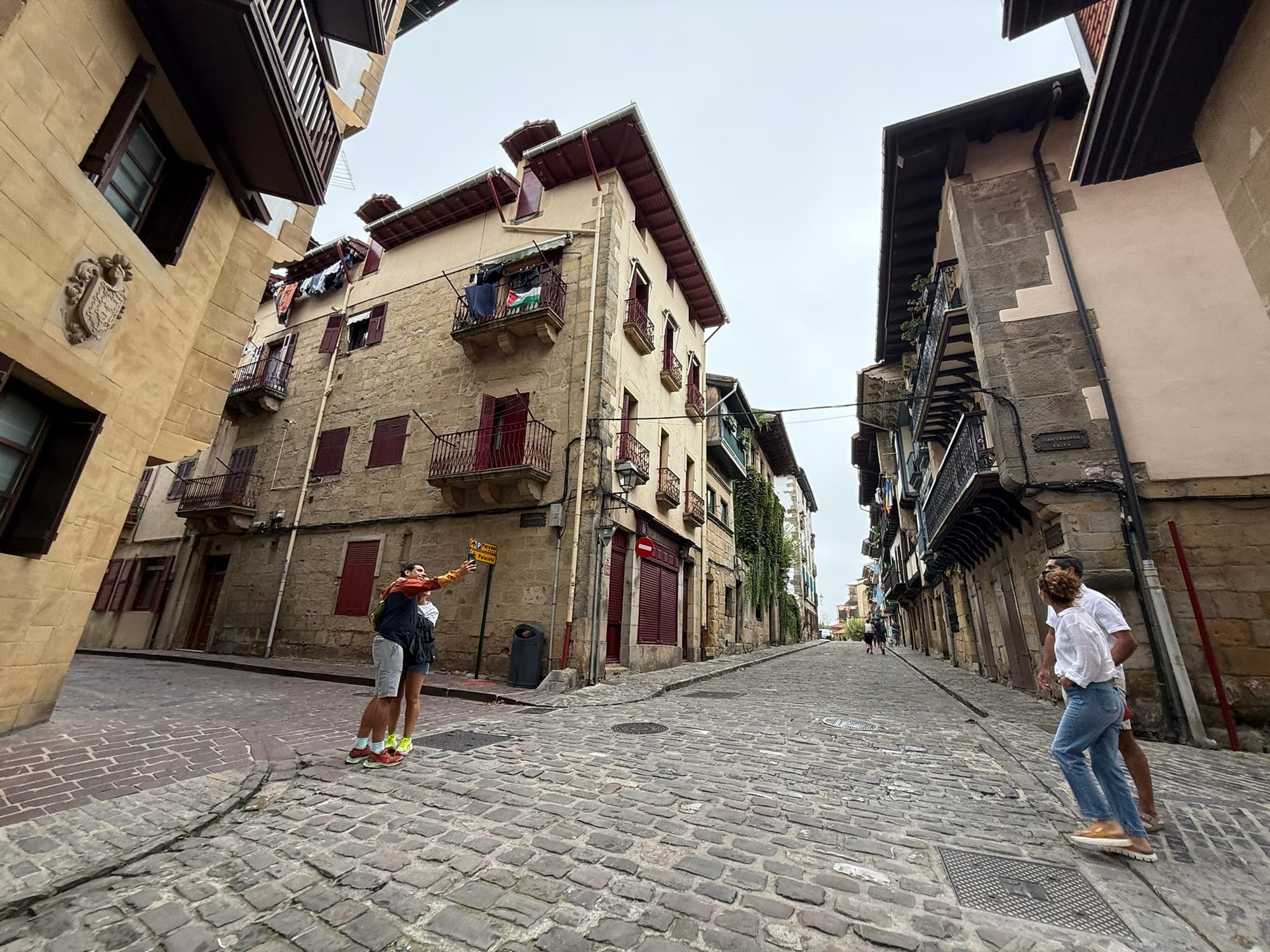
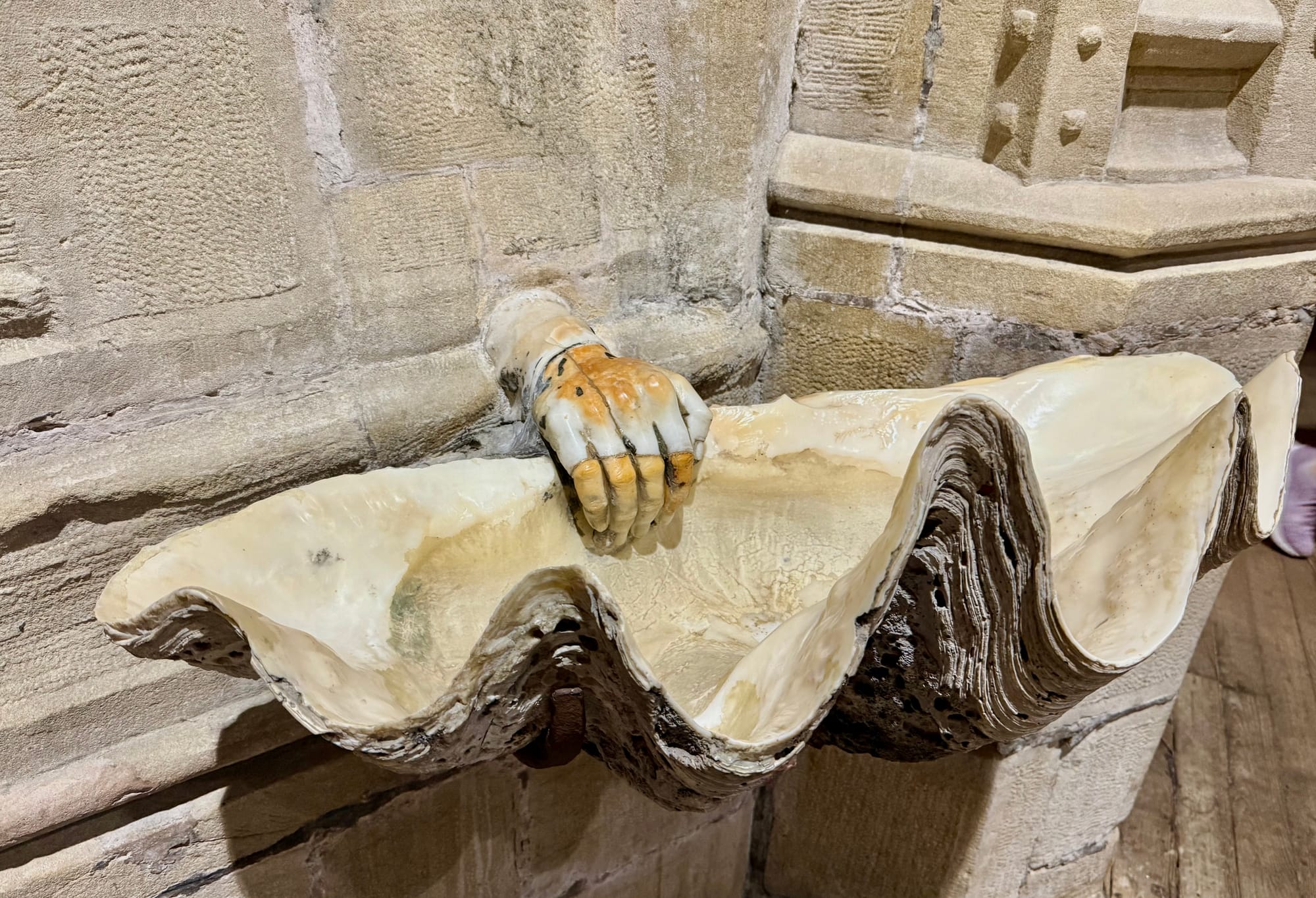
After that, we made our way back to Orio, where I'd booked us a table at one of the town's renowned sea-bream specialist restaurants - a sea bream being a big-eyed and silvery creature that looks a lot like the picture you'd expect to find on the Wikipedia entry for the generic term "fish."
There are a number of restaurants in town that serve approximately identical fish-oriented menus. I chose Bodegon Sarasua, which had excellent reviews and which I actually could reserve at short notice. Unlike another place in town that had recently been glorified by an appearance on "Somebody Feed Phil," and was thus booked out until, I dunno, 2035.
In Orio, the fish are butterflied, beheaded, then placed in a metal clamp and briefly grilled over charcoal.
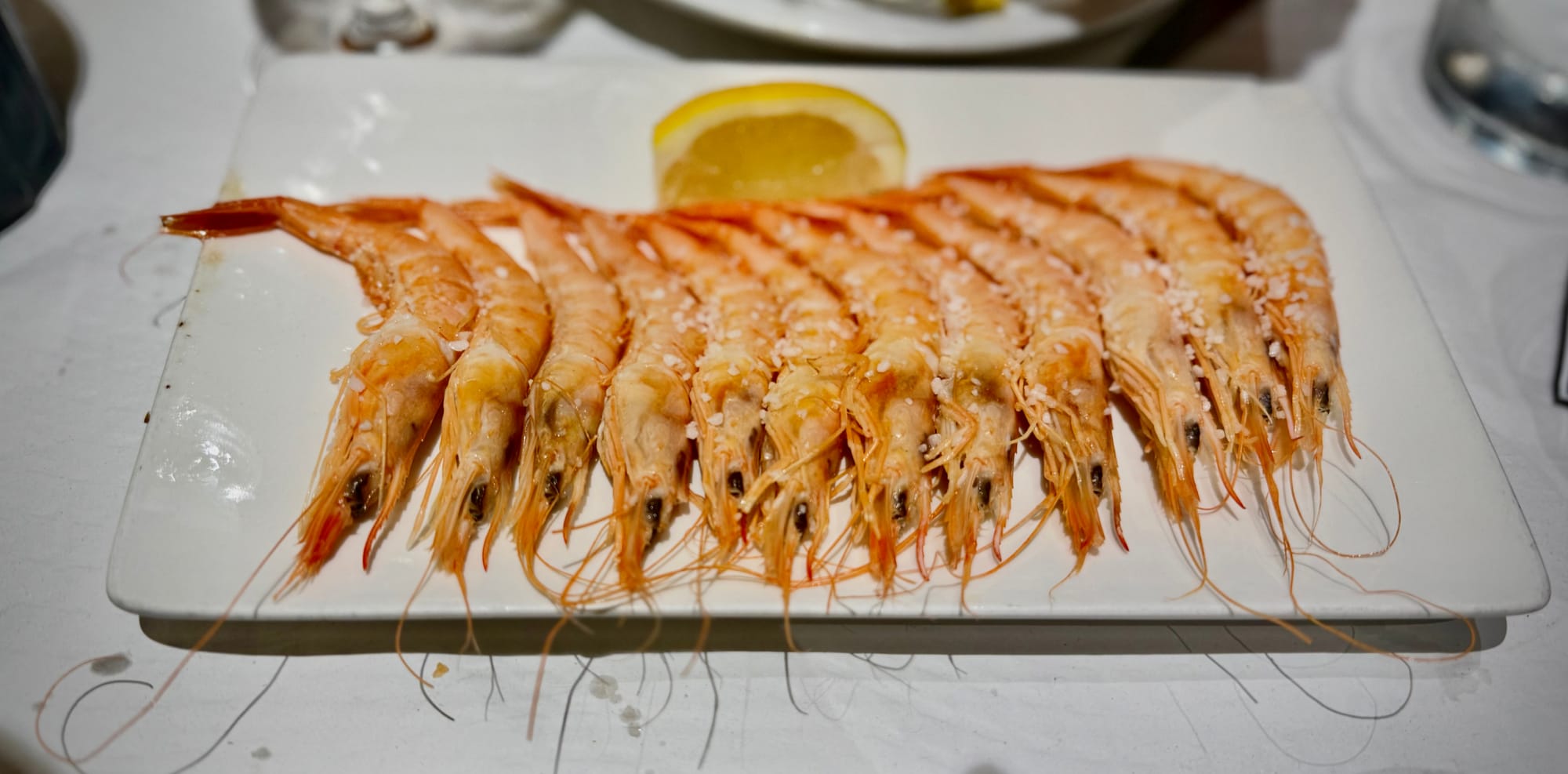
For a starter, we ordered a plate of swiftly-cooked local prawns, shells and heads still on and flavored with nothing other than lemon and some sea salt. The Basque Country is neck-and-neck with Japan for "tastiest prawns I've ever eaten," and diving face-first into a platter of Iberian sea bugs is one of the happier places that I can go to in this mortal, waking world. You are, to speak plainly, a fool if you don't attempt to extract all the electric-red juices from their spiky little heads.
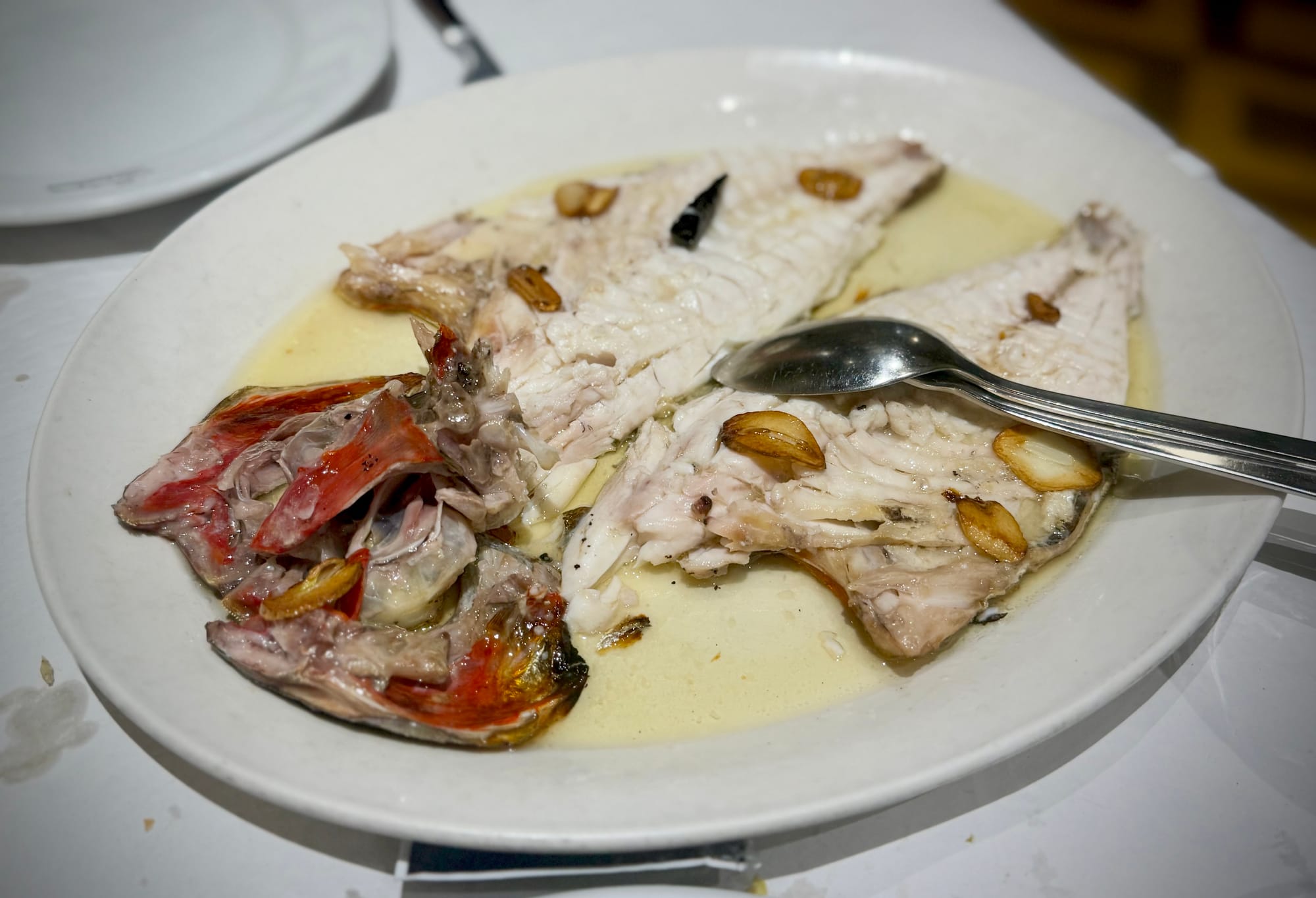
Sea bream is delicate but has a more robust flavor than most other white fish, and this version was perfectly augmented by the vinegar-olive oil-garlic sauce poured over it right before serving. We soaked up the juices with bread. For dessert, we ordered creme catalan, which is basically creme brulee with more flavor.
Day Three: Pamplona and Steak
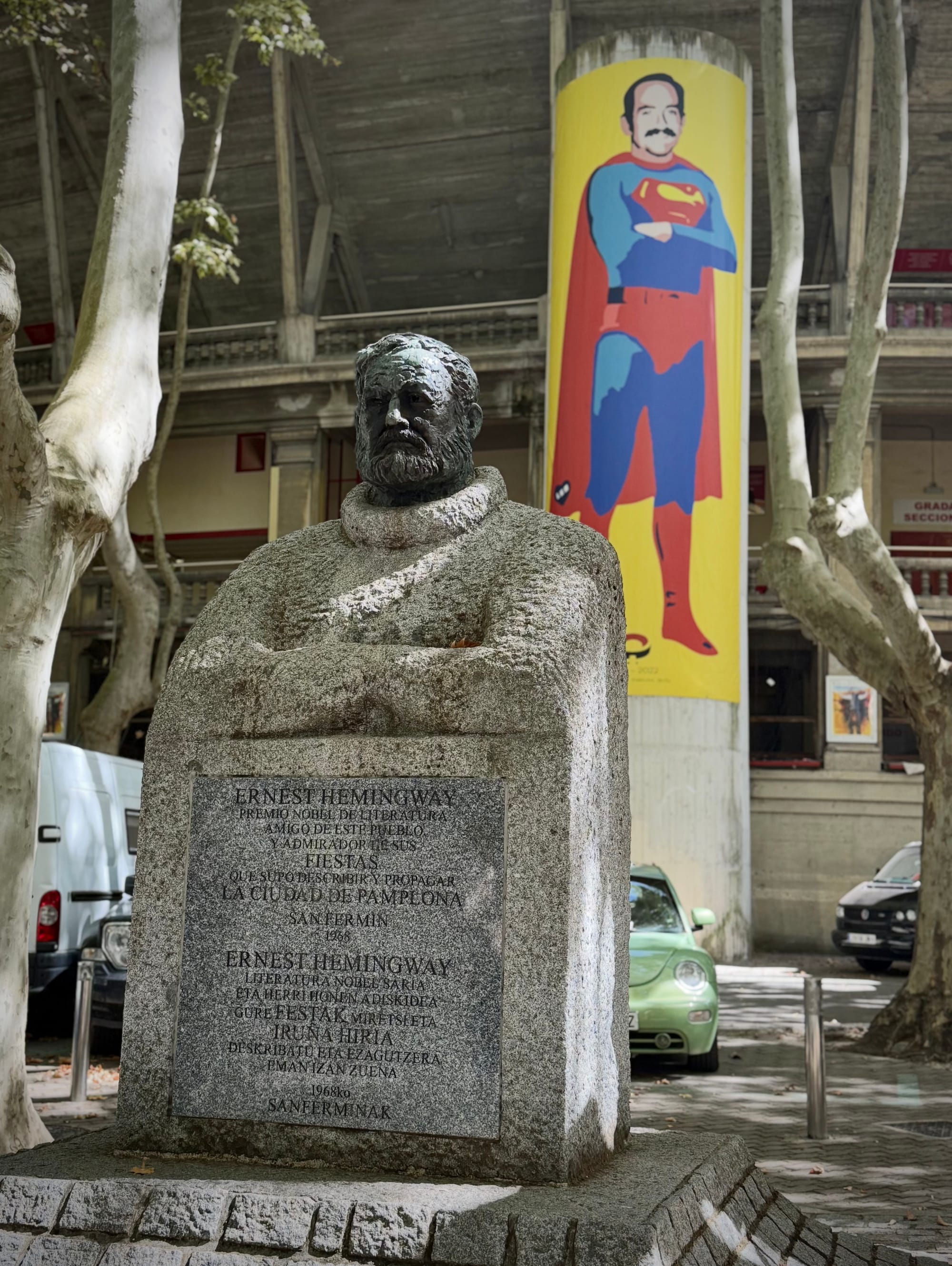
Pamplona is globally known as "that place where a contingent of drunken idiots willingly agree to being chased by a bunch of angry, doomed bulls down slippery medieval-era streets." It is also known as "the place Hemingway spent a lot of time going to bull fights and drinking at atmospheric bars." (Some pictures of the Pamplona locations mentioned in his work are here).
What is less well-known is that it's a mostly-Basque city existing in the liminal zone of the Basque Country, and part of what was once the independent Basque kingdom of Navarre. It's also a very old city, so old that the legendary Roman general Pompey rather, well, pompously named the place "Pompaelo" after himself, after his troops used it as a camp while fighting the Roman rebel Quintus Sertorius.
As for the running of the bulls, it's part of the Festival of Saint Fermin, a week-long celebration held in July that has been going on since at least 1591, but probably more broadly dates back to the 14th century. We visited in mid-September, long after the festival crowds had subsided and the summer package tours had died down, and Pamplona was refreshingly quiet.
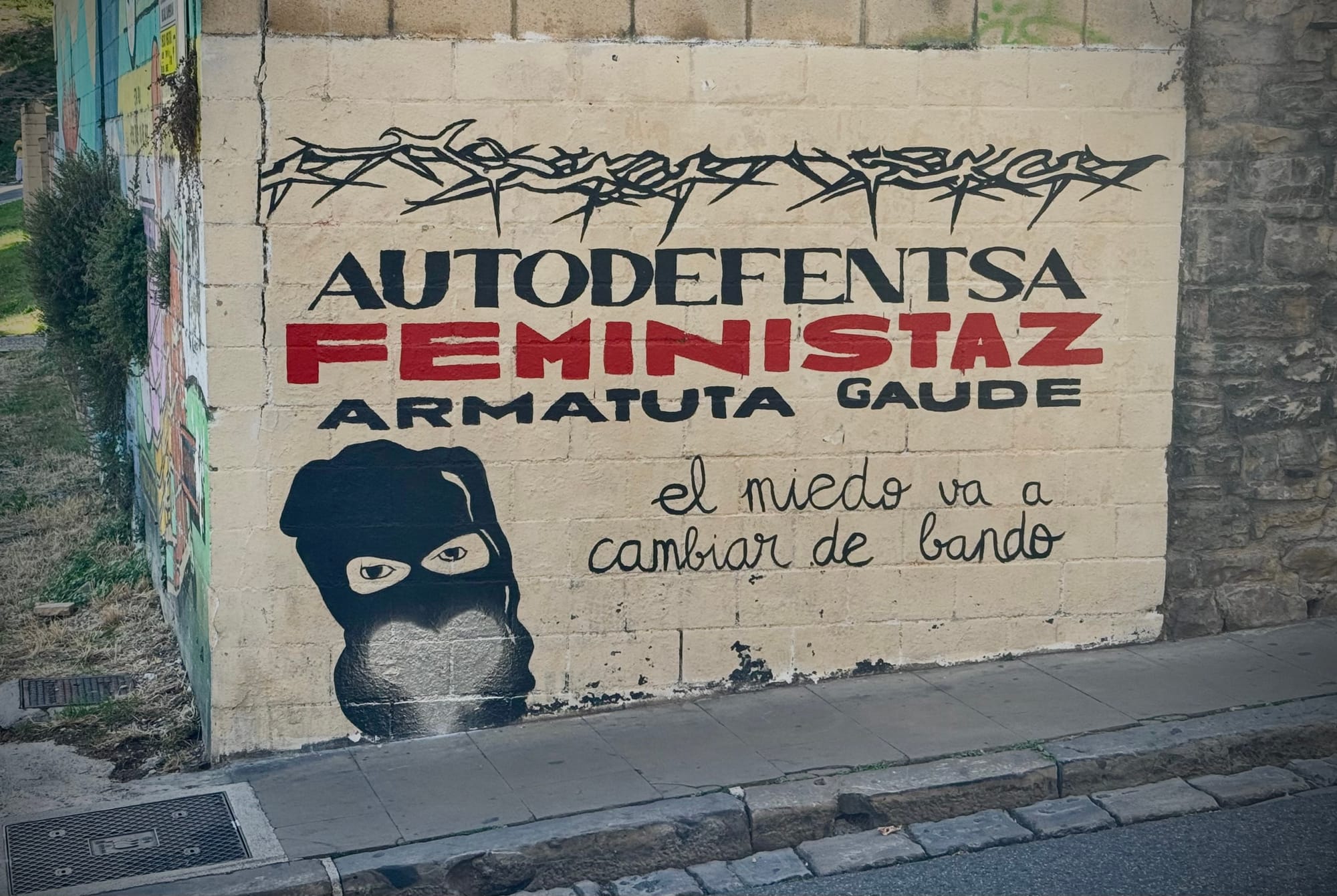
Pamplona still retains most of the city walls erected to protect the seat of the Kingdom of Navarre in the early 1400s, and you can happily wander around them at your leisure, taking in the views of the more-recent, modern city sprawling out below and the dry plains and mountains that surround them.
We first stopped in at the Museum of Navarre, which is housed in a former historical hospital and has a nice, compact selection of ancient and medieval art from the area, including an assortment of lovely ancient Roman mosaics.
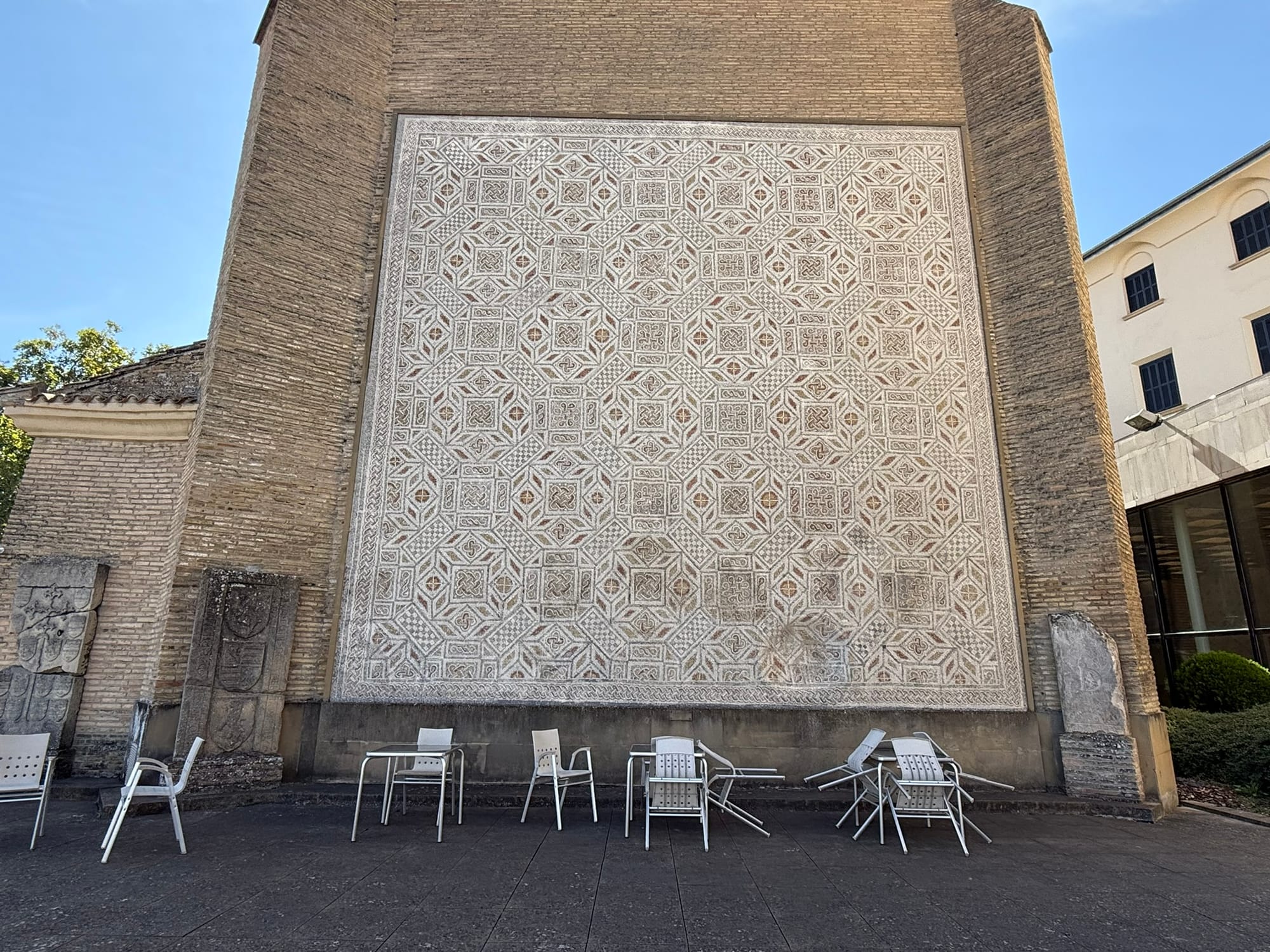
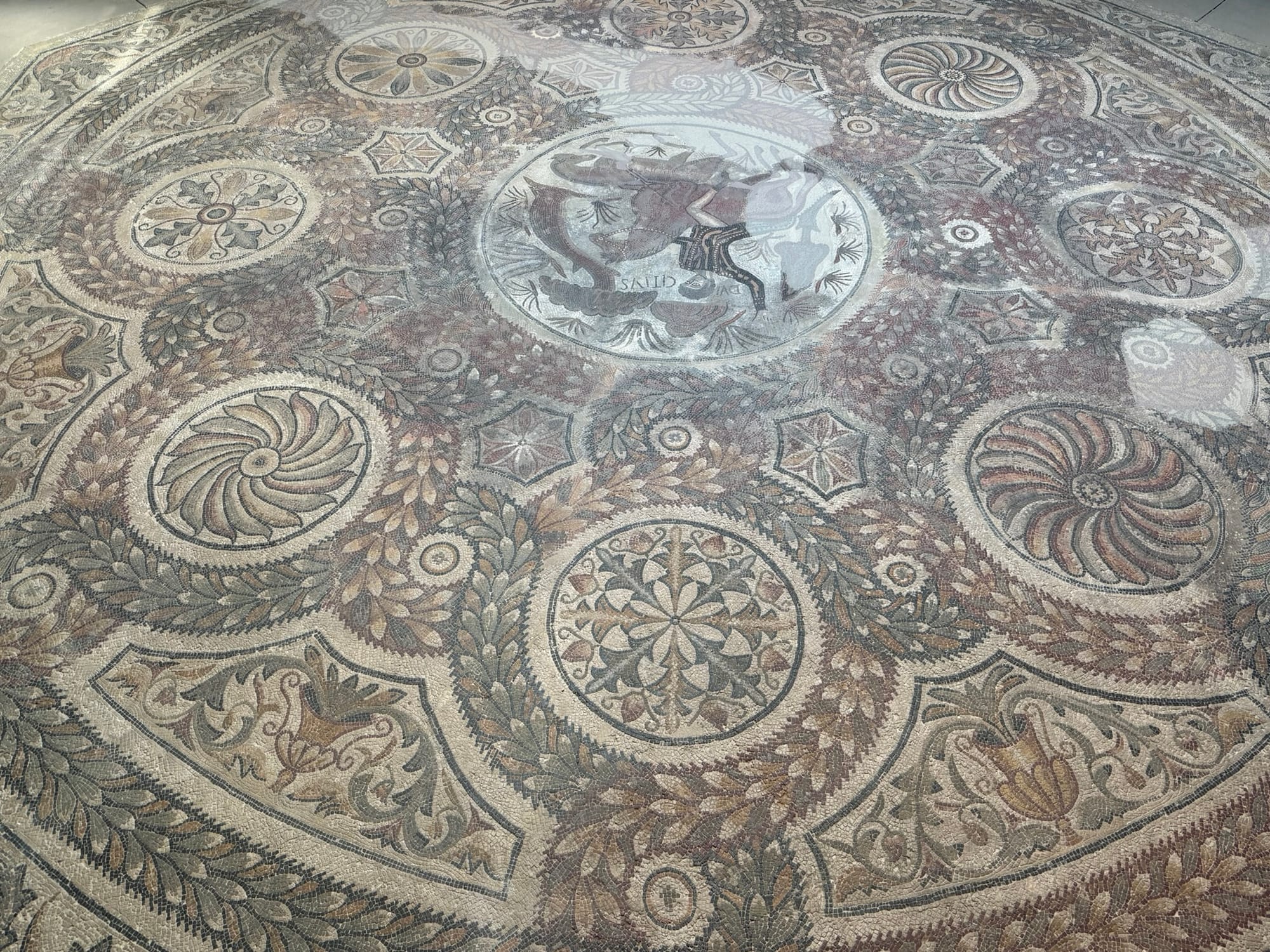
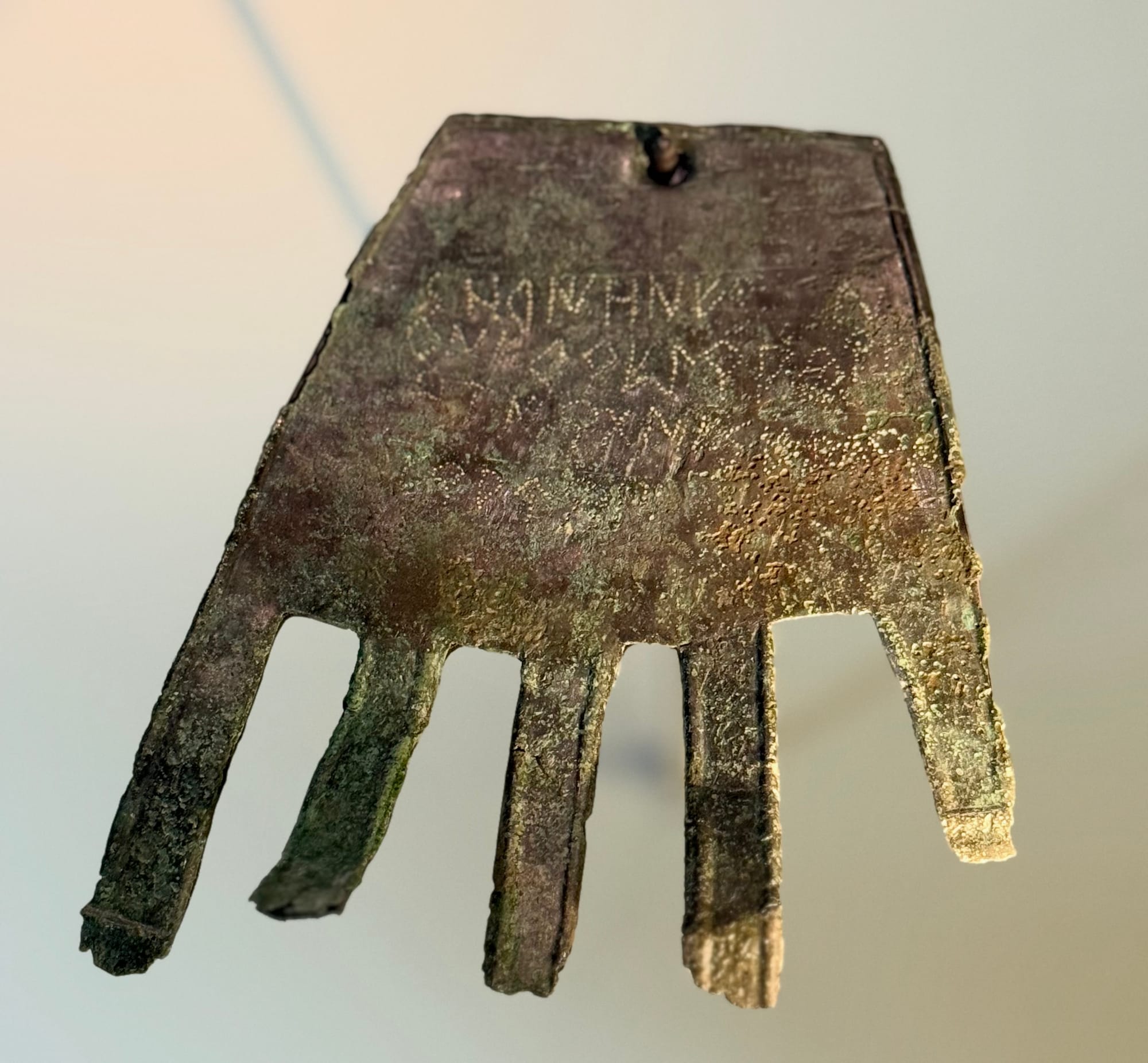
Of particular interest was the Hand of Irulegi, a metal sorta-hand-shaped artifact that archeologists uncovered in the summer of 2021. Upon further study, they realized that the writing on the 2,10o-old object may represent the oldest origins of Euskara, which is what the modern Basque language is called today:
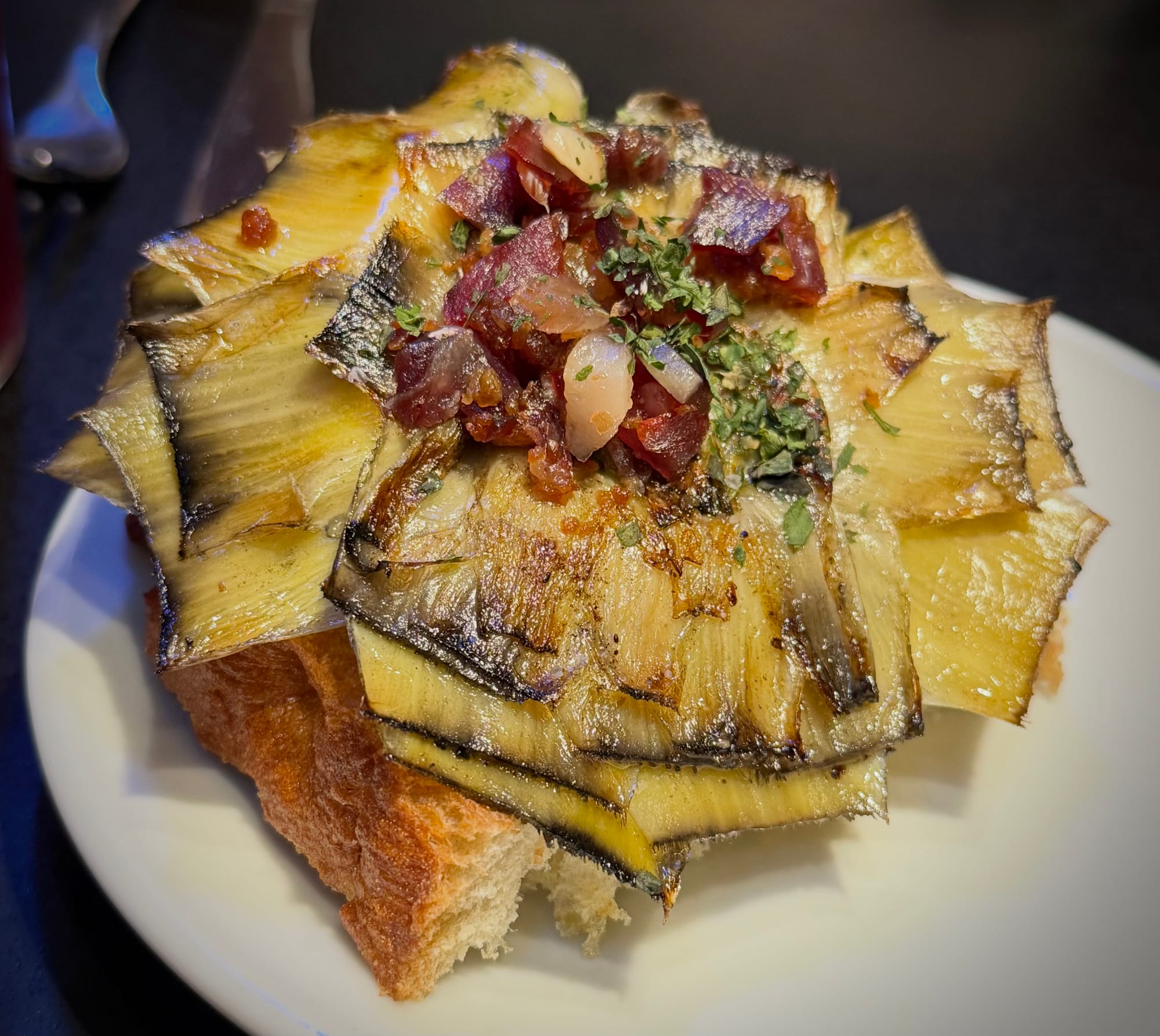
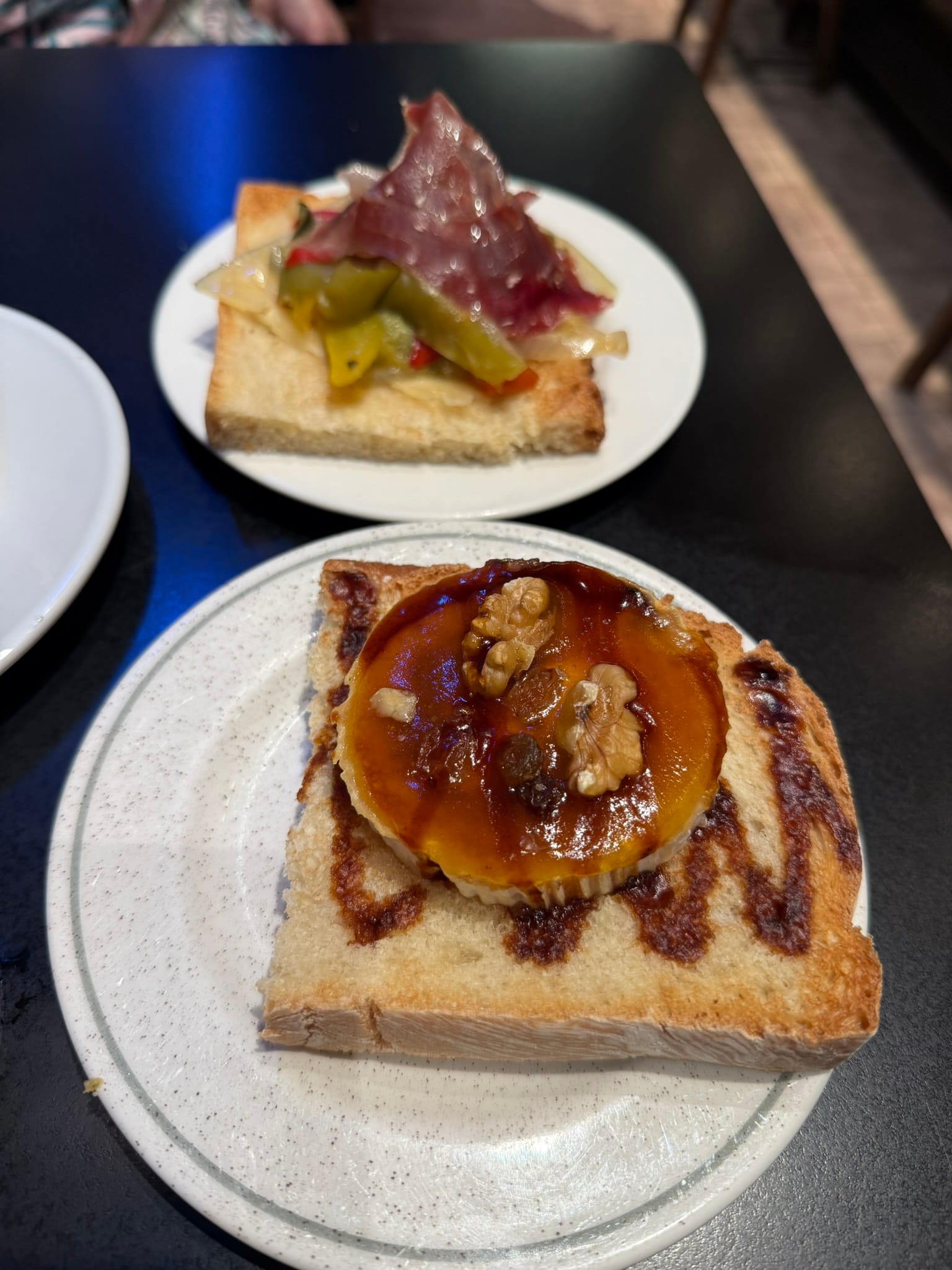
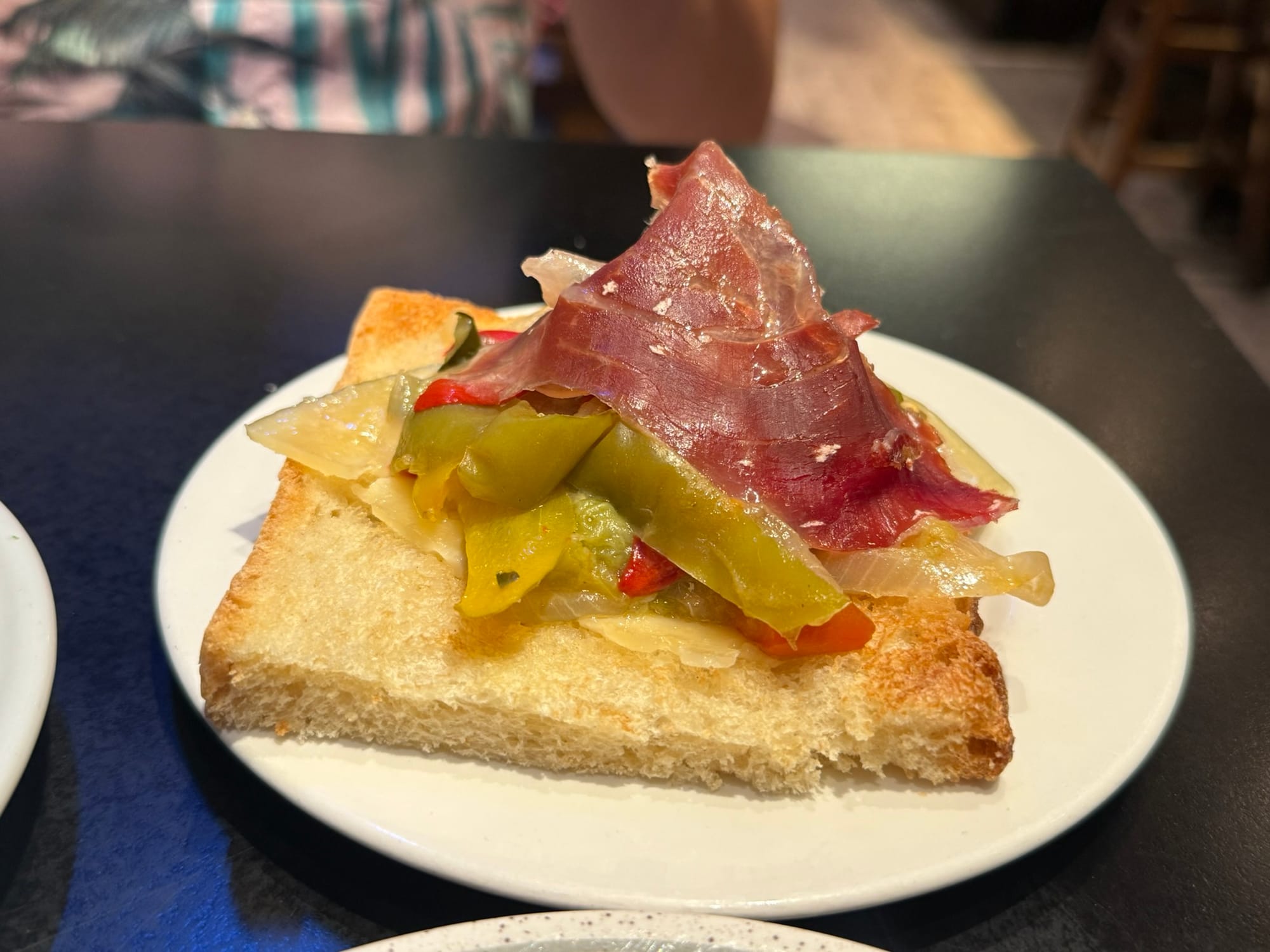
For lunch, we paused for a light pintxos snack at La Mandarra de La Ramos, which had a lovely stone-walled ambience, complete with swinging stalactites of cured Iberico hams. As is typical for pintxos places, most everything is served on a slice of bread: point at what you want, and you'll get handed a plate. We tried baked goat cheese with honey and walnuts, grilled peppers and onions with ham, and grilled artichoke with bacon, all of which were very nice.
We also walked by Pamplona's famous bullfighting arena, immortalized by Hemingway and beloved by package tour groups and people running away from said bulls during the towns July San Fermin Festival. During our trip, in September, the place was completely dead - which suited us fine.
My partner and I have a high tolerance for medieval cathedrals, and Pamplona has a particularly good one. While the current cathedral is 15th century Gothic, this structure was, as is traditional, built on the site of what was once the ancient Roman city, and then two other, older Christian cathedrals beside.
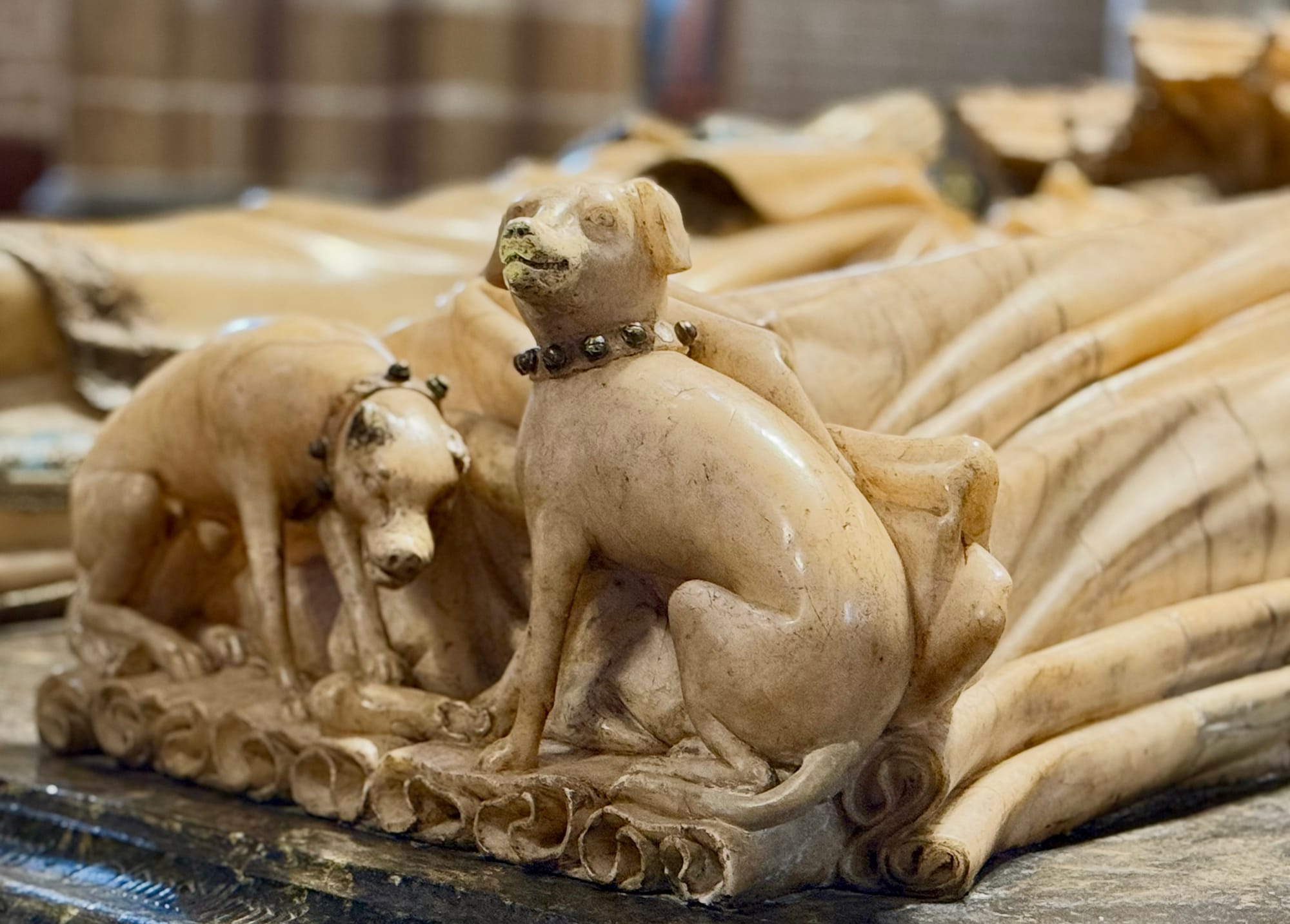
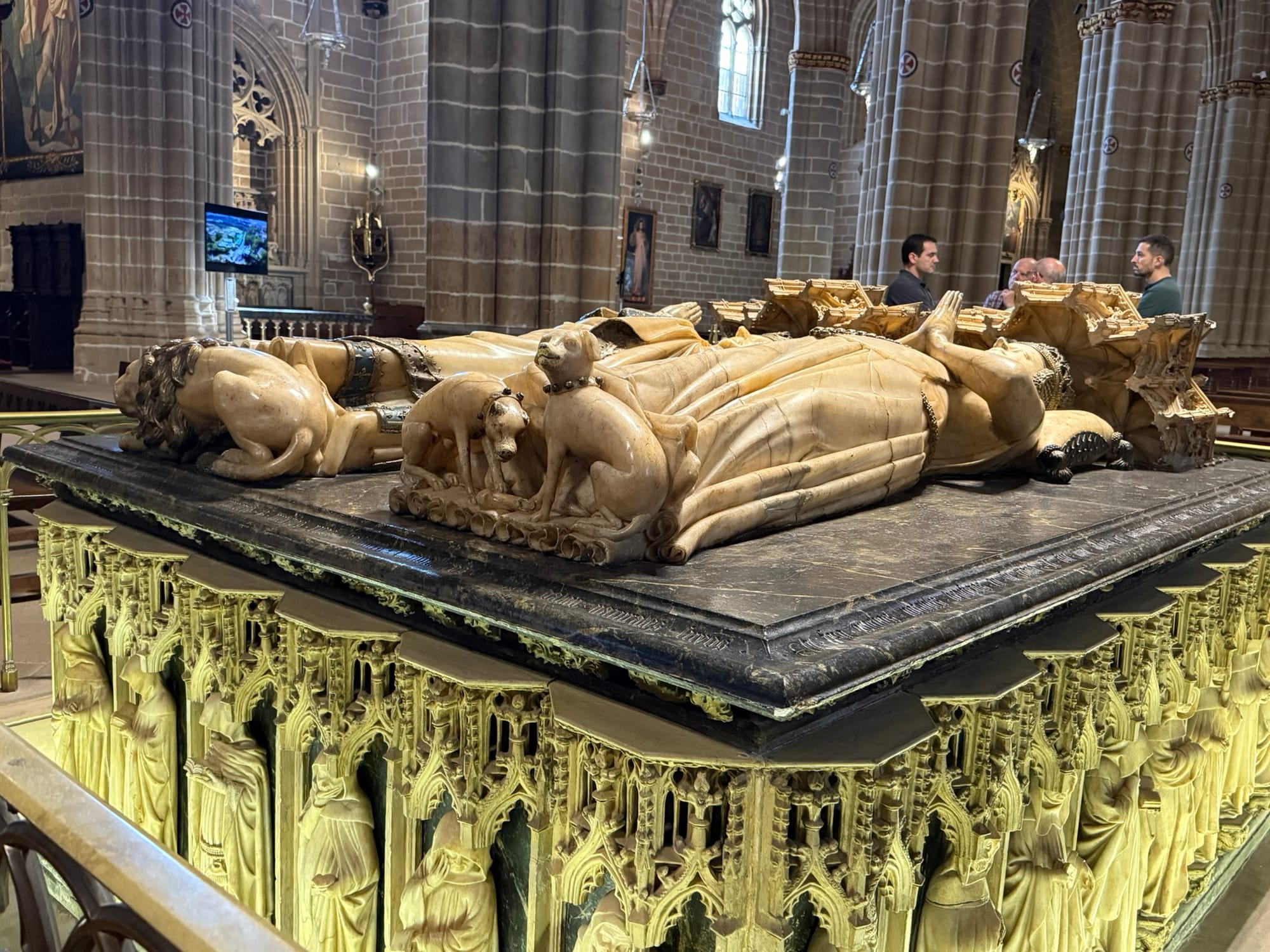
whimsical dogs for eternity
The cathedral is perhaps best known for its impressively well-preserved cloisters, but it's got another neat feature. In 1783, the architect Ventura Rodriguez launched a project that would give the old building a then-trendy Neoclassical facade. Which is relevant because, unlike any other cathedral I've ever been to, visitors are actually allowed to walk around on gangplanks in the eerie gaps between the medieval building and the more recent 1700s addition.
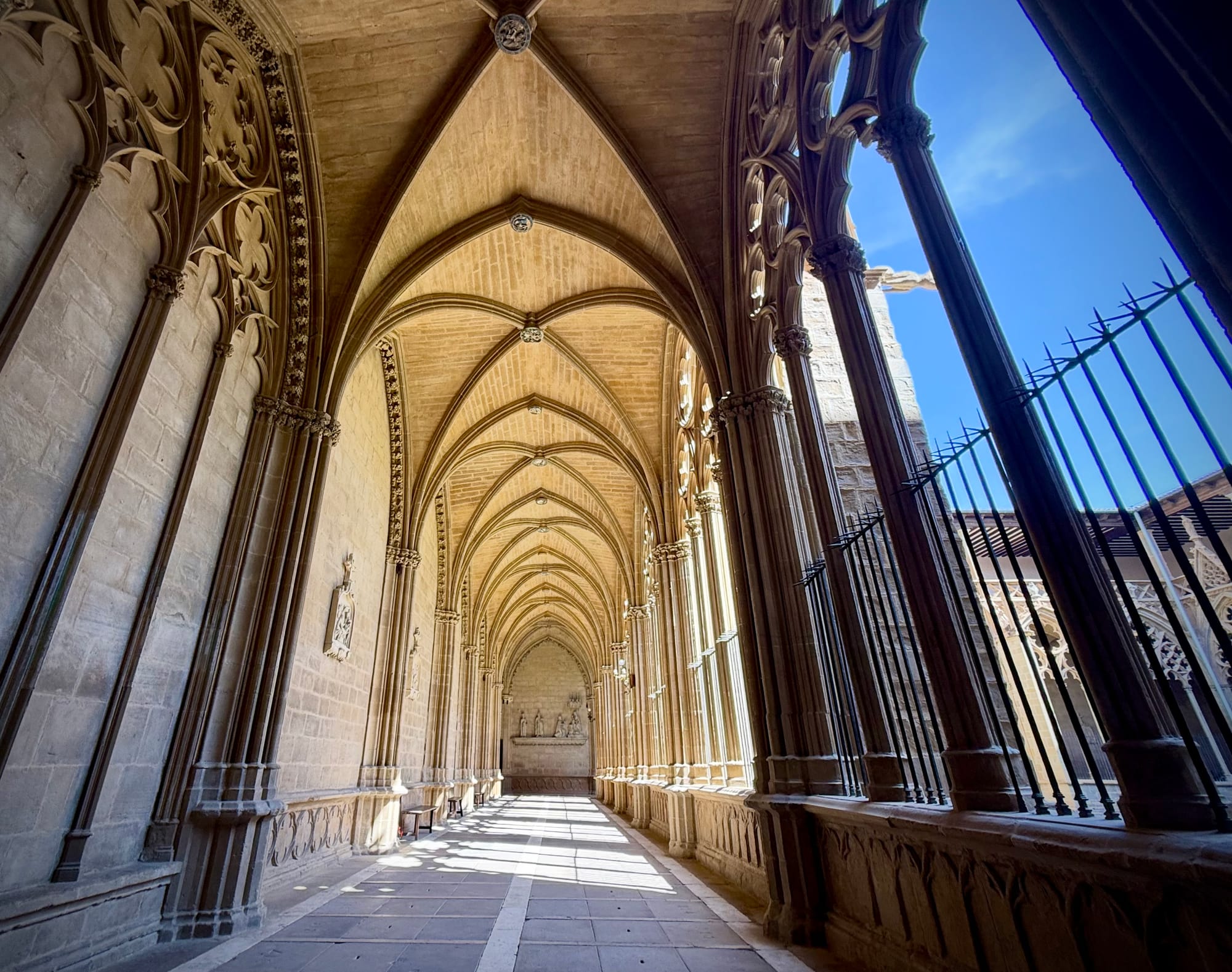
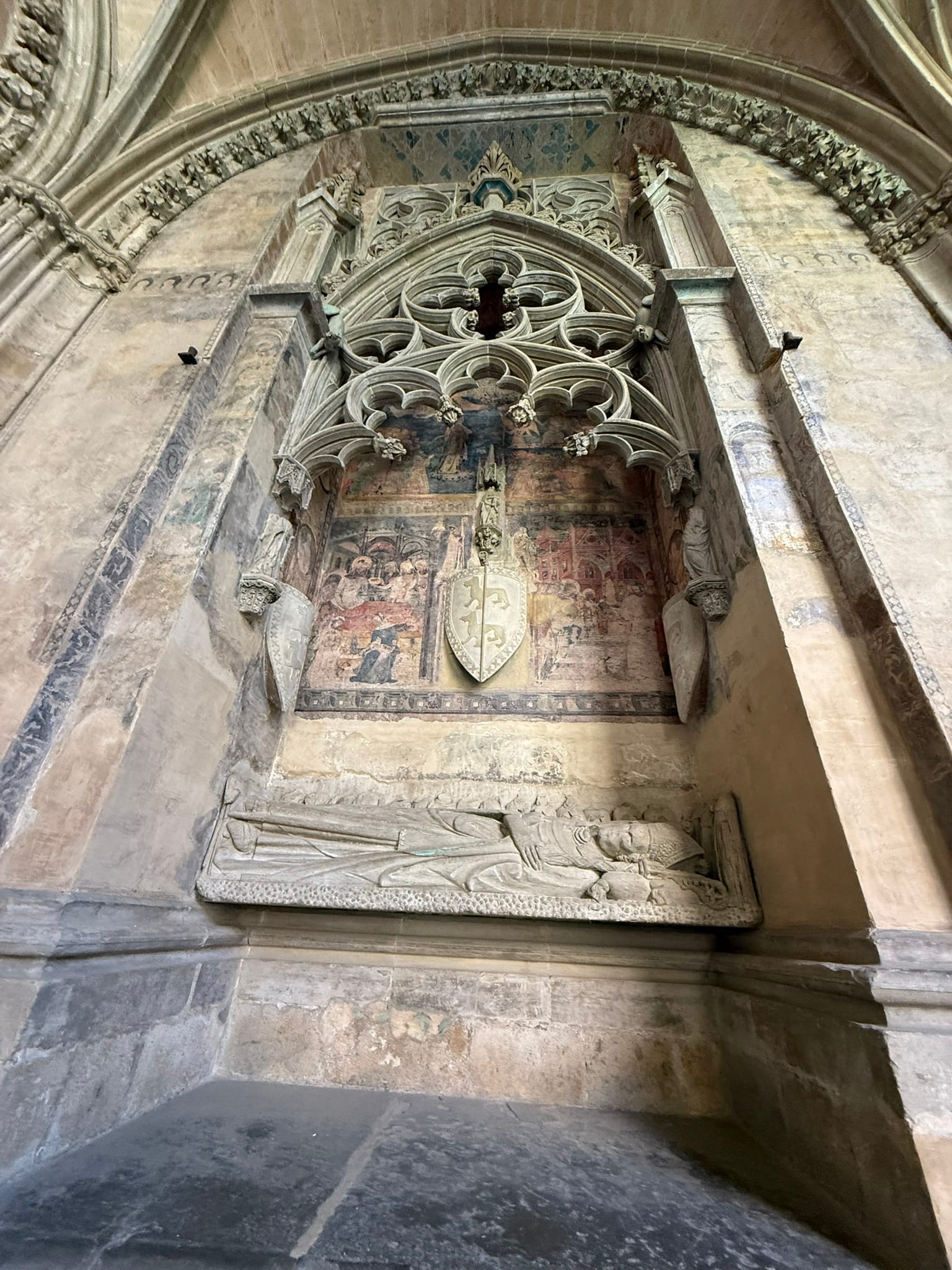
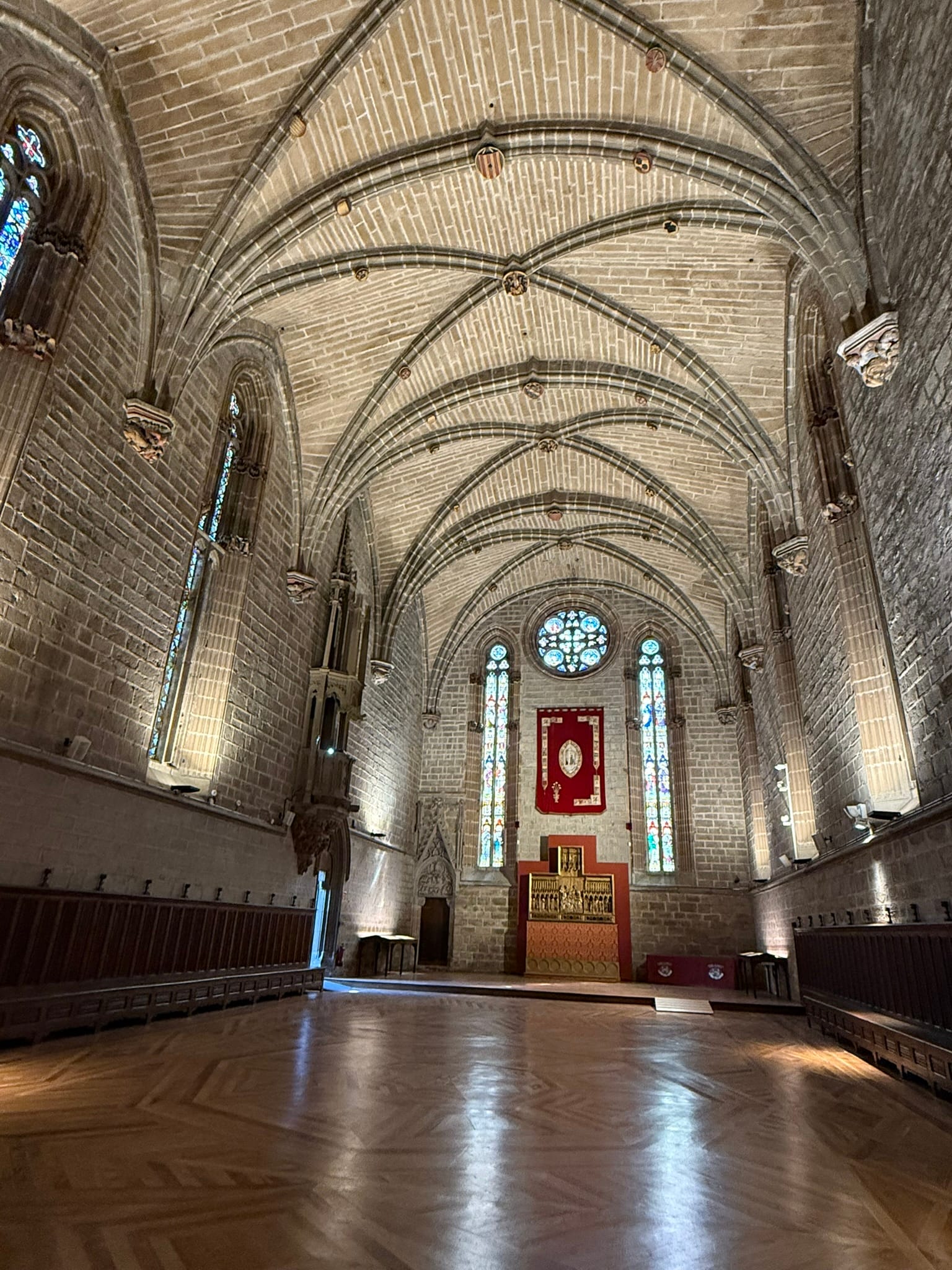
In these spaces, you can see evidence of the various engineering choices that Rodriguez needed to consider to make the whole thing work. Most of the time, you can also climb the stairs up to the bell tower to see a full-scale view of Pamplona, although this was closed during our visit.
In addition to being able to scrabble around in the walls of a cathedral like a sneaky little rat, which is nothing if not novel, you can also look at an excellent 13th century cloister, an ambitiously vented kitchen built in the 1330s, and a refectory and canteen of equal age that was also used as a meeting room for the royal courts of Navarre.
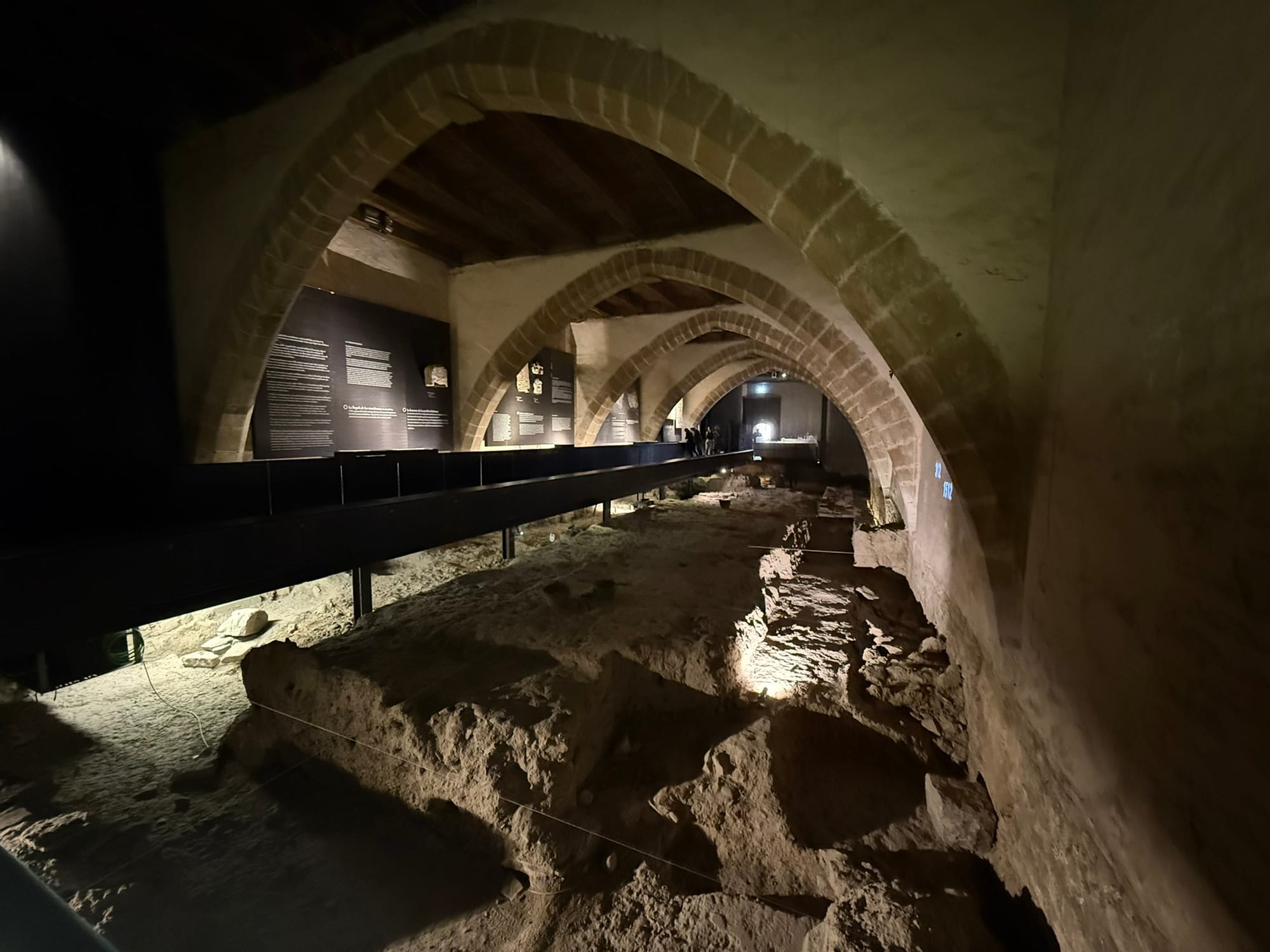
What's more, the cathedral features a very modern archeological exhibit, which starts with an excavated portion of the old Roman settlement of Pompaelo and proceeds from there to a Pamplona-focused exploration of Western Culture, albeit described at times with somewhat uncomfortable language about its supposed artistic superiority to everybody else. I thoroughly enjoyed it anyway: if you're looking for a genuinely fun cathedral, Pamplona is about as close as you're going to get.
For dinner that evening, I'd booked us a table at Portuetxe Erretegia, a long-standing specialist in chuleton, the Basque country's beloved flame-grilled rib-eye steak, traditionally made from older, stronger-tasting cattle.
Located in the green hills outside of San Sebastian, Erretegia has a few guys manning a huge grill out front. Within the restaurant, there's one room that resembles a stone-walled cider emporium, as well as another more bland, white-tablecloth dining room - where we were seated, and which had slightly stronger lighting than I'd have preferred, which is something I've noticed at many restaurants in Spain. Request the stone-walled room if you come here and are a big sensitive wiener about The Big Light, like me.
Needless to say, we ordered the chuleton, which comes priced by the kilogram (pricy, but well within the bounds of sanity for this kind of meal, at least from my perspective). As we are not enormous eaters, we requested a cut weighing a little under a kilo, which ended up being a good size for us with leftovers for the next morning.
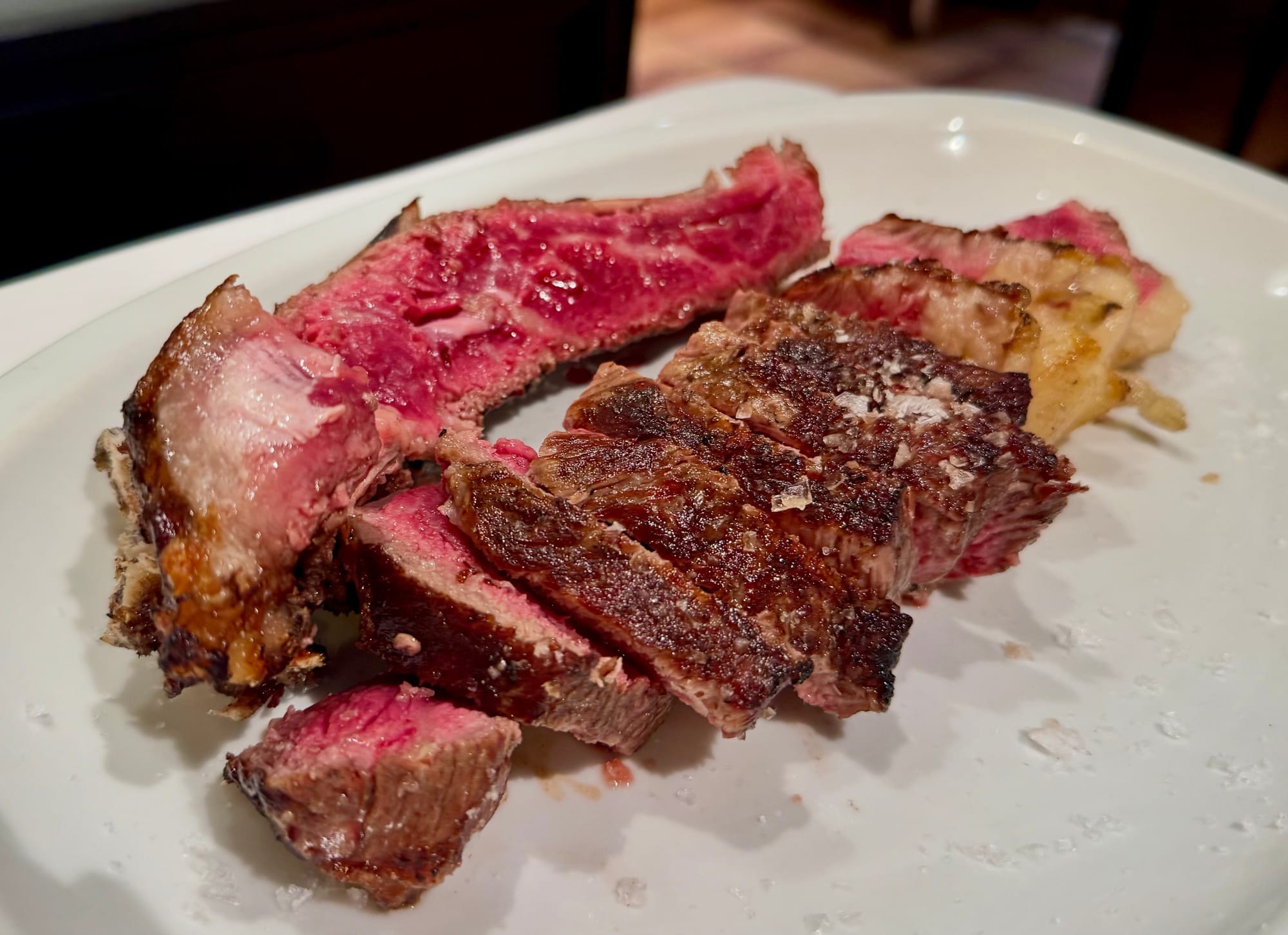
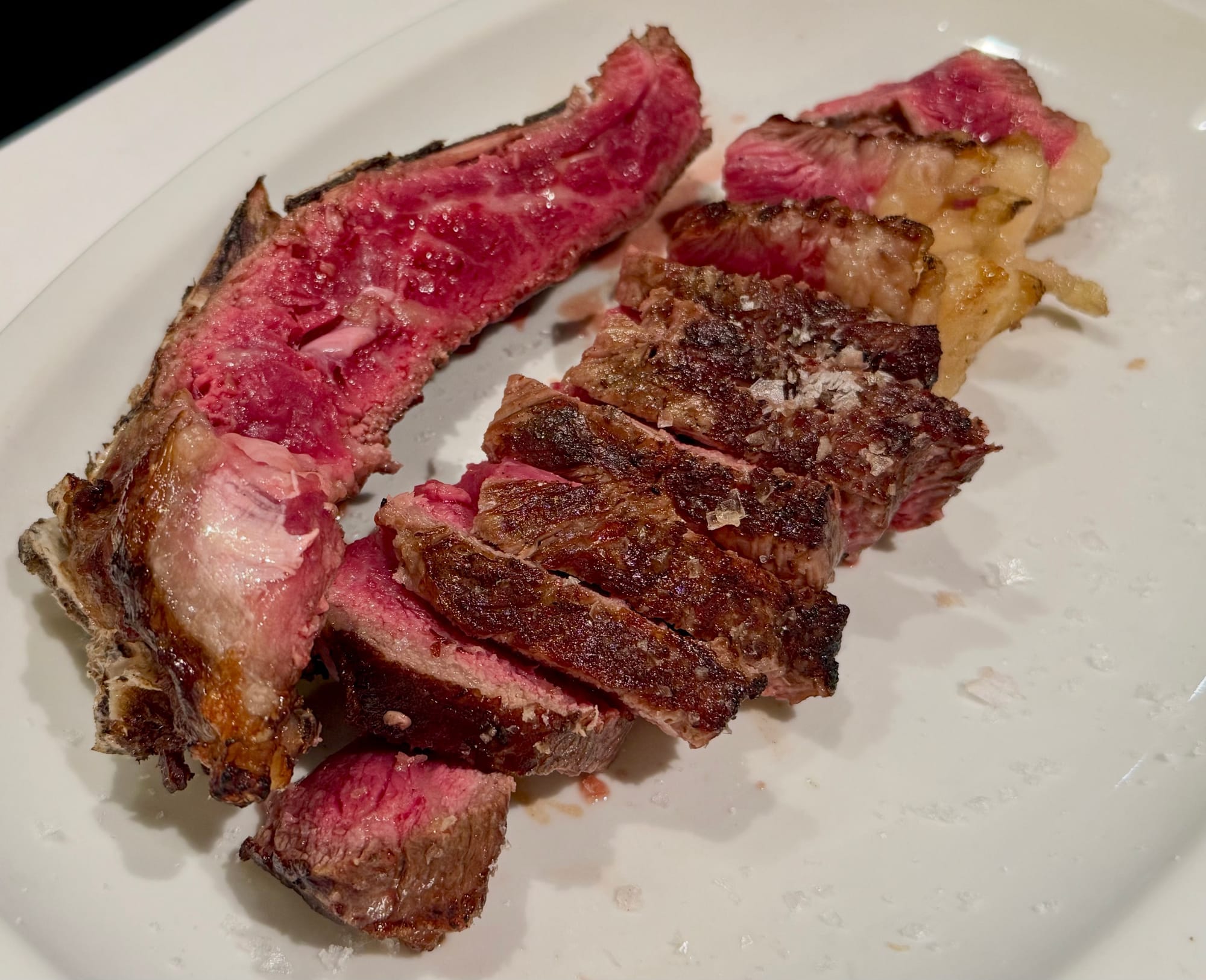
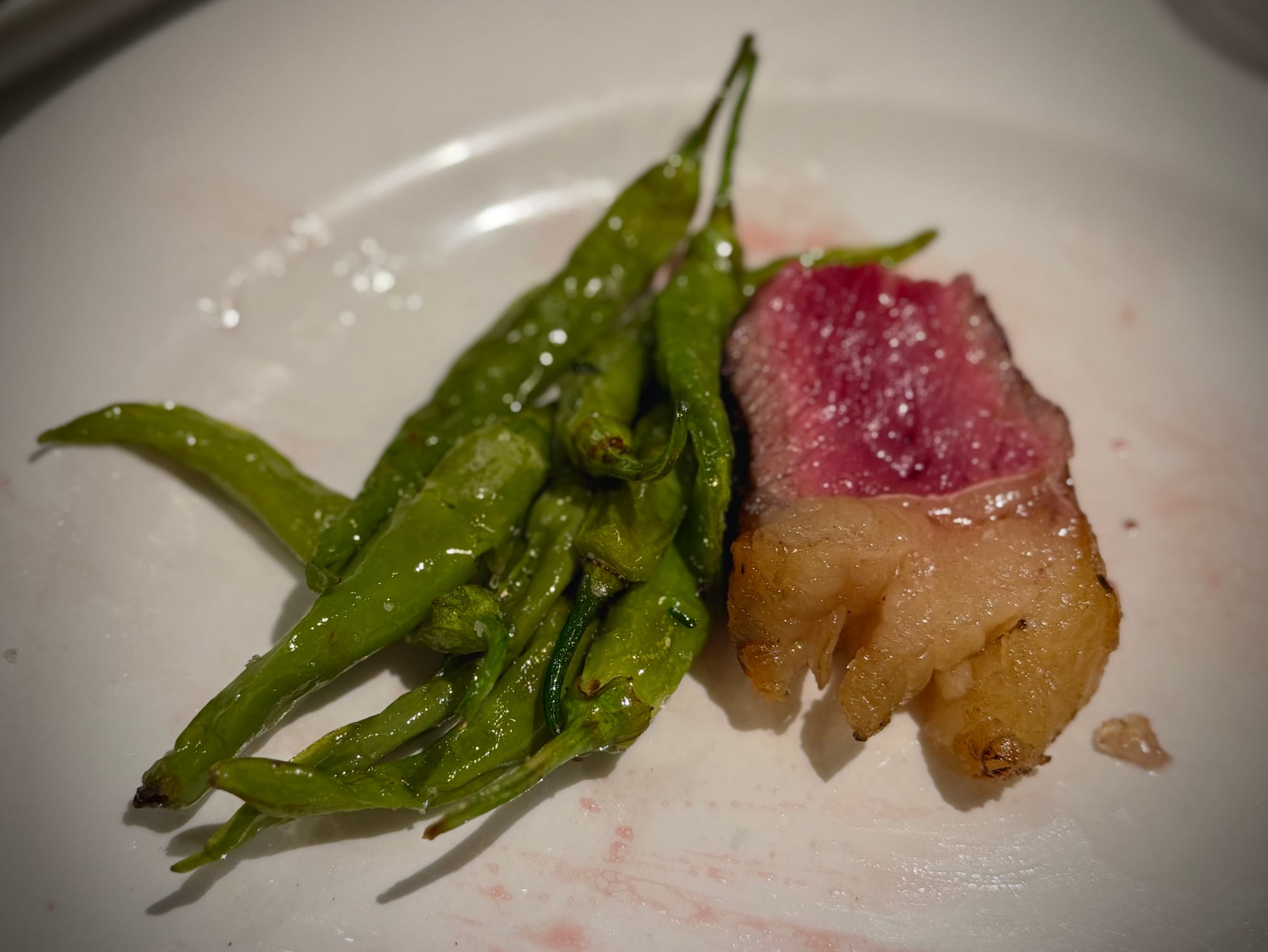
As expected, the steak was incredible, cooked to a perfect medium rare. Indeed, this is the only doneness at which I’ve ever seen a Basque restaurant serve a steak, and I imagine you'd get withering push-back if you, shamefully, asked for anything more incinerated. TBH they might just kick you out. I wouldn’t risk it.
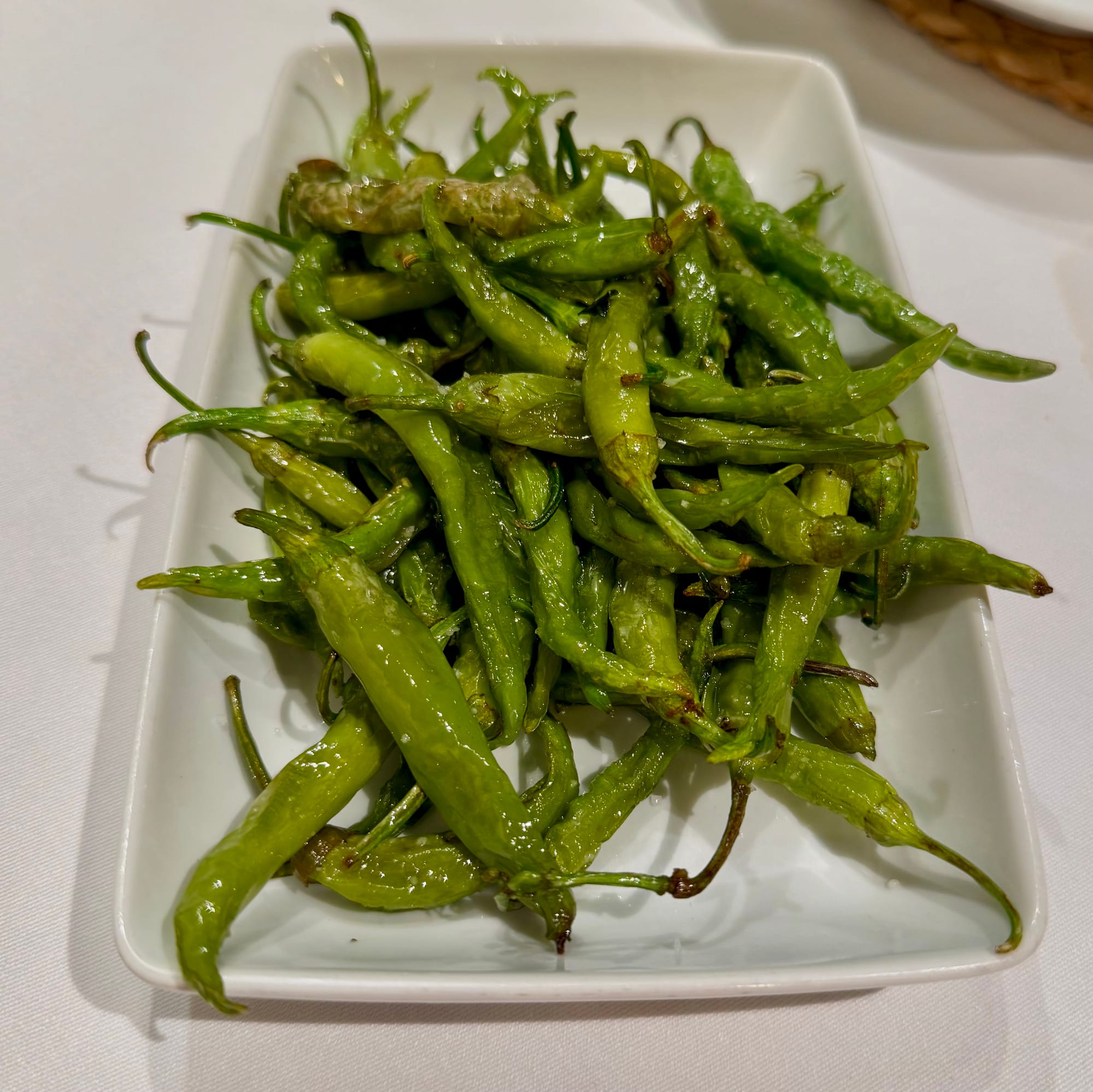
On the side, we ordered a mess of fried deliciously spicy, twisty local Guindilla green peppers, a very characteristically Northern Iberian salad of tomatoes and tuna (which I love), as well as a slab of a little overly chilled duck-liver pate. To drink, we had a bottle of the yeasty and dry local cider, which goes a lot better with steak than I think some red-wine partisans are prepared to admit.
Day Four: San Sebastian and Saint-Jean-de-la-Luz
You're contractually obliged to do a pintxos bar crawl in San Sebastian when you visit there, or so I've been led to believe by two decades of edgy Anthony-Bourdain inspired food media.
In the interest of actually being able to get a seat anywhere, we opted to have lunch embarrassingly, unfashionably early by Basque standards - IE, around 11:00 AM, when the very-earliest-opening places start to let people in. Most places only open at noon.
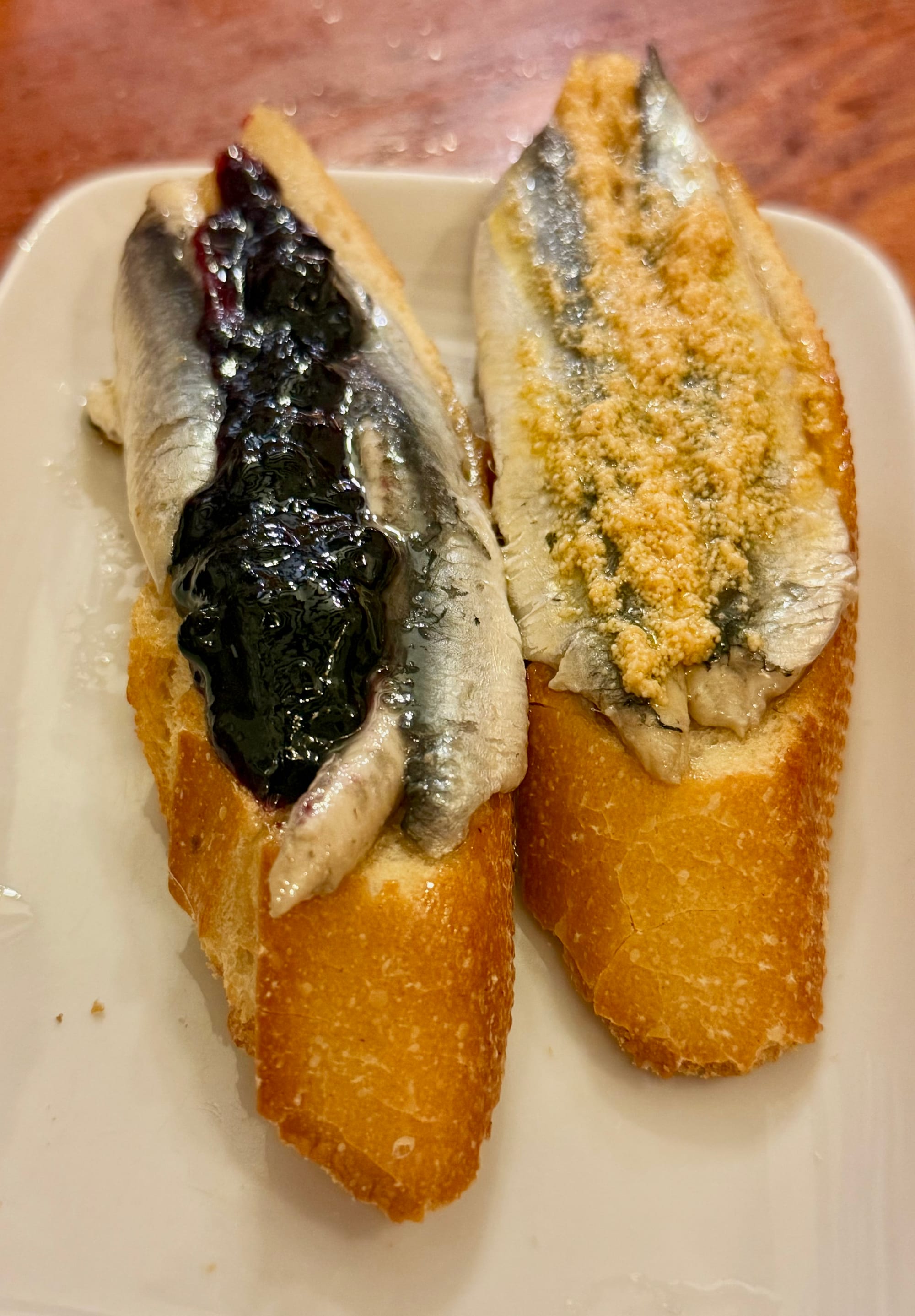
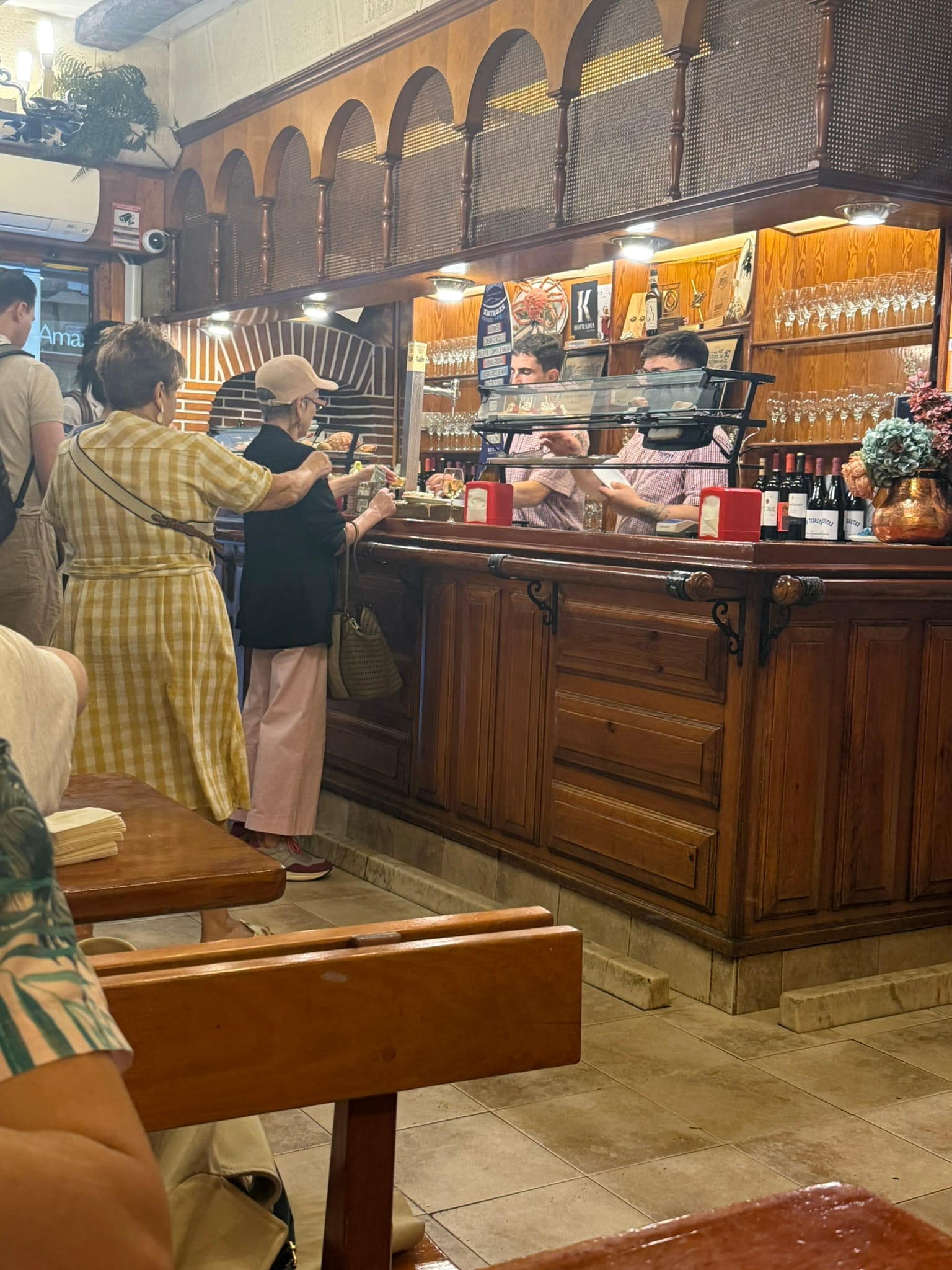
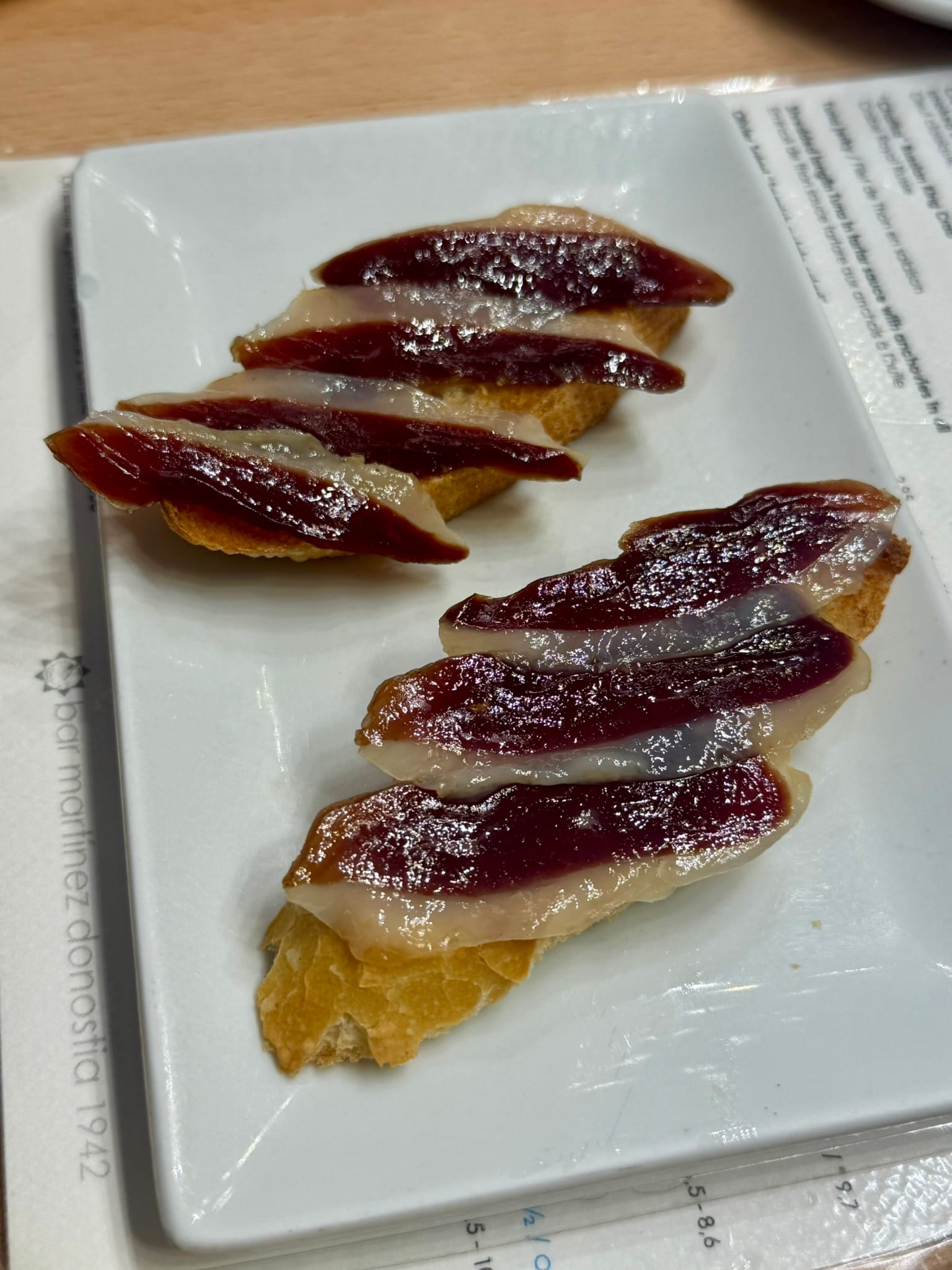
Our whirlwind tour through little fish snacks started at Bar Txepetxa, which specializes in fresh anchovy pintxos: we tried one with sea urchin roe, and one with blueberry jam - which, as it turns out, is a combination that really works.
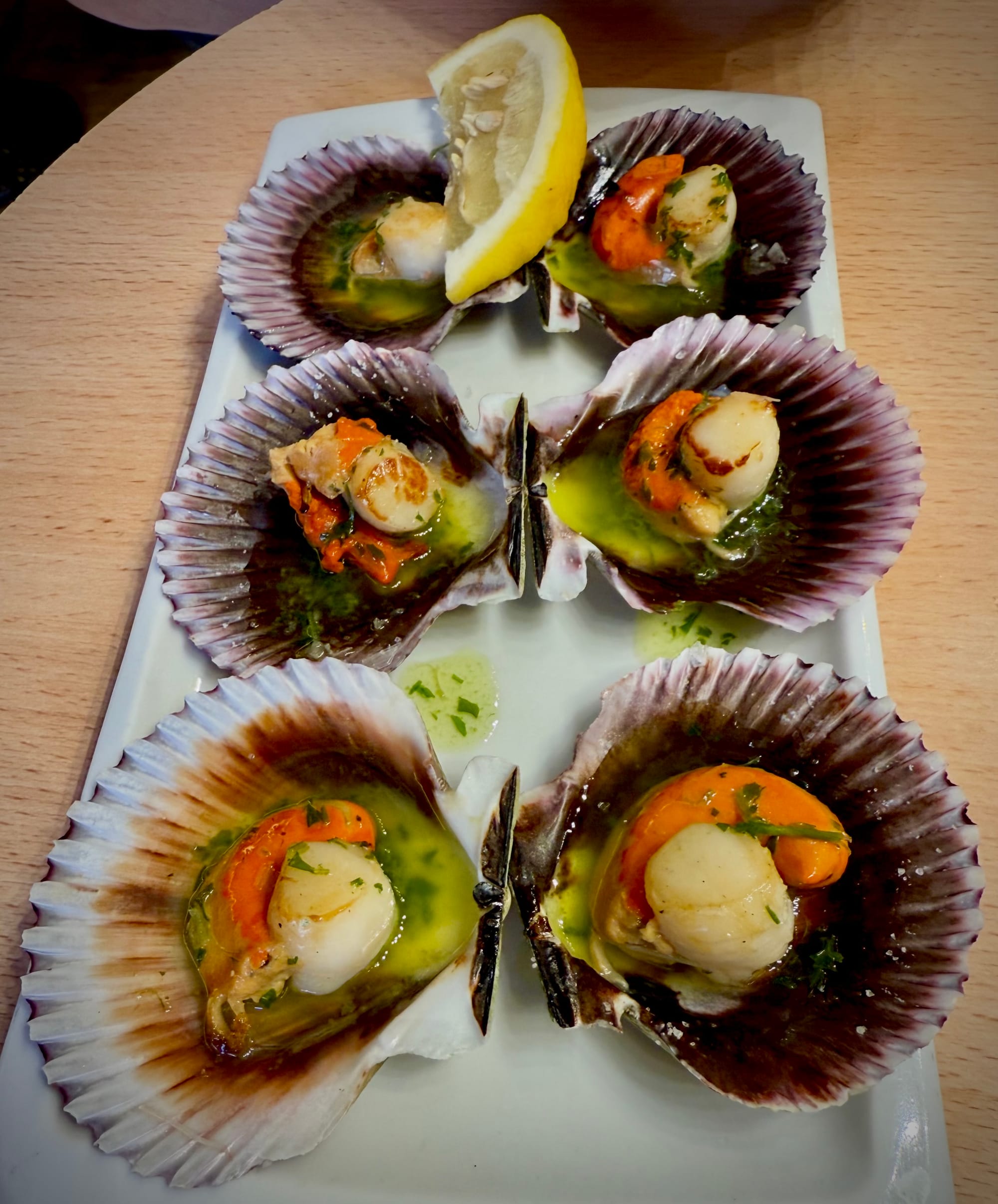
From there, we were able to secure a couple seats at Bar Martinez, where we ordered a round of fresh scallops poached in olive oil (complete with the orange roe that American seafood vendors cruelly deny us),
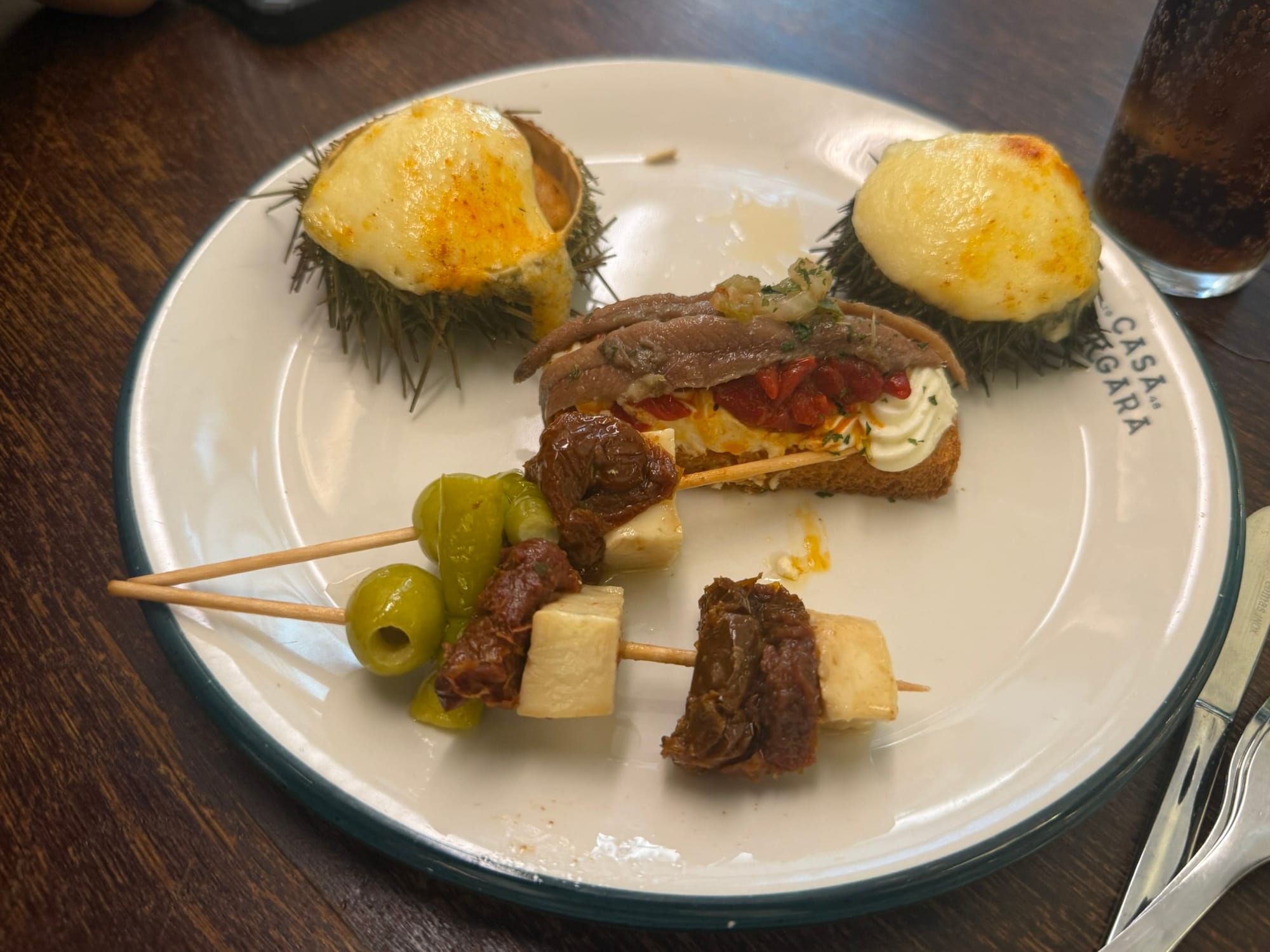
For a final stop, we ended up at Casa Vergara 1948, a beautifully decorated place with an art-deco feel that is particularly known for serving stuffed sea urchin, in which the roe is combined with cream and spices and chargrilled for a minute or two. We slammed a couple of the spiky bastards, and then got out before the place completely filled up.
We strolled up the walking path from San Sebastian's old town area and around the cliffs to La Concha, the legendary half-moon shaped beach that comprises the other part of town. It was once again very hot, and the mid-day heat on the pavement and the aggressive UV rays made sticking to an urban area seem less appealing. So we decided to get back in the air-conditioned car and to drive north, all the way to France.
The French part of the Basque country looked, well, pretty much the same, with the exception of French EU license plates and a lot more white-painted buildings. We ended up spending an incredibly charming early-fall afternoon in the Saint Jean de Luz area, starting off at the pleasant little oceanside Saint Jean de Luz Botanical Garden, with a fine collection of local plant species and a number of pleasant places to sit and admire the view.
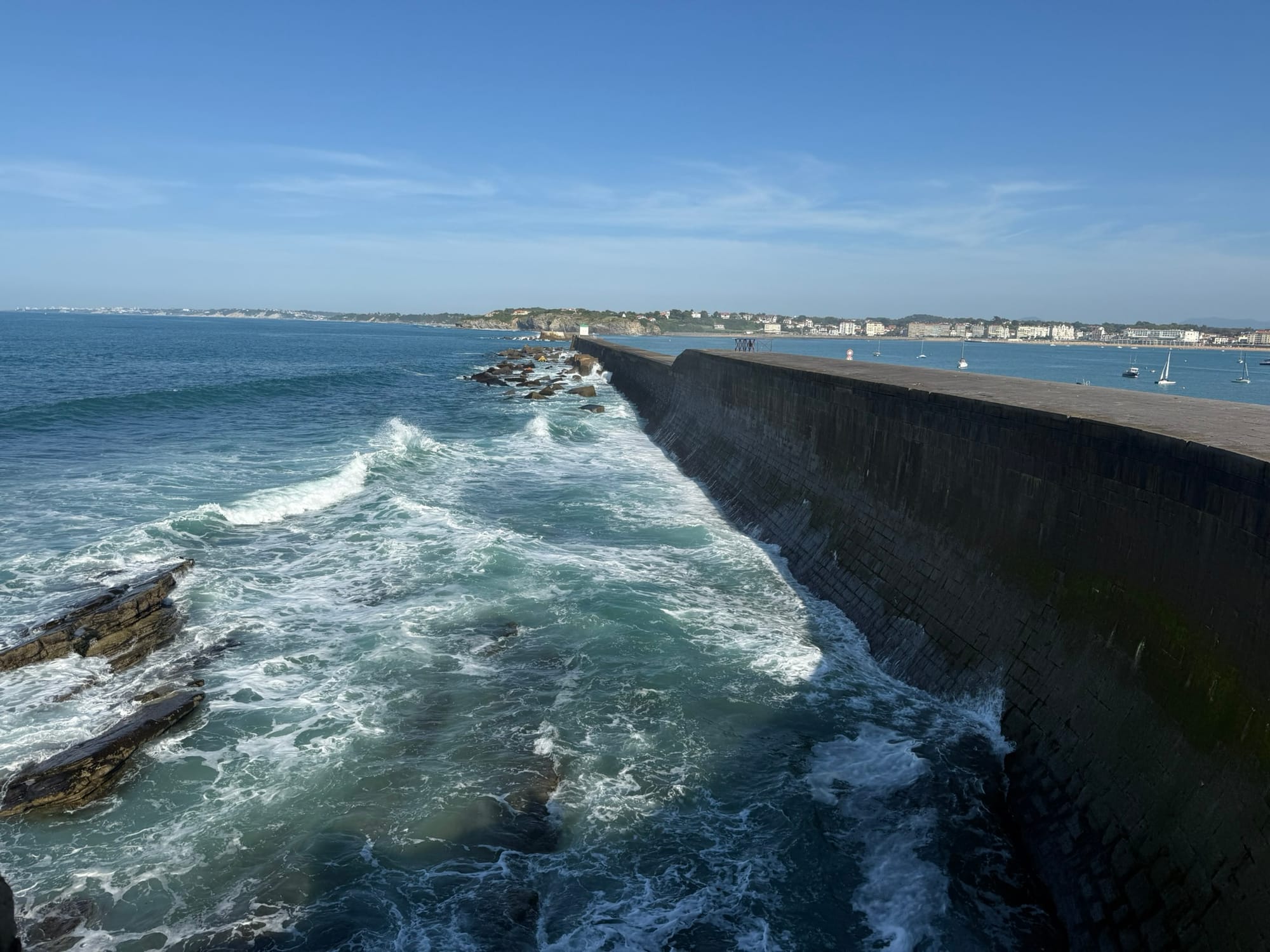
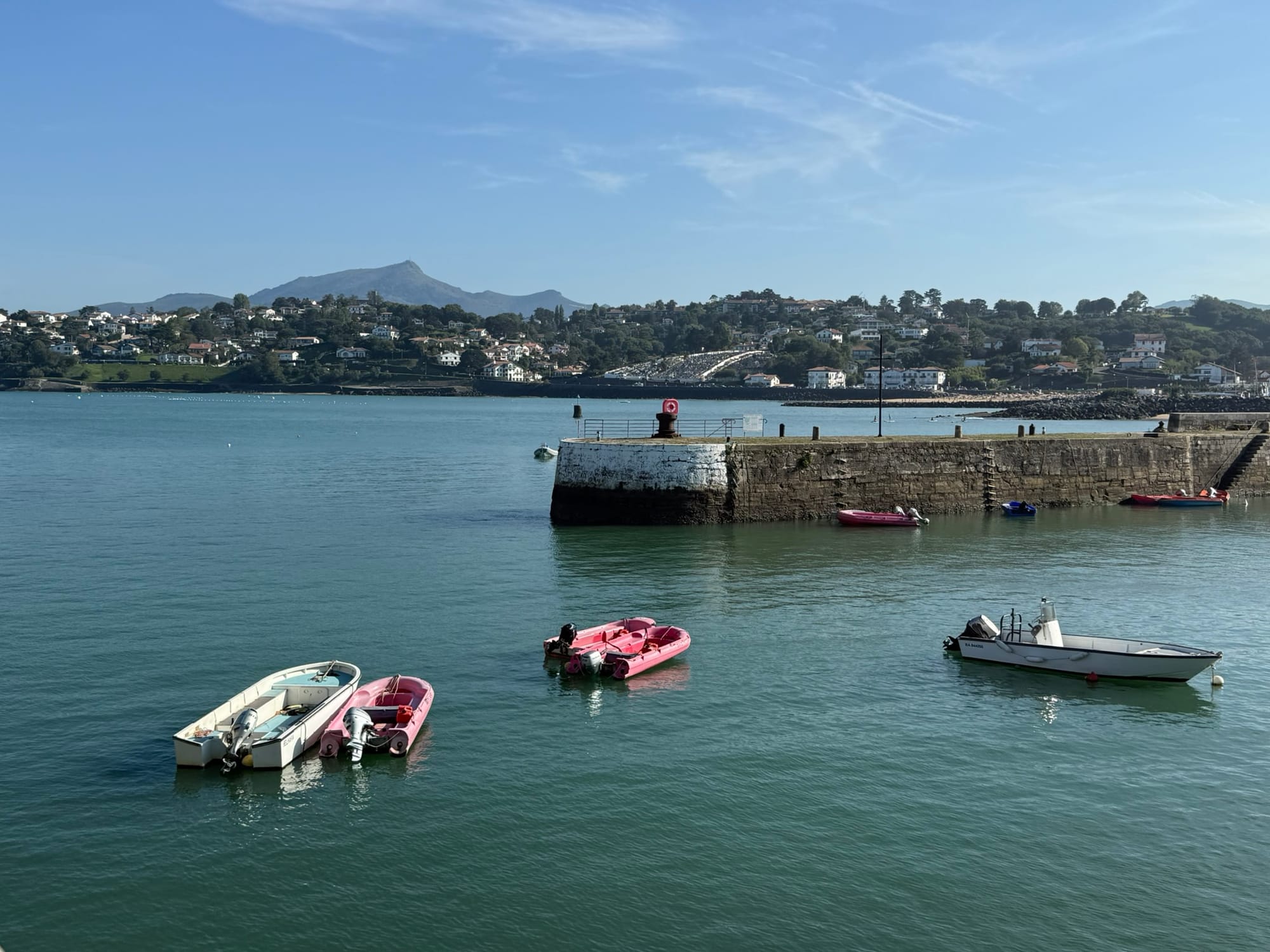
In the little beach town of Saint Jean de Luz proper, we parked by the sea and walked over to the 1627-vintage Fort de Socoa, a crumbling castle which faces out to the sea. At every turn, we were confronted with the kind of coastal French view that us Americans only really experience via the medium of fine art museums and art history classes: oh, so that's what all those impressionists were on about.
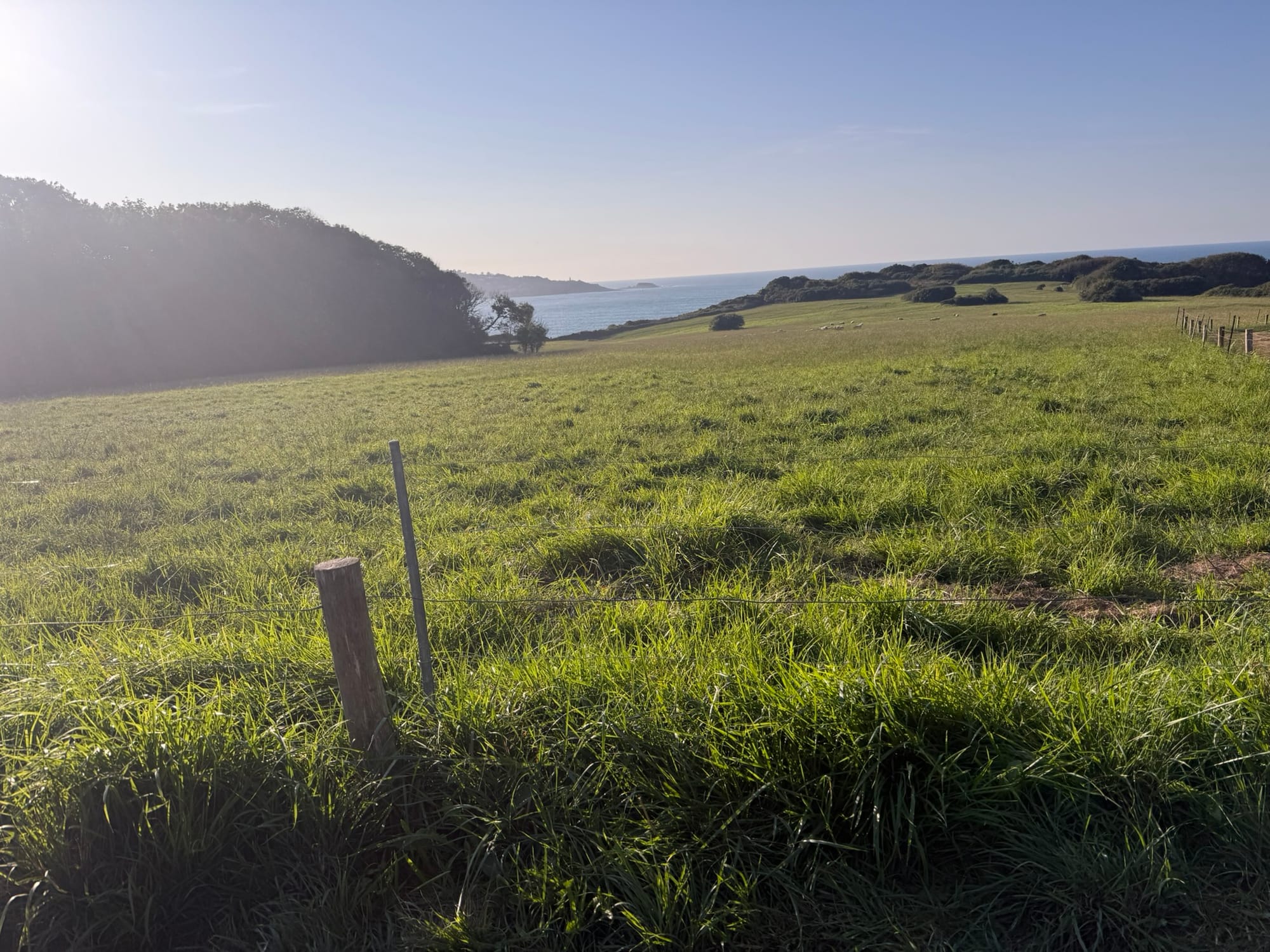
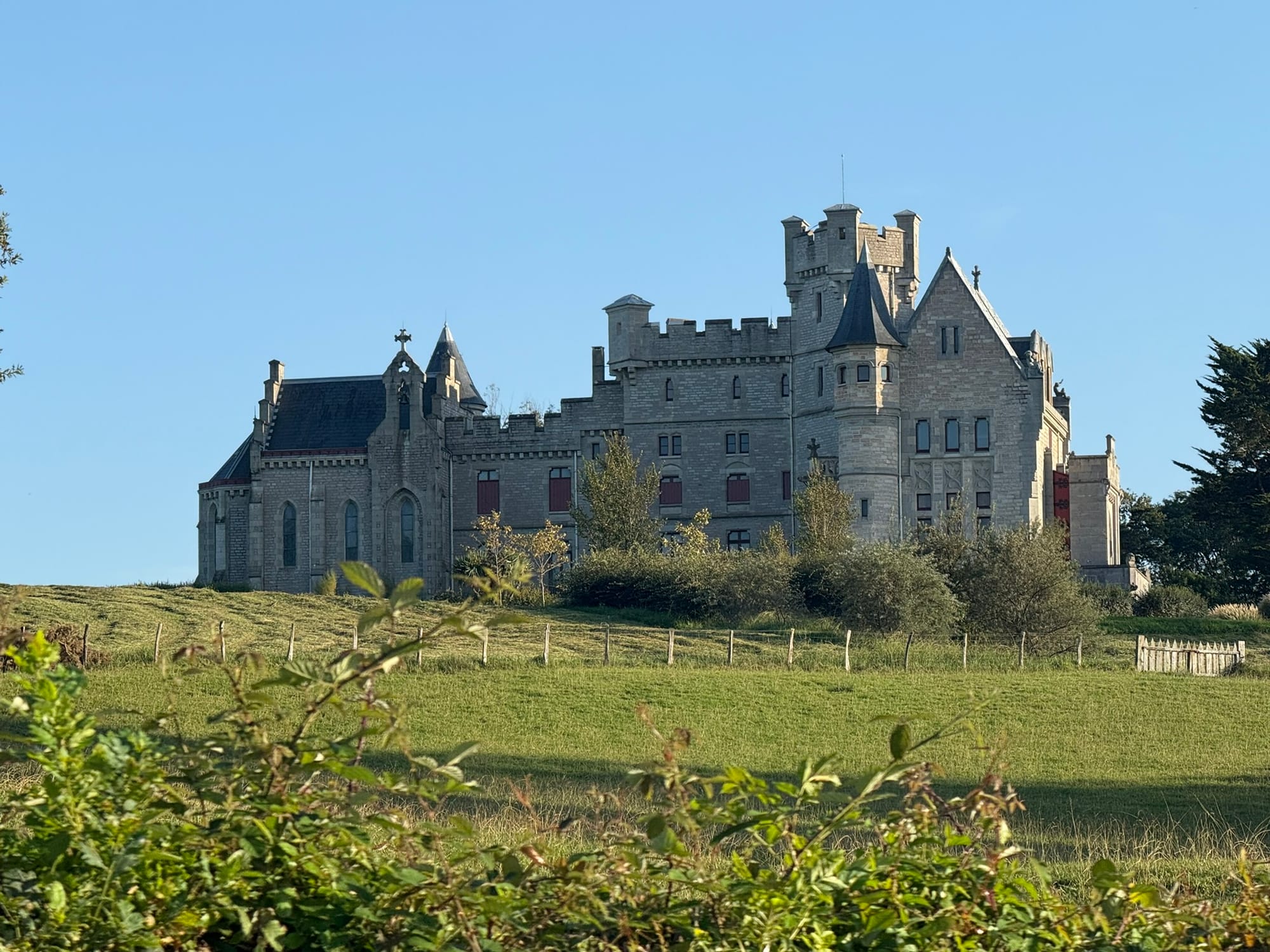
It was still a bit too early for dinner, and we wanted to keep walking in the glorious weather - so we drove over to the nearby Abbadia, le Château Observatoire, a 19th century chateau owned by a wealthy nobleman geographer, and which boasts a lot of nice coastal walking paths throughout its grounds. While it was a bit too late for us to tour the chateau itself, we had a wonderful time wandering the forests around the grounds and saying hello to the local horses.
We doubled back to the oceanside area near Fort de Socoa for dinner, sucked in by the magnetic lure of all those seaside restaurants advertising mussels that I'd seen earlier.
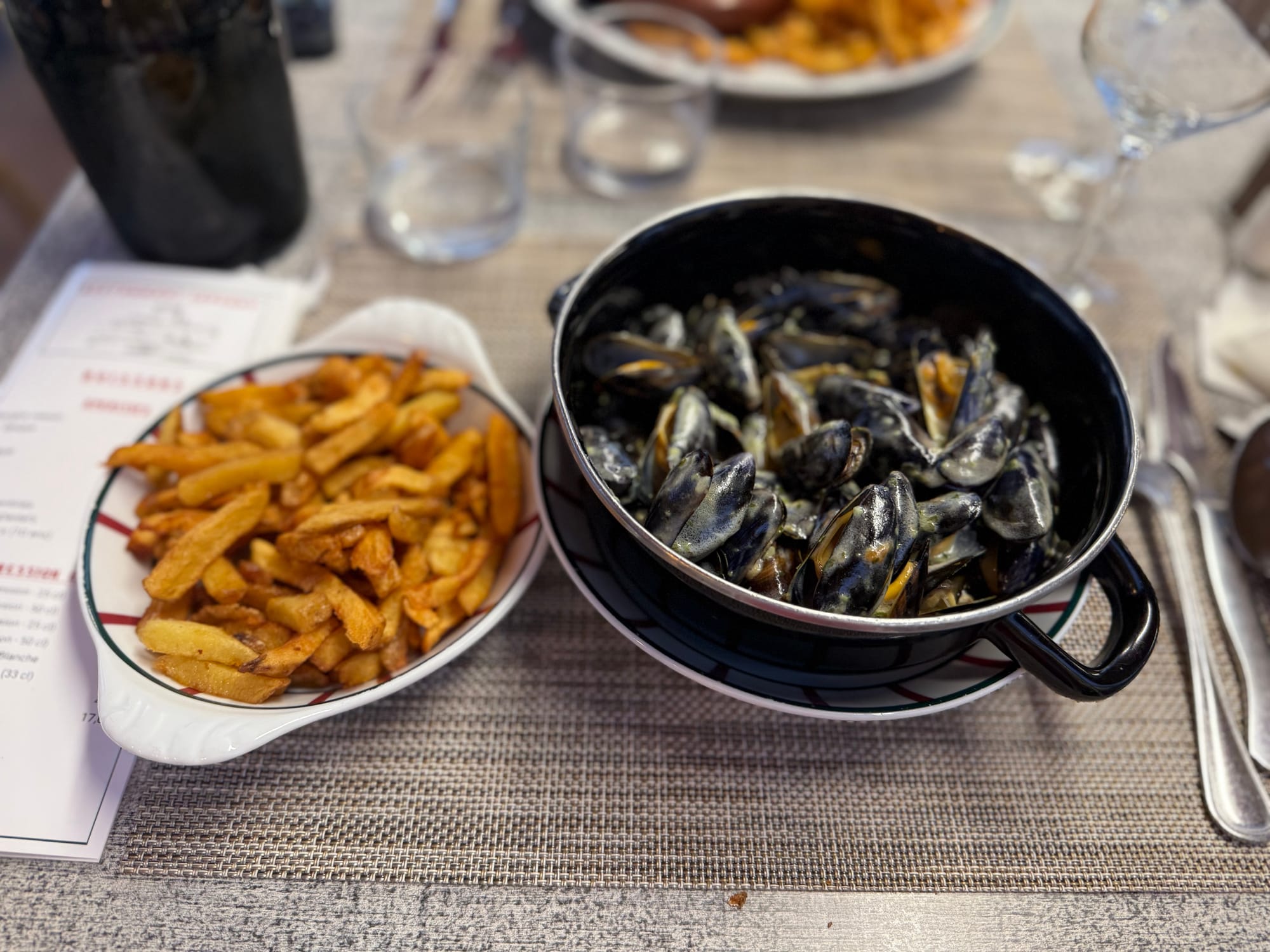
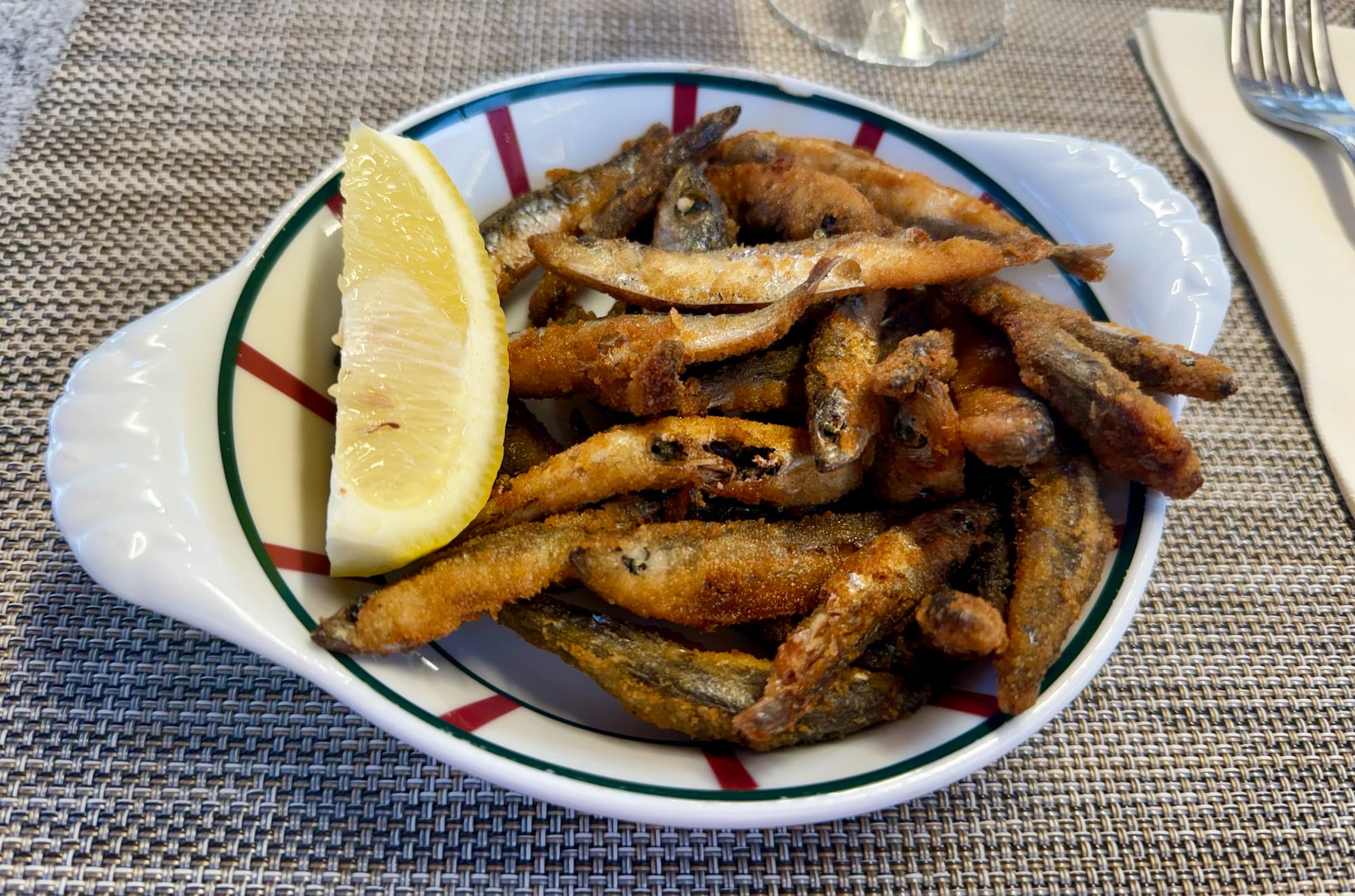
We were able to get an outdoor table by the ocean at Restaurant Ispeguy, and were quickly set up with glasses of cold txakoli and a late-summer sunset. For dinner, we ordered a perfect set-menu composed of fried smelts (my beloved), mussels cooked in a classic wine and cream sauce with frites, and Basque sheep's cheese with jam for dessert.
My partner had salmorejo, an excellent braised Basque chicken with peppers, and a soft-and-crispy slice of Gateau Basque, which I now believe is one of the world's more unjustifiably underappreciated pastries.
Day Five: Bilbao and Bakea
We had a roughly hour and a half long drive ahead of us from Orio to Bilbao, and the day was threatening to shape up to be incredibly hot, even by the standards of summer in Spain in the mid 2020s.
Before the heat really got cranked up, we paused not too far from Durango to look at (surprise!) another historical Basque necropolis - the Arginetako Nekropolia, or "place of the stonemasons," a medieval cemetery in front of the also-very-old Hermitage of San Adrian.
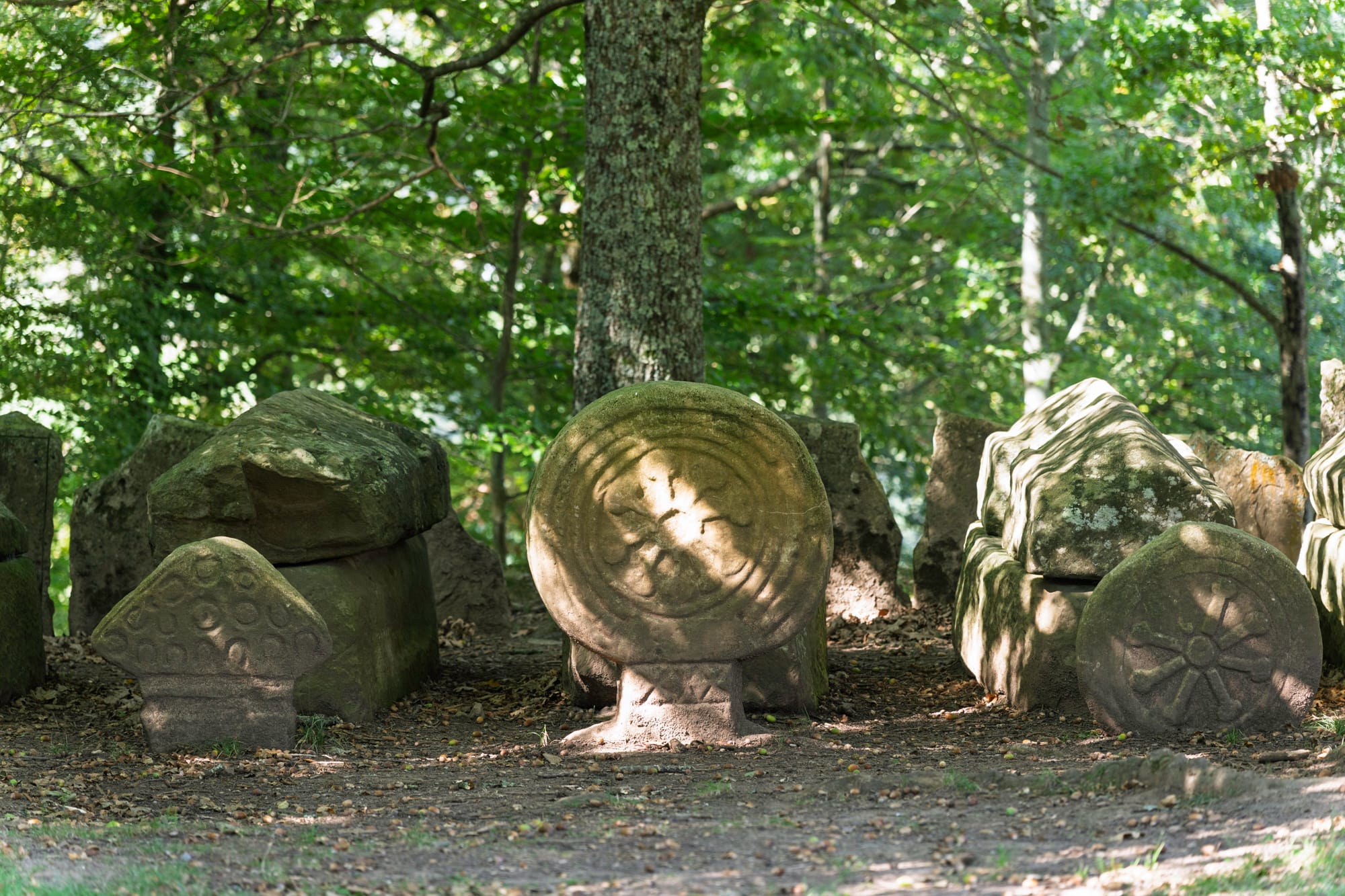
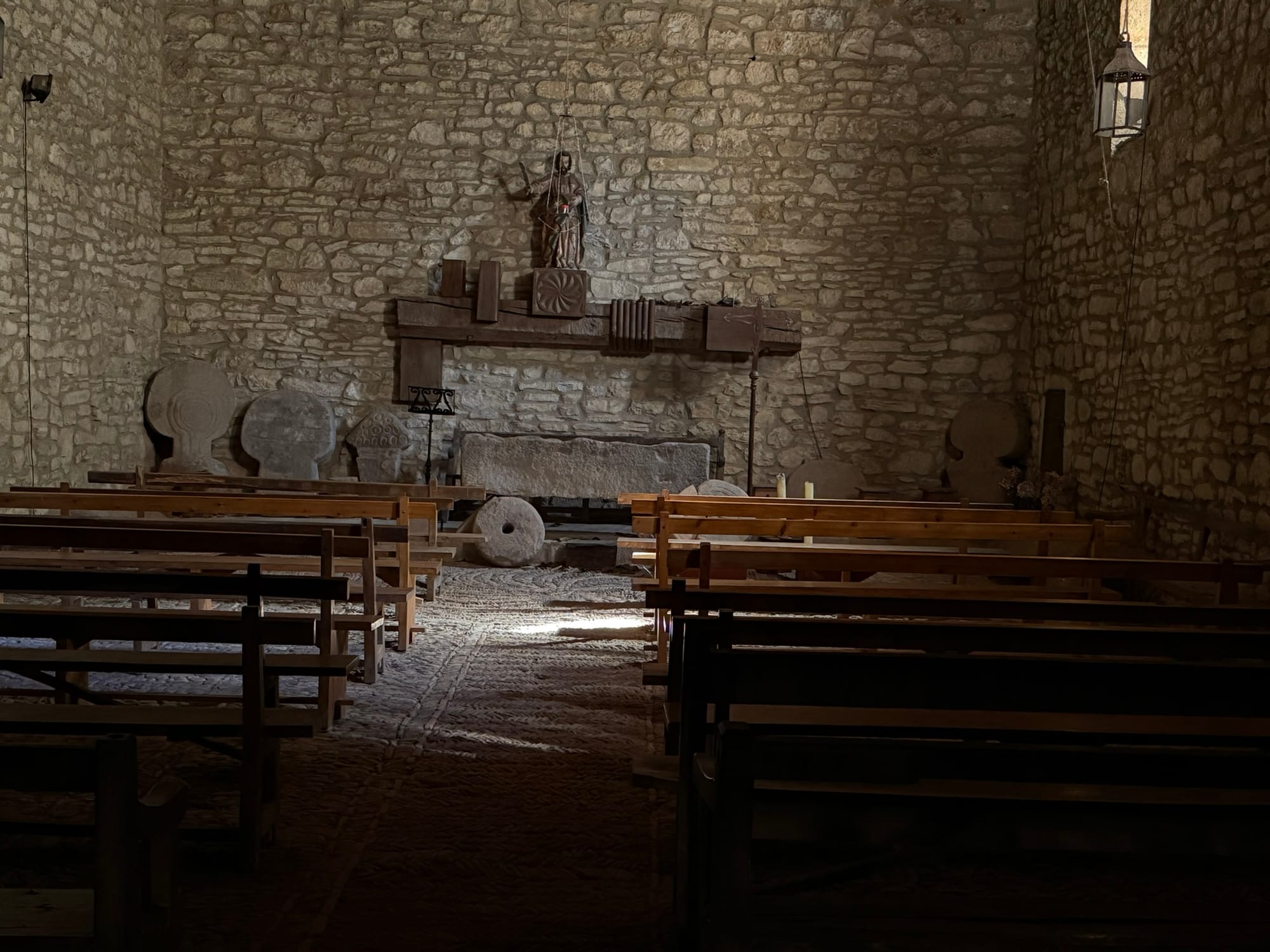
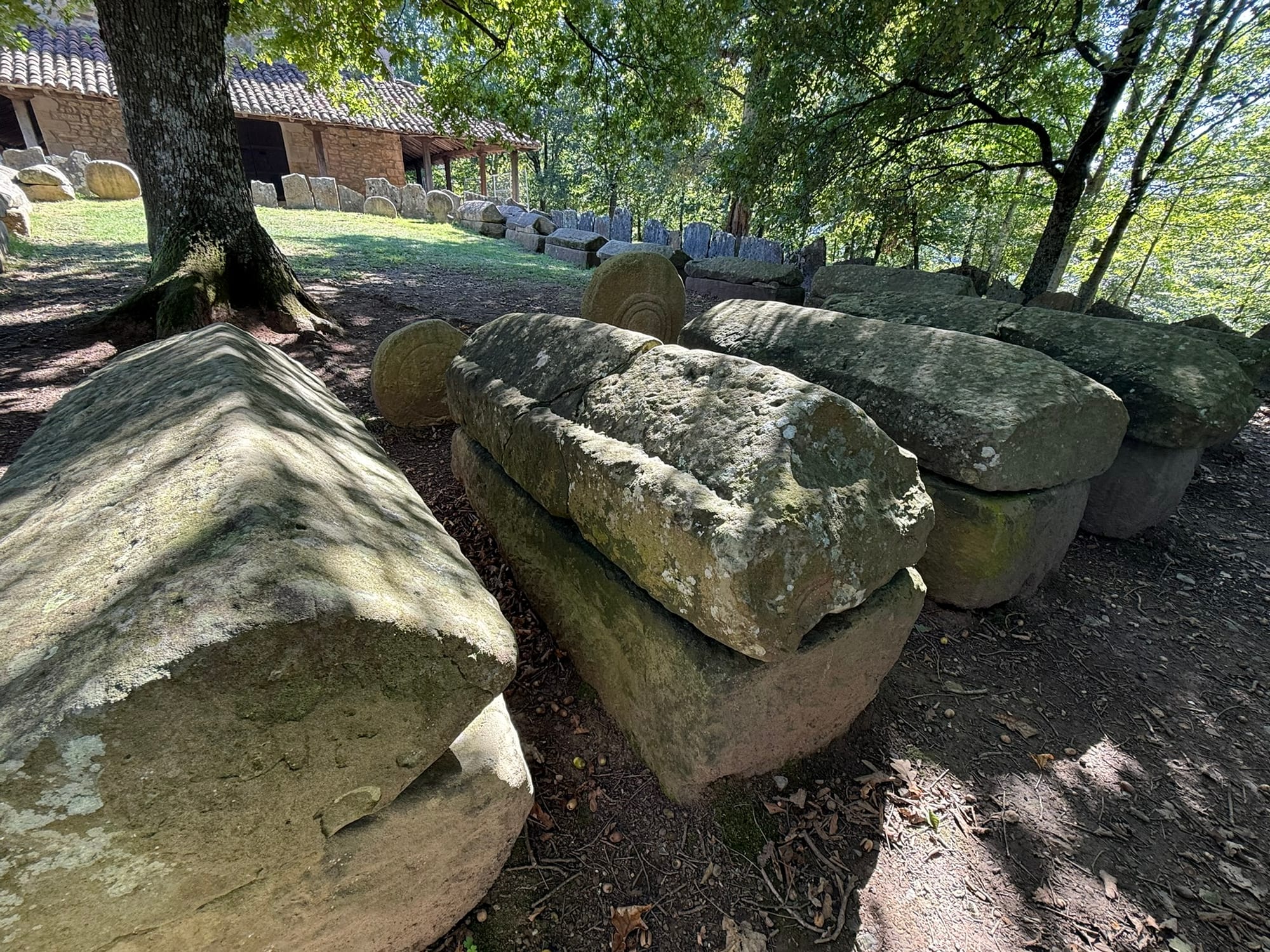
About 23 tombs from the 9th century still remain (presumably built by the Visigoths), as well as three more ancient tombstones that appear to predate the arrival of Christianity in this region. While this site isn't exactly a show-stopper, if you're someone who enjoys archeology and peaceful woodsy contemplation of the ancient past, it's a nice place to pause. And there's also a lot of charmingly active lizards in the area.
For lunch in Bilbao, we stopped at the oddly named but excellent (and pleasingly air-conditioned) Lucky Baster, which has a hip interior and the kind of creative menu that’s favored all over the Basque Country.
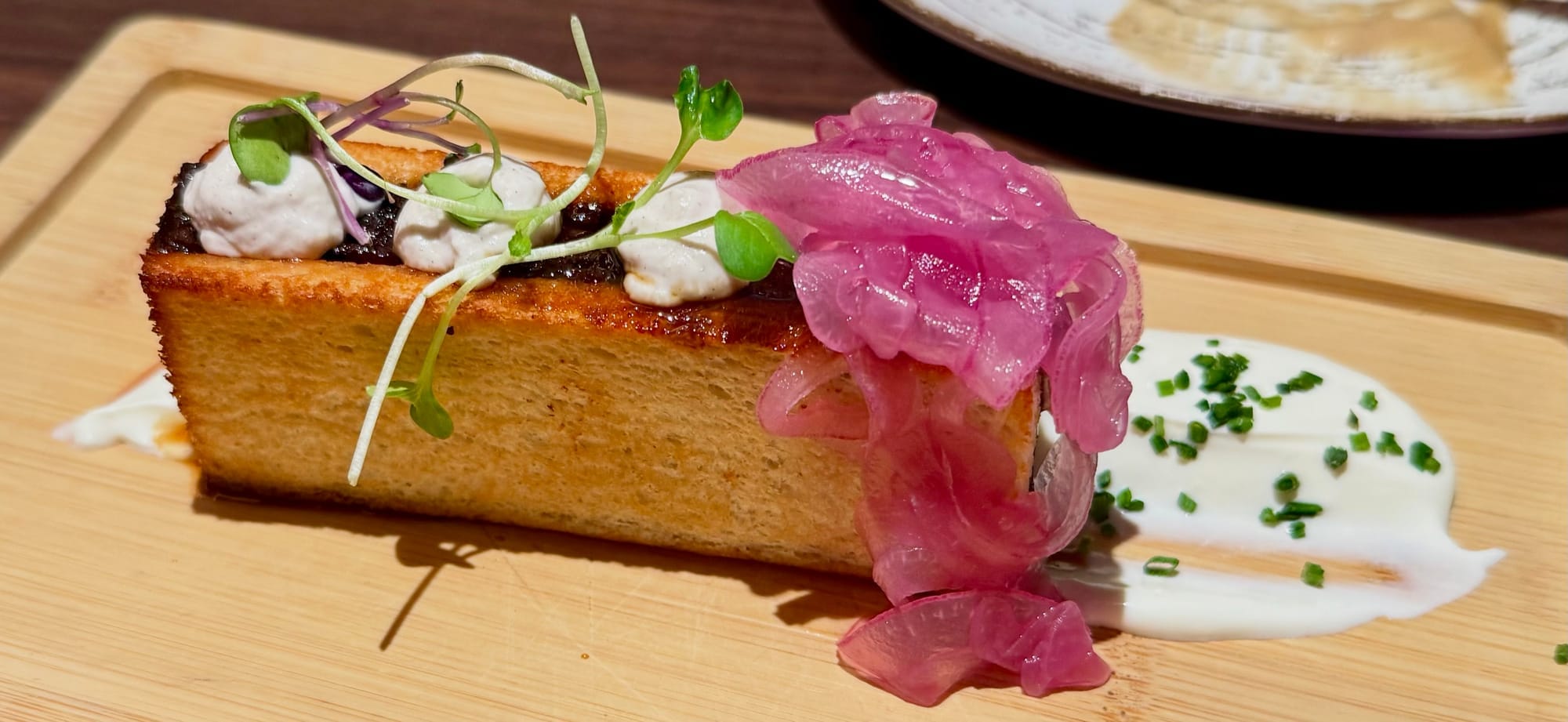
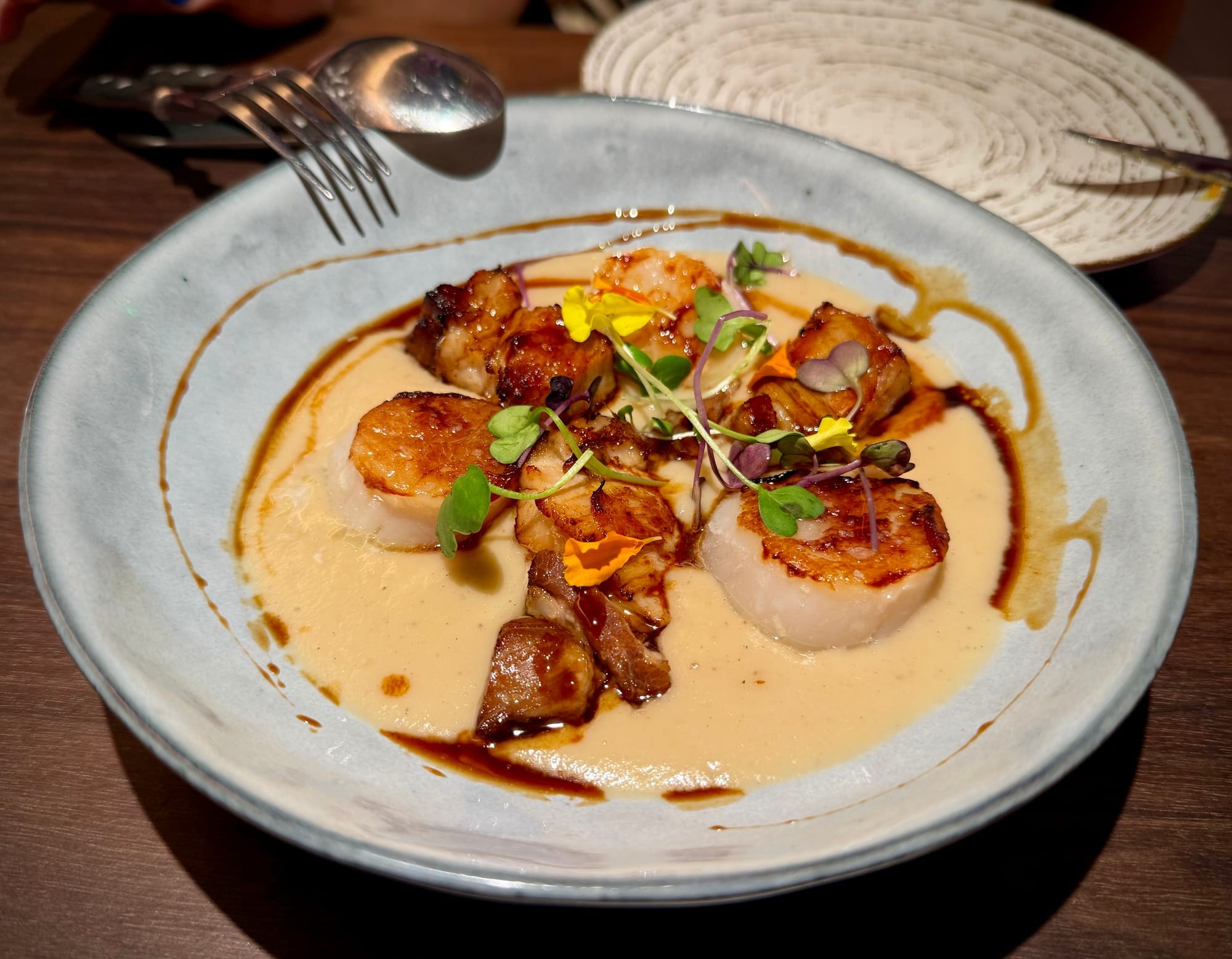
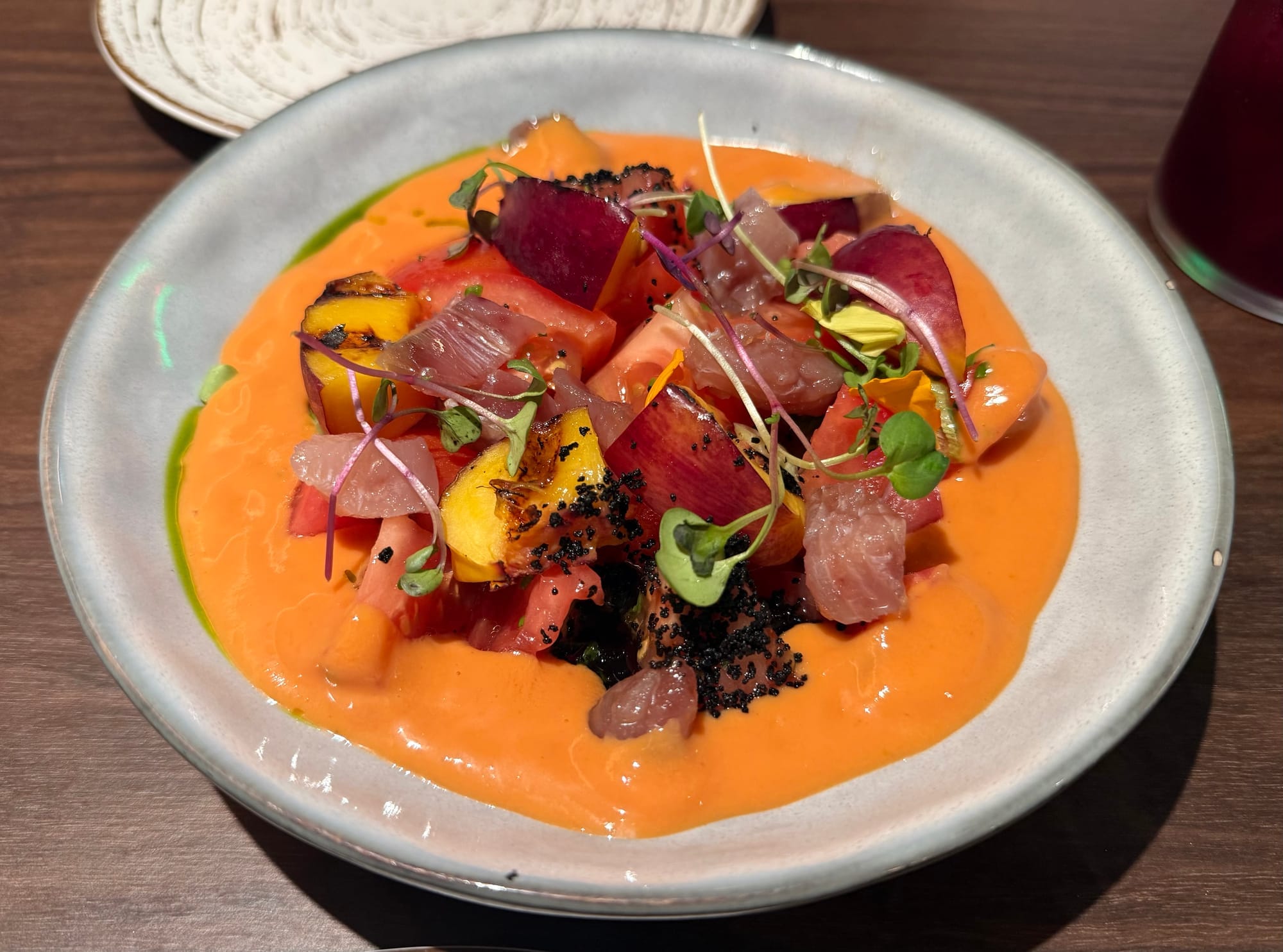
We enjoyed an excellent summer salad with chopped tomatos, grilled nectarines and cubes of fresh marinated tuna on top of a base of salmorejo, as well as seared scallops with hoisin bacon and truffled celeriac cream with vermouth sauce. We also tried the equally oddly named "bikini de rabo XXL" - as it turns out, "bikini" is a whimsical Catalan name for grilled sandwiches, and this one, which contained braised oxtail, truffled mayonaisse, creme fraiche, and pickled onions, was pretty delightful.
After that, we walked over to the nearby Guggenheim Museum Bilbao, trying to stay in the shade to avoid incinerating.
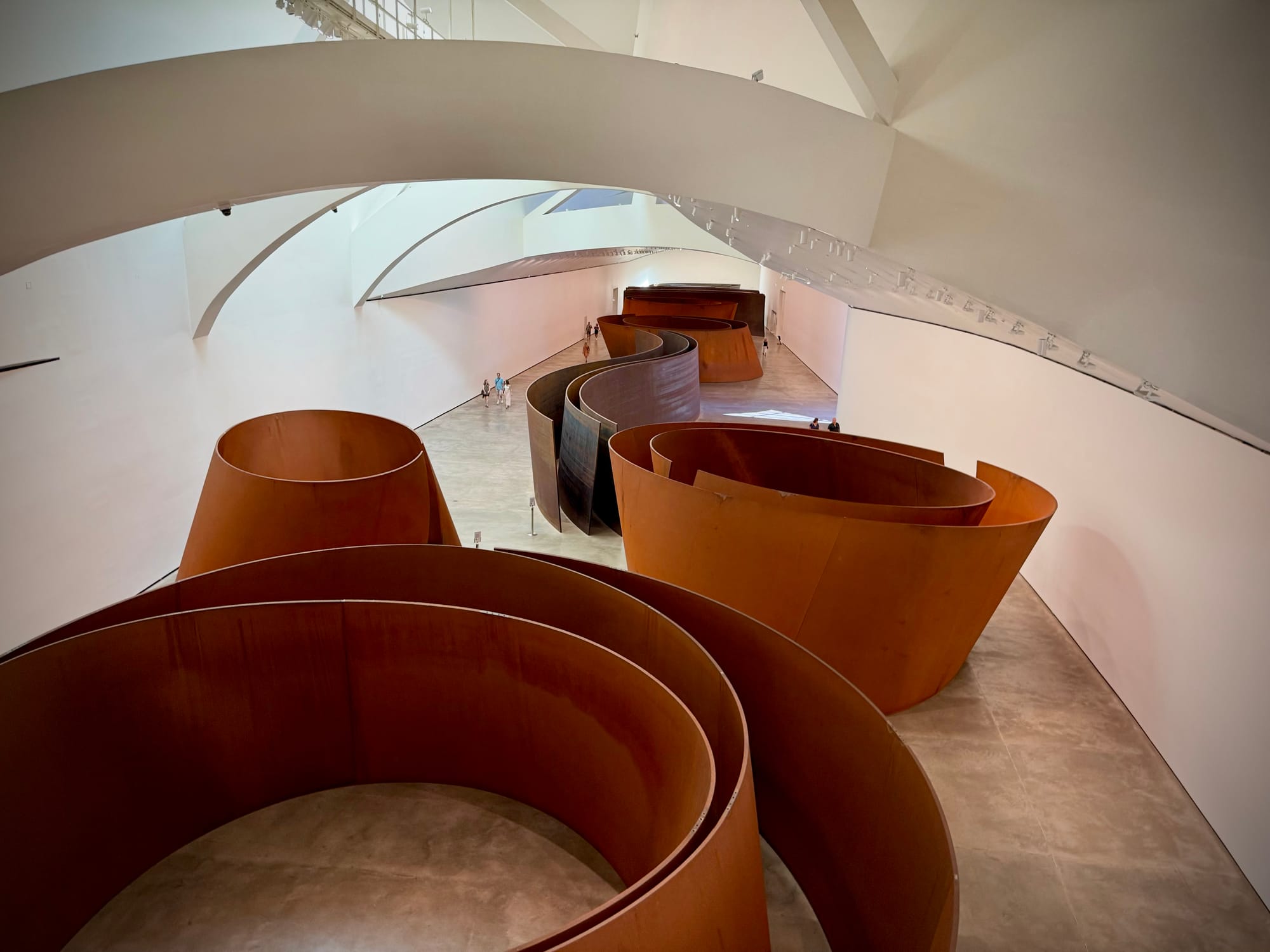
The Guggenheim remains one of the world's more memorable art gallery buildings, although the collection itself isn't enormous, and I’d sort of expected it to change more from my last visit back in 2009. A large area was also closed off during our visit, as it was being shifted over to a new special exhibition. But it’s still a worthwhile visit, and there’s something entertaining about walking around in the rusty labyrinths of Richard Serra. I wish I could afford to put one of those bad boys in my yard.
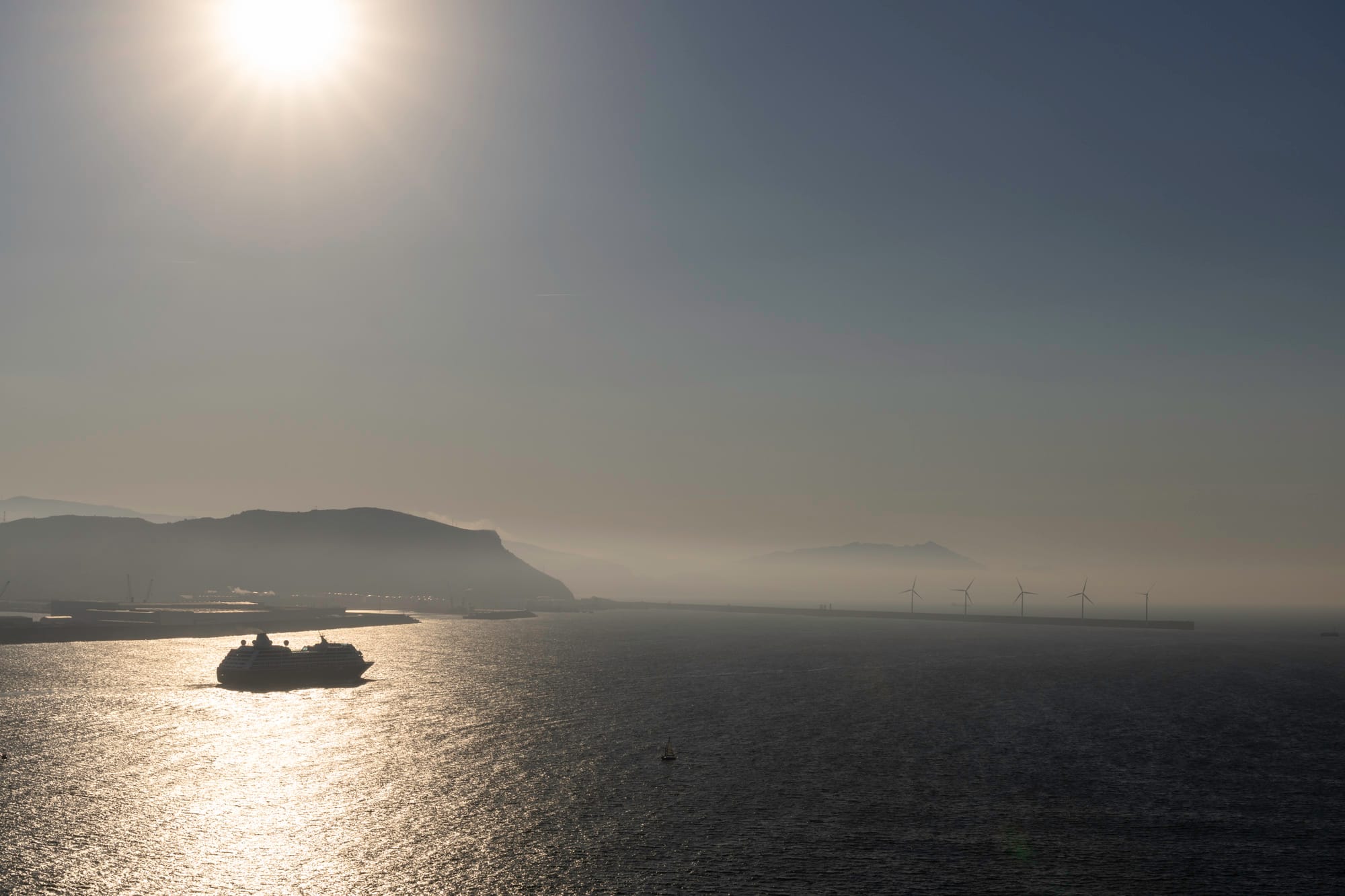
We'd had intentions of walking around Bilbao more after finishing up at the museum, but it was still stunningly hot in the city proper. We decided to get the car and drive up to a park overlooking the sea instead, where we joined Basque families out for a sunset stroll and some laudably self-actualized older ladies who were sunbathing topless. Here, we enjoyed an impressive ocean view of cruise ships, sailboats, and slowly-rotating windmills off in the distance.
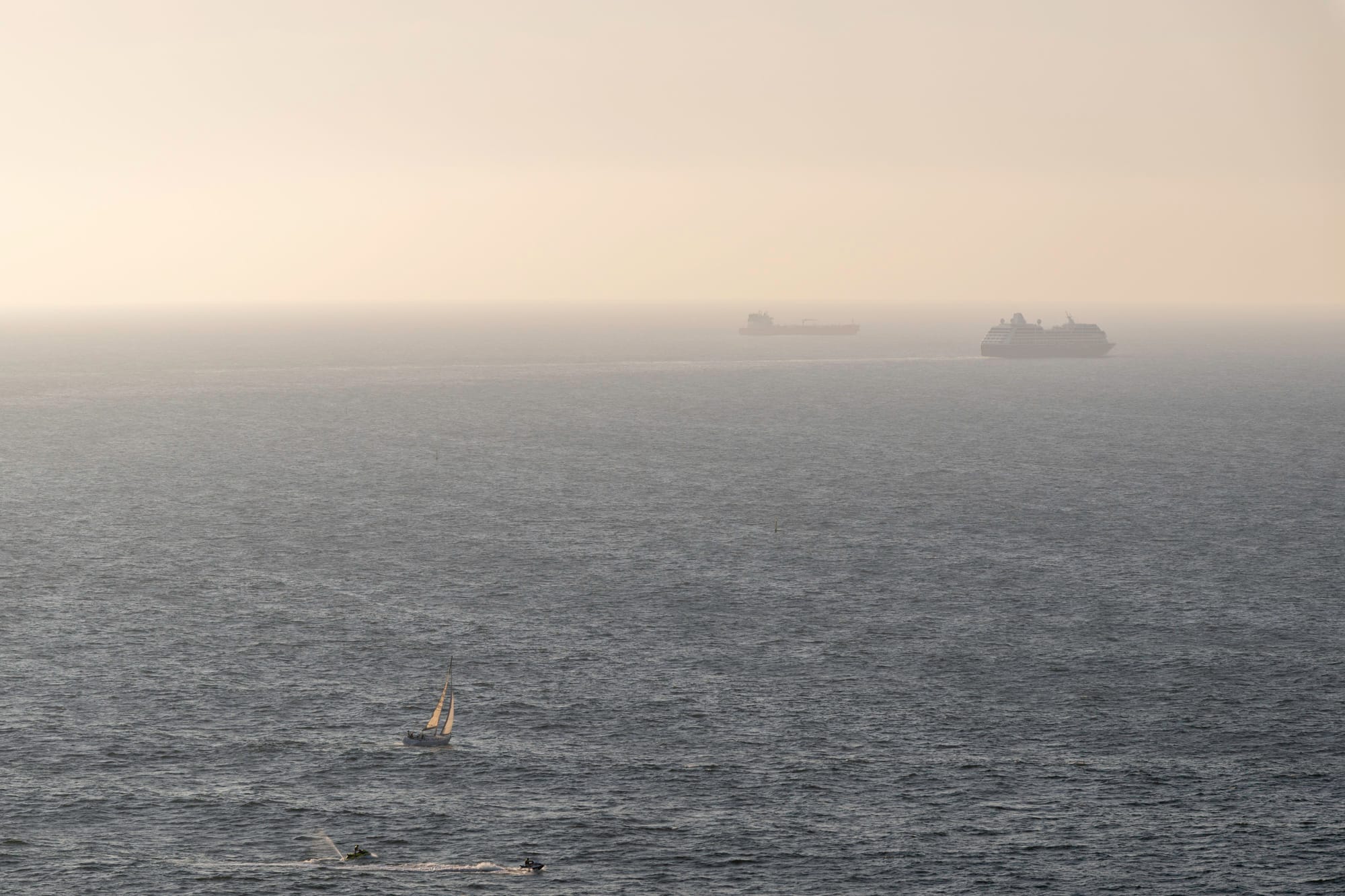
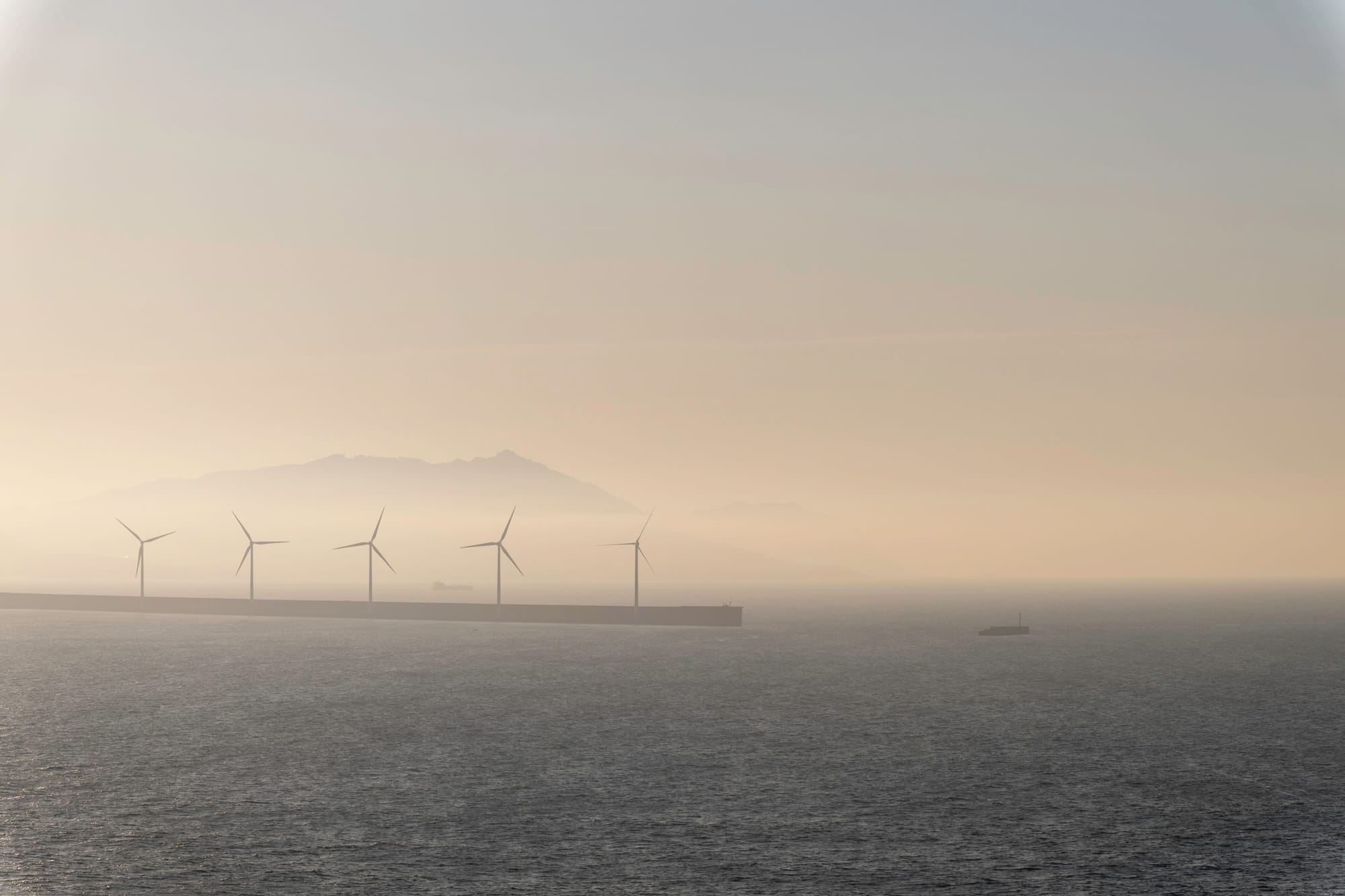
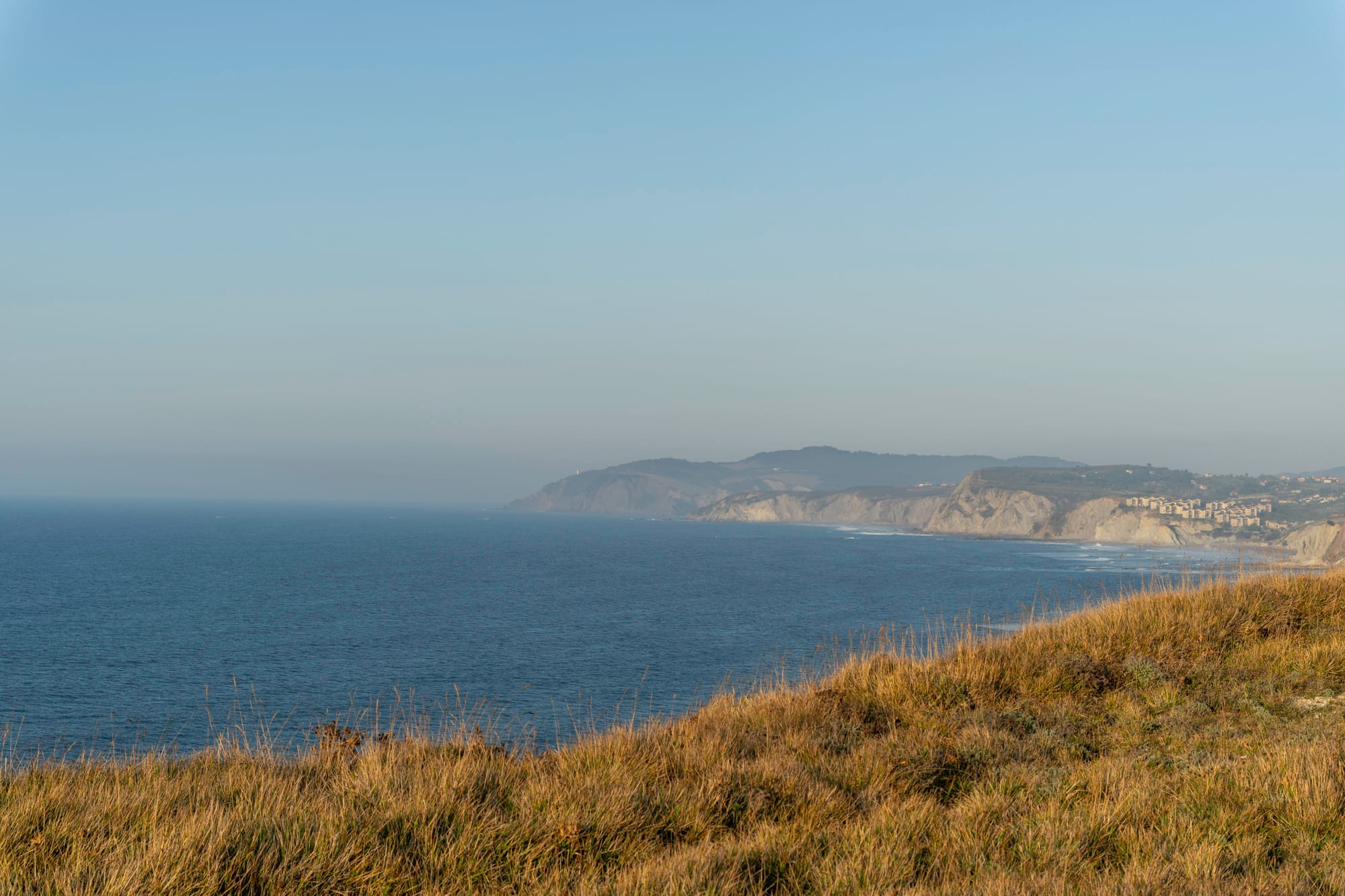
views from the hills above Bilbao, which really do look amazingly like California
Soon enough, it was time to drive into the mountains for dinner at Bakea, a new restaurant founded by a young metal worker/chef with a highly specific sort of fine dining vision.
We specifically sought out Bakea because we wanted to try something in the experimental realm that was less on the known radar (and also less insanely expensive) than the more established and aggressively posted-about restaurants in the fine-dining-saturates Basque Country. And we loved it, weirdness and all.
Like many of the Basque region's best restaurants, Bakea is a small restaurant in a a small yet-vertical residential area in a small town. The restaurant itself is a dark and dramatically lit-space, with accent lights highlighting the many rustic and custom-made metal cooking tools, plates, and other hand-hewn objects, made by the chef himself at his family's forge.
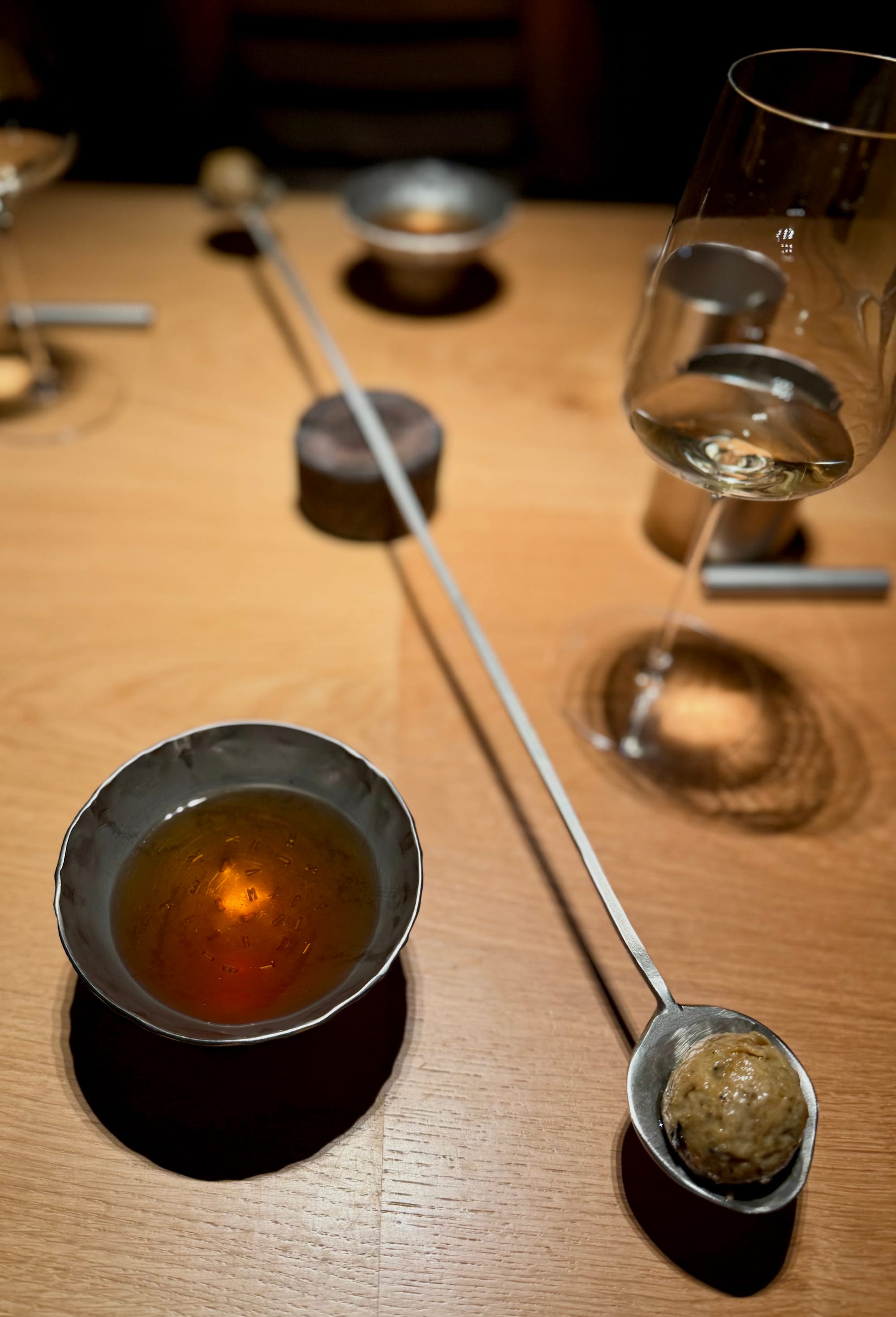
Objects like a two-sided tilting spoon on a pivot containing a bite of Spanish tortilla and a bowl of beef consomme, a little interactive activity for my partner and I to negotiate. (Again, either you love this kind of silly thing, like we do, or you find it incredibly annoying, in which case, you probably need to do your homework before booking fine dining in the Basque region).
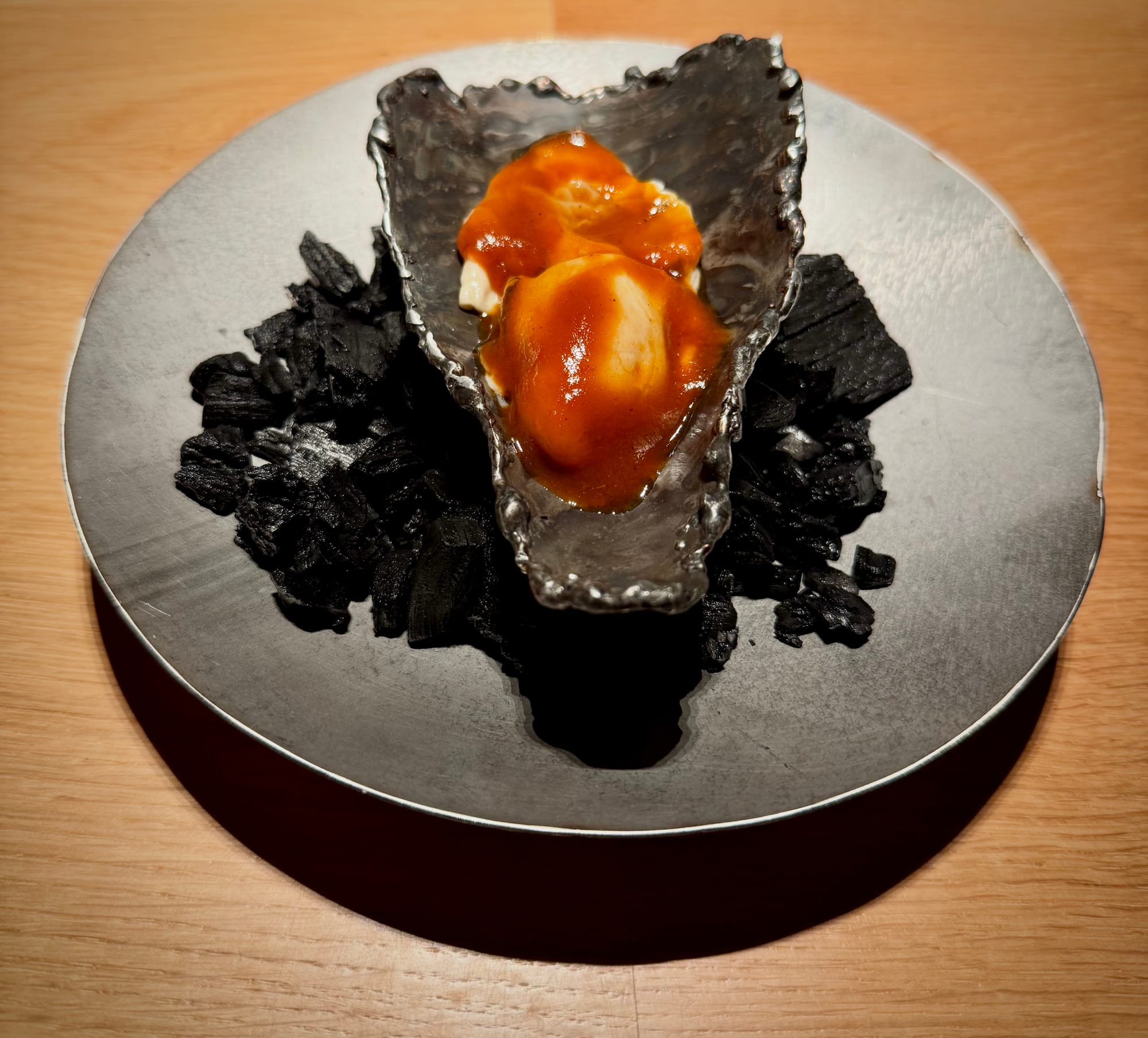
Next: an oyster in an unctuous tomato sauce, rather like a classic Northern California BBQ oyster, served in a hand-made metal oyster shell. I would like some of these metal oyster shells for myself. Maybe to put my keys in.
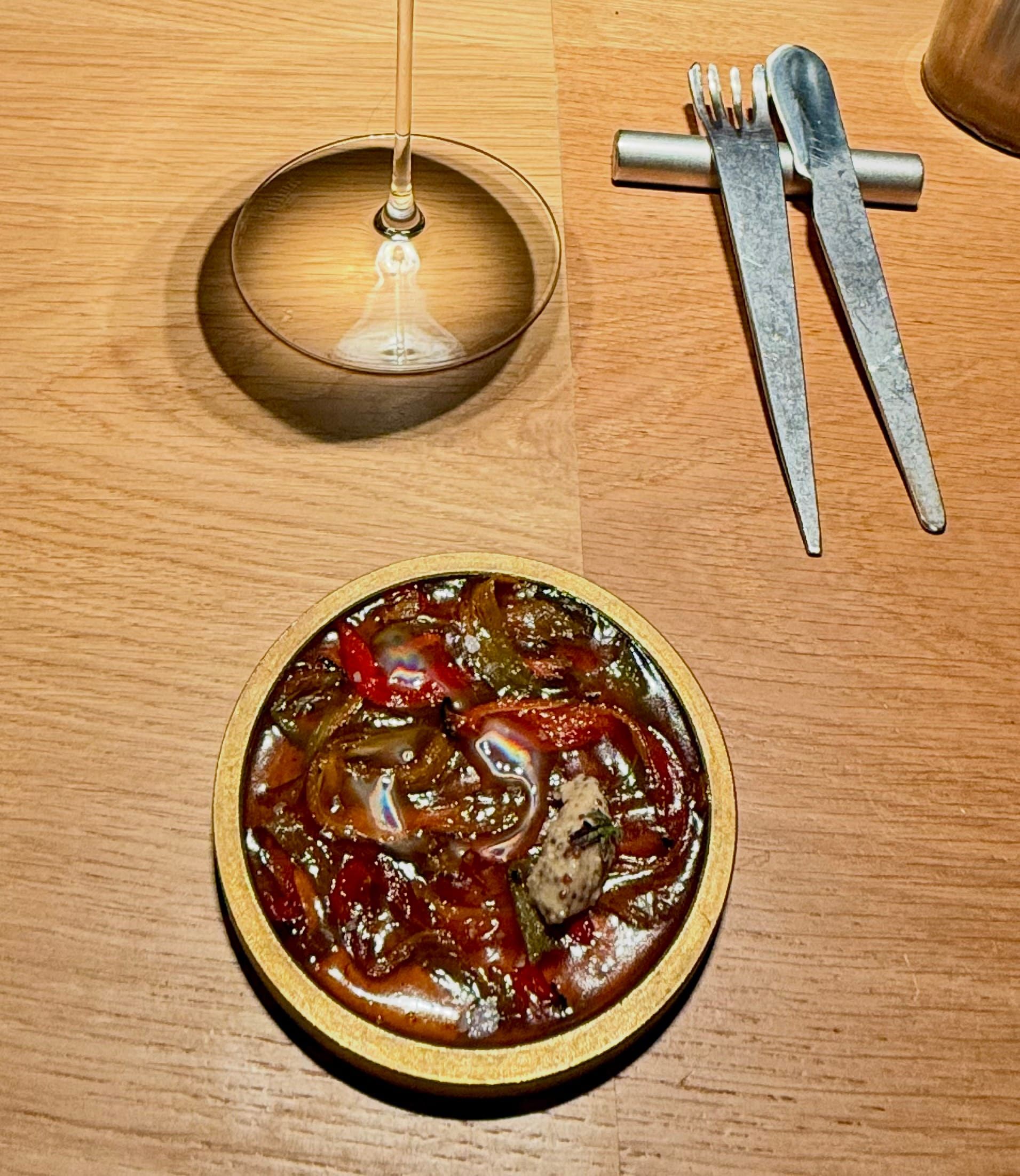
Then: peppers in aspic with ground mustard, which I think is part of a burgeoning aspic revival on the fine-dining scene. Pretty tasty flavor-wise, though as someone who didn’t exist during Peak Aspic, I’m still adjusting emotionally to the texture.
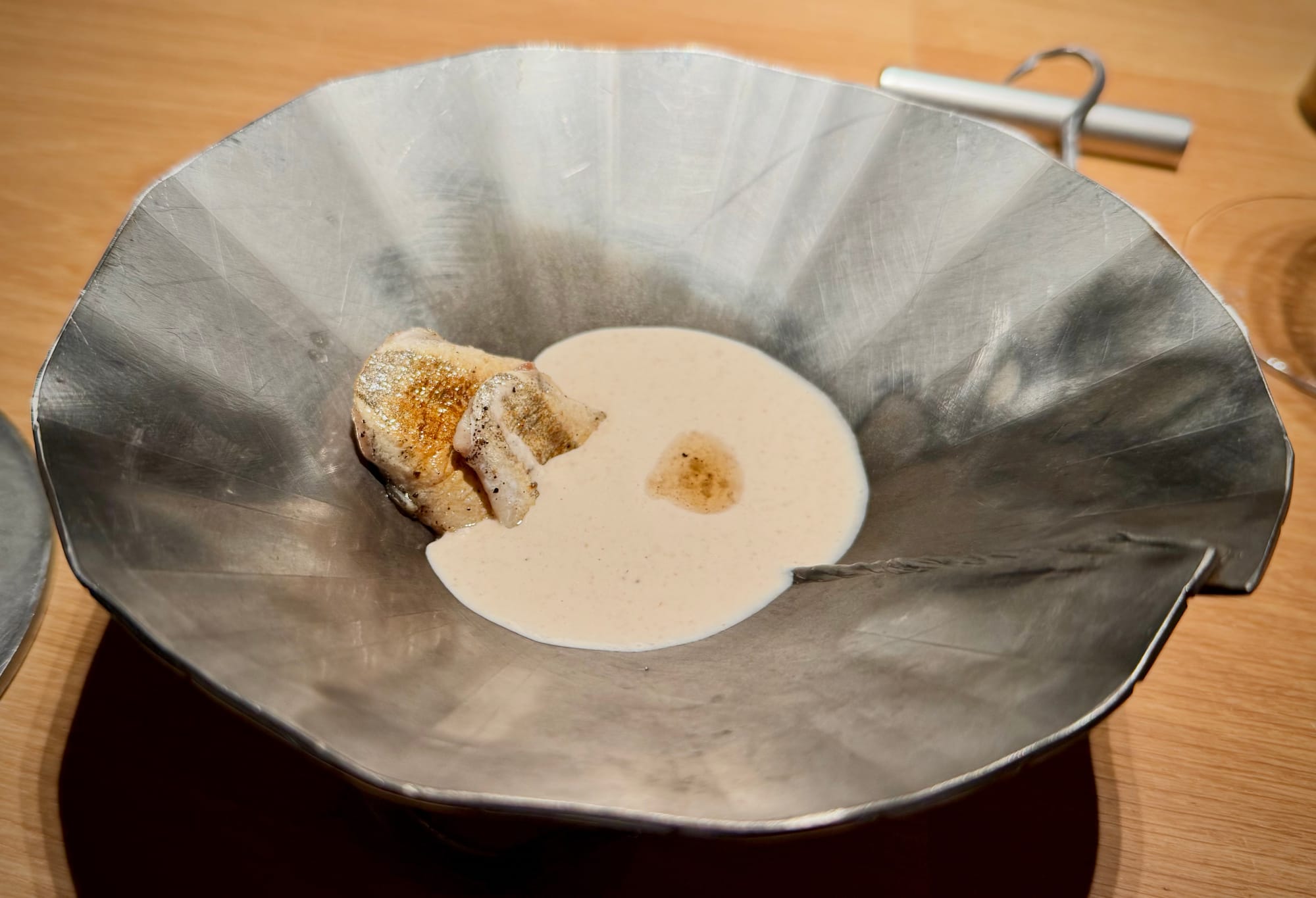
Next, we proceeded to hake (a lovely kind of white fish popular on the Atlantic coast) with a silky-smooth ground almond and milk sauce, a classic preparation that I think dates back to at least the Middle Ages. It's also similar to the beloved and decadent sauce used in Mexico City for chiles en nogada. Once again, I found myself wanting to make off with the chef’s home-made and pleasingly organic water-plant-looking metal serving bowl.
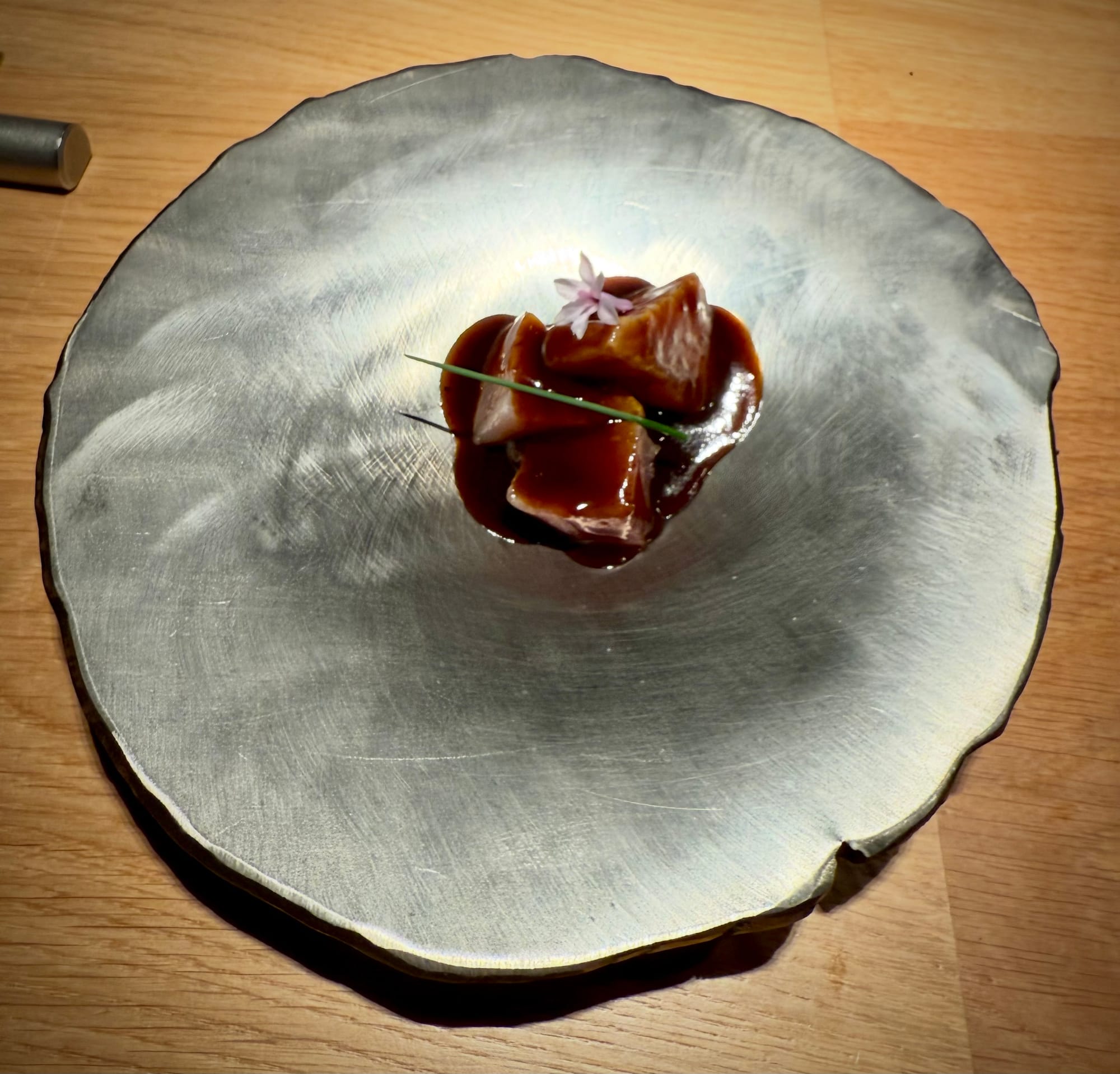
Halfway through the meal, the lights suddenly cut off entirely, and the sounds of sirens, then explosives and screams filled the room: this course came with a auditory reminder of the horrendous Nazi aerial bombing of Guernica on April 26, 1937, which killed (at a bare minimum) well over a hundred people, and quite possibly many more.
Some might dismiss this kind of thing as an overwrought gimmick in the context of a fancy dinner, but personally, I thought it was great - over the top, sure, but entirely sincere, intended to contextualize the diner in both space and in a key collective Basque trauma.
Next came a little ultra-rich sampling of squid ink with a squid-and-cream sauce.
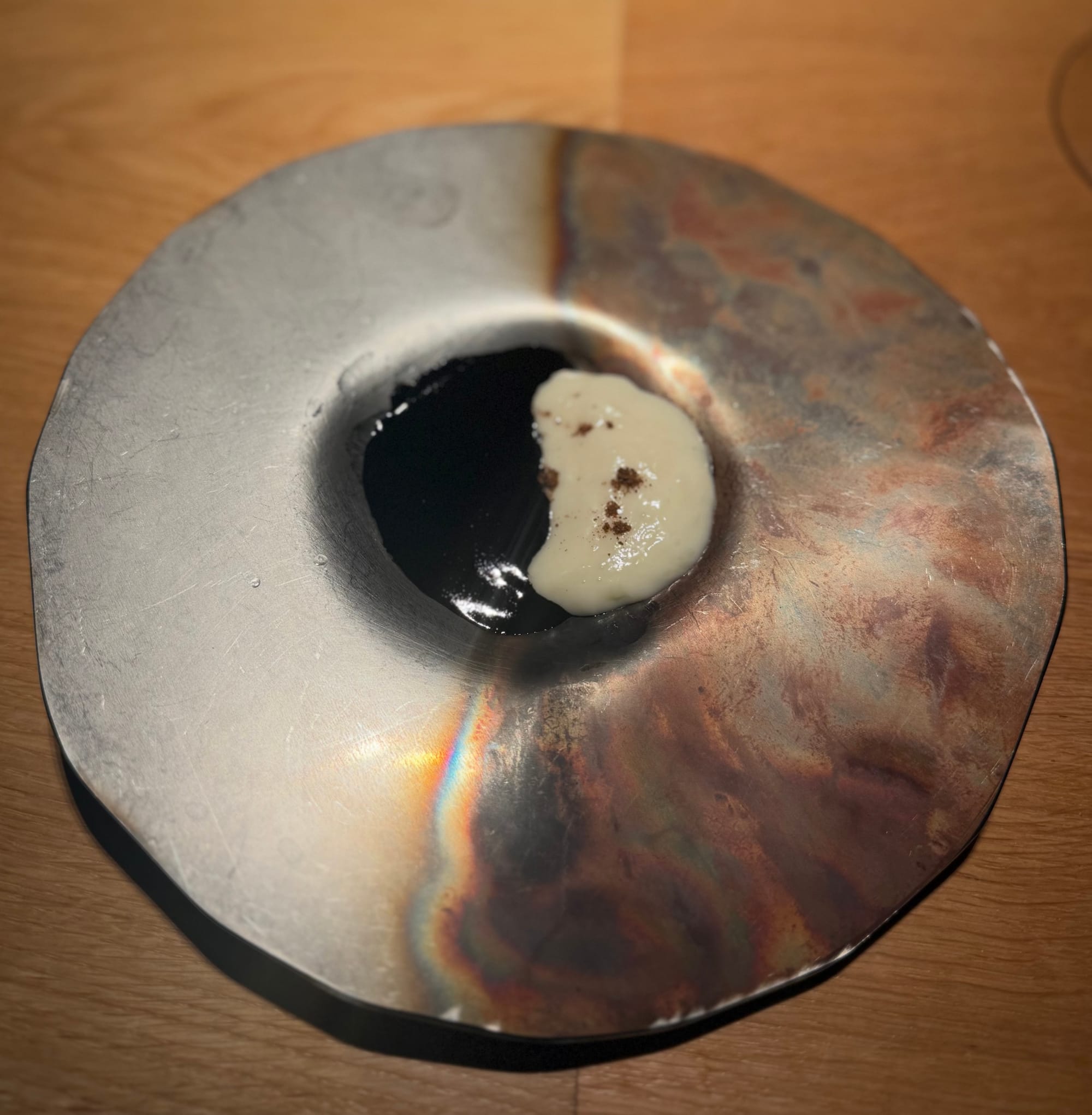
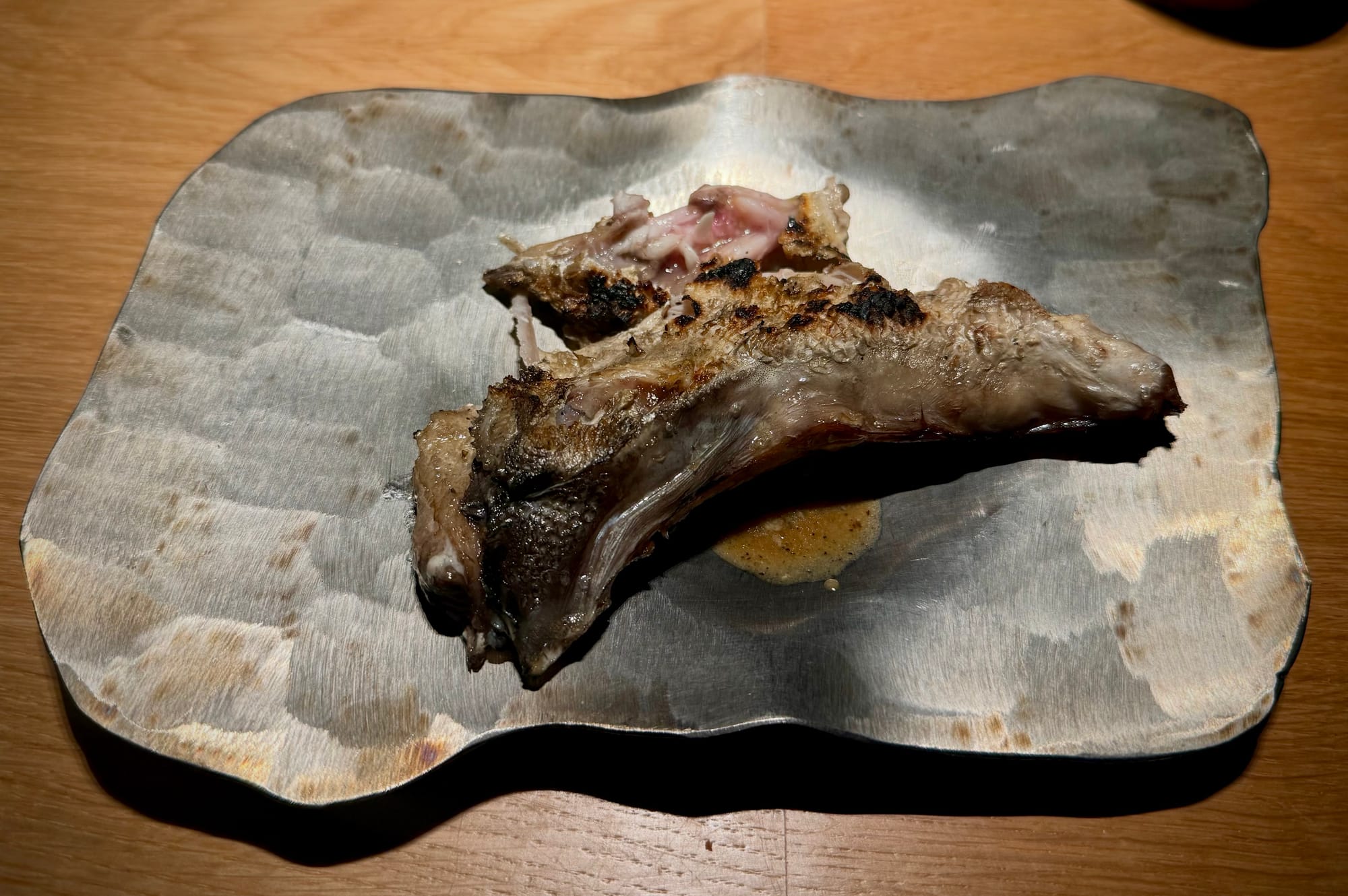
I'm a sucker for fish cheeks and collars, so I was very pleased with this hefty portion of grilled fish collar.
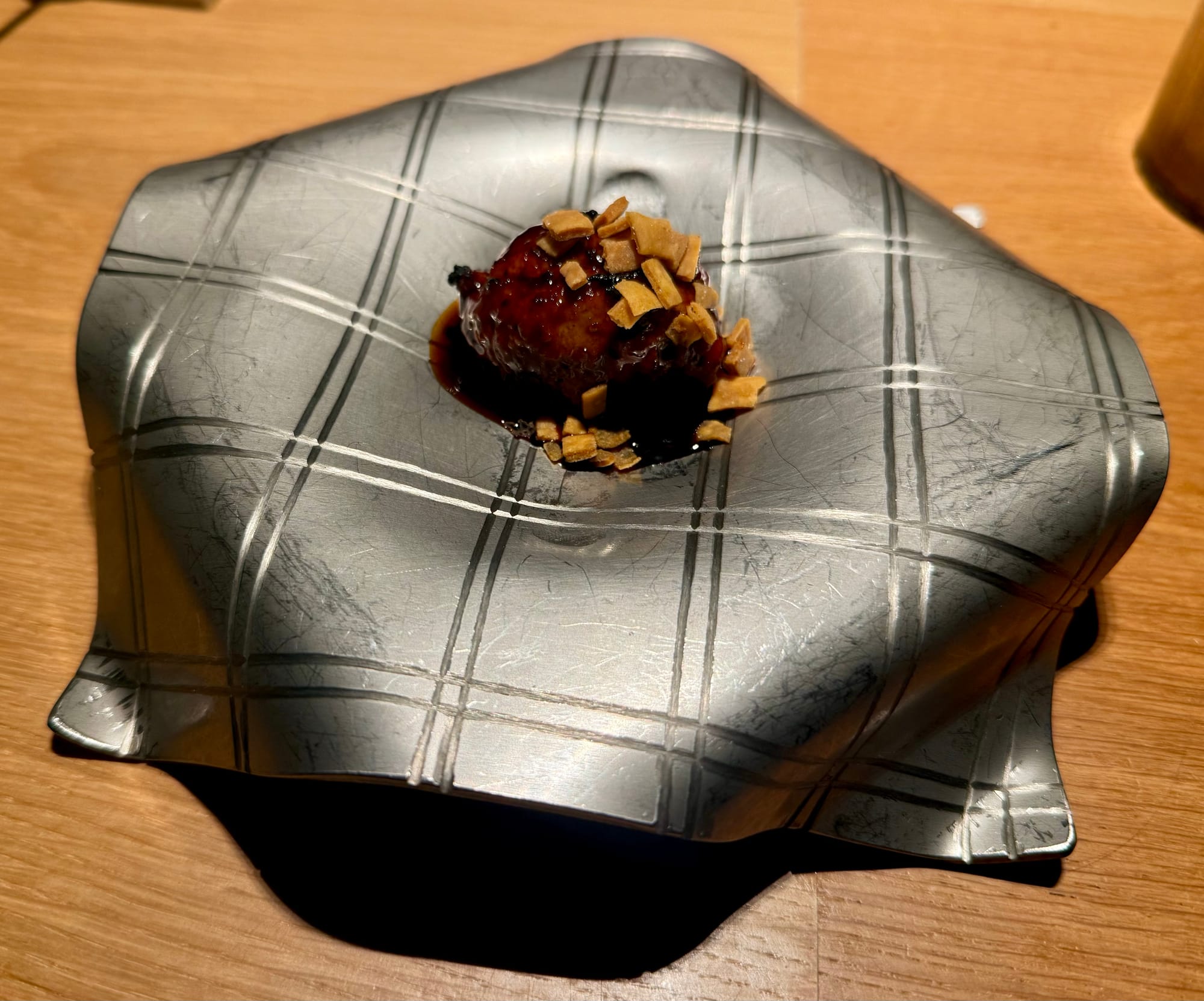
Next came a Lumagorri chicken meatball in a sweet sauce with a crunchy smattering of almonds.
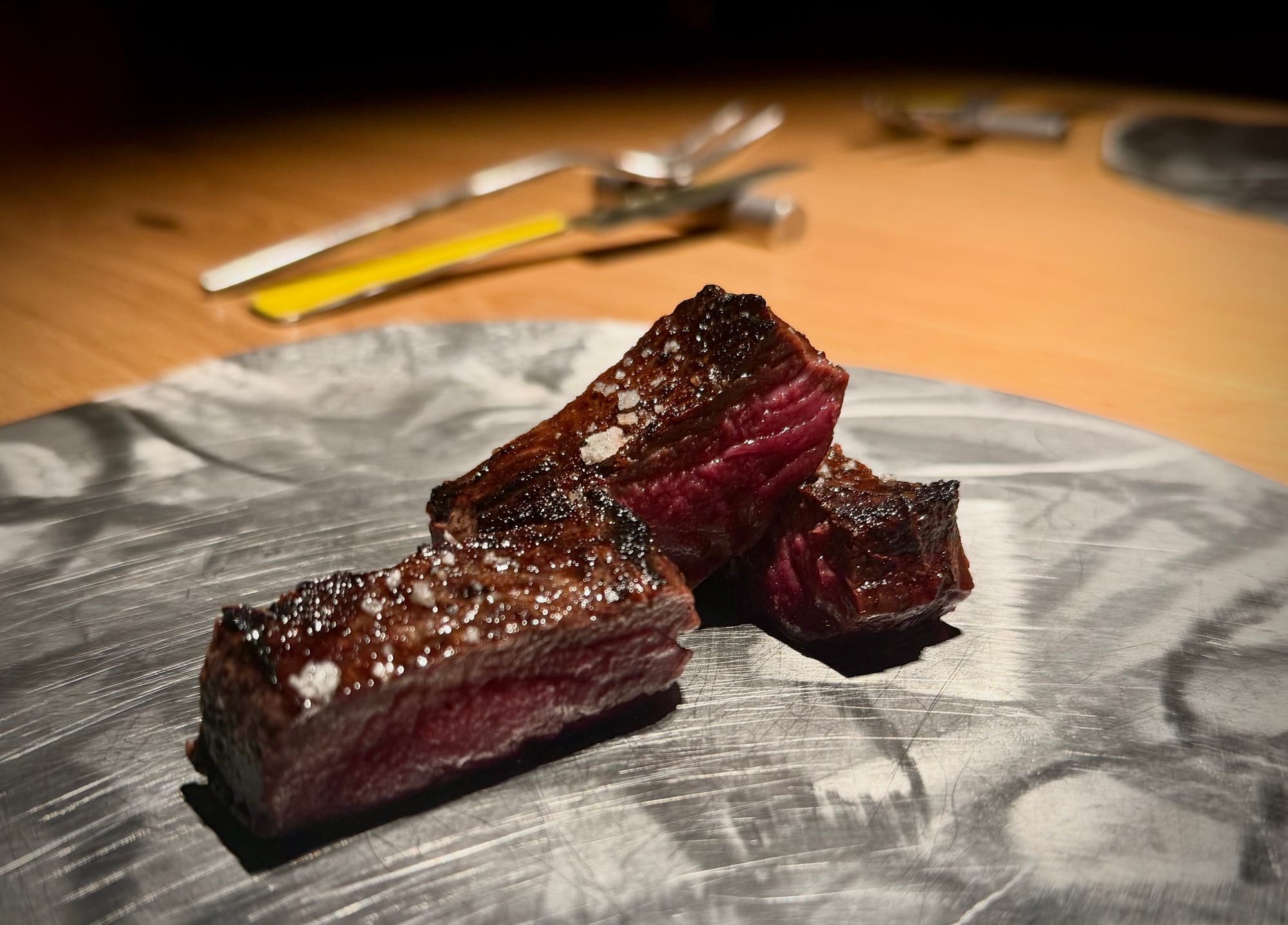
Finally, to round out the savories, we had what every fancy Basque meal requires: a few perfectly-cooked pieces of seared beef.
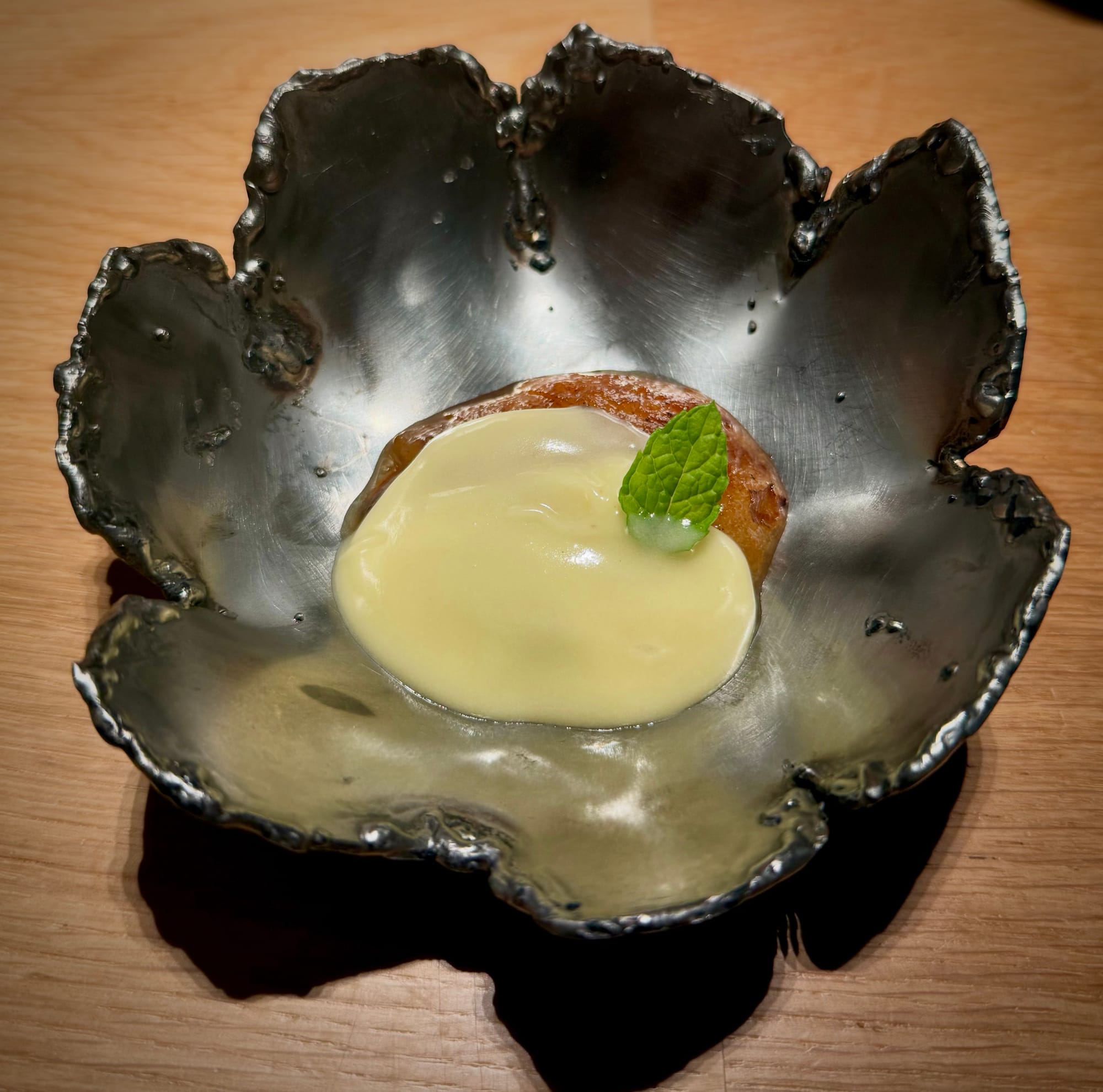
Our first dessert was a bit of fresh poached pear with a cream and mint sauce - a light palate-cleanser sort of situation.
Our second dessert came in a metal orb that looked exactly like the infamously radioactive Demon Core, which of course delighted us because we spend too much time on the stupid Internet. Instead of deadly radioactive material, however, this particular menacing orb contained a perfectly light and slightly sour cream with a lemon and berry topping.
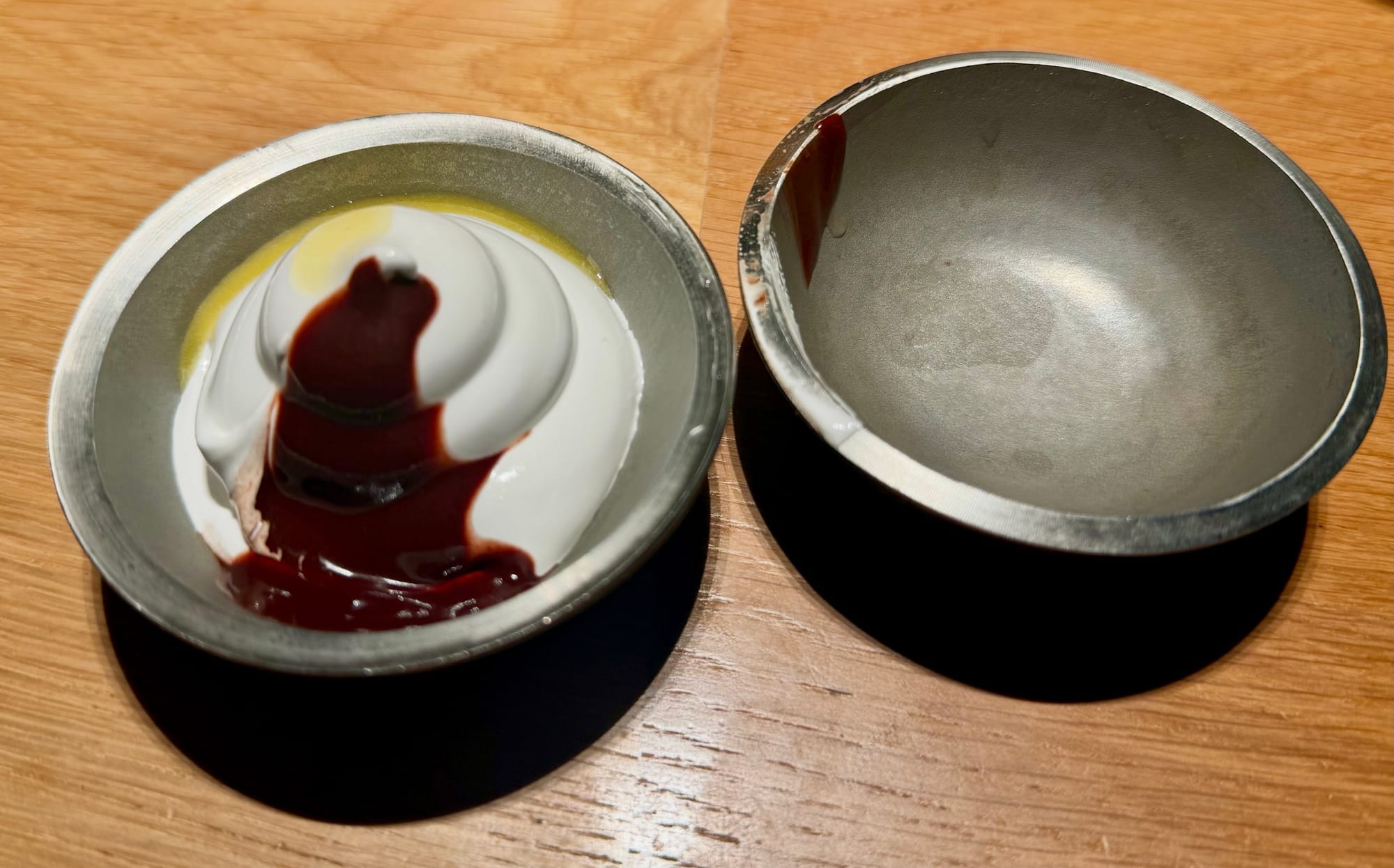
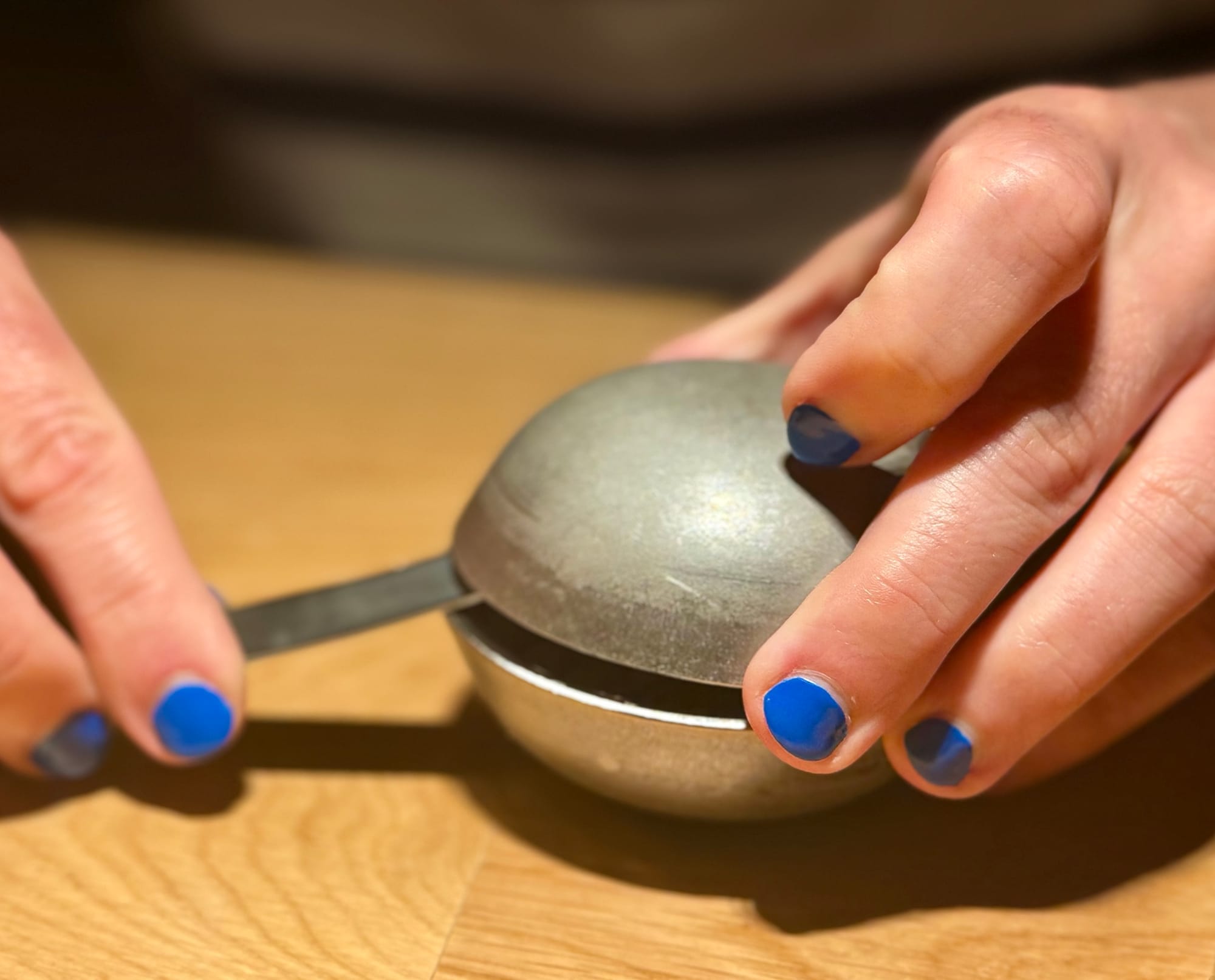
surprise! it's not the demon core, it's dessert!
I'm one of those weirdos who really enjoys the flavor of metal, so I was totally charmed by our final dessert, which was what I can only describe as a metal ice cream sandwich: two saltines made steel with ice cream in the middle, which we were instructed to smush together so we could eat the ice cream off the sides.
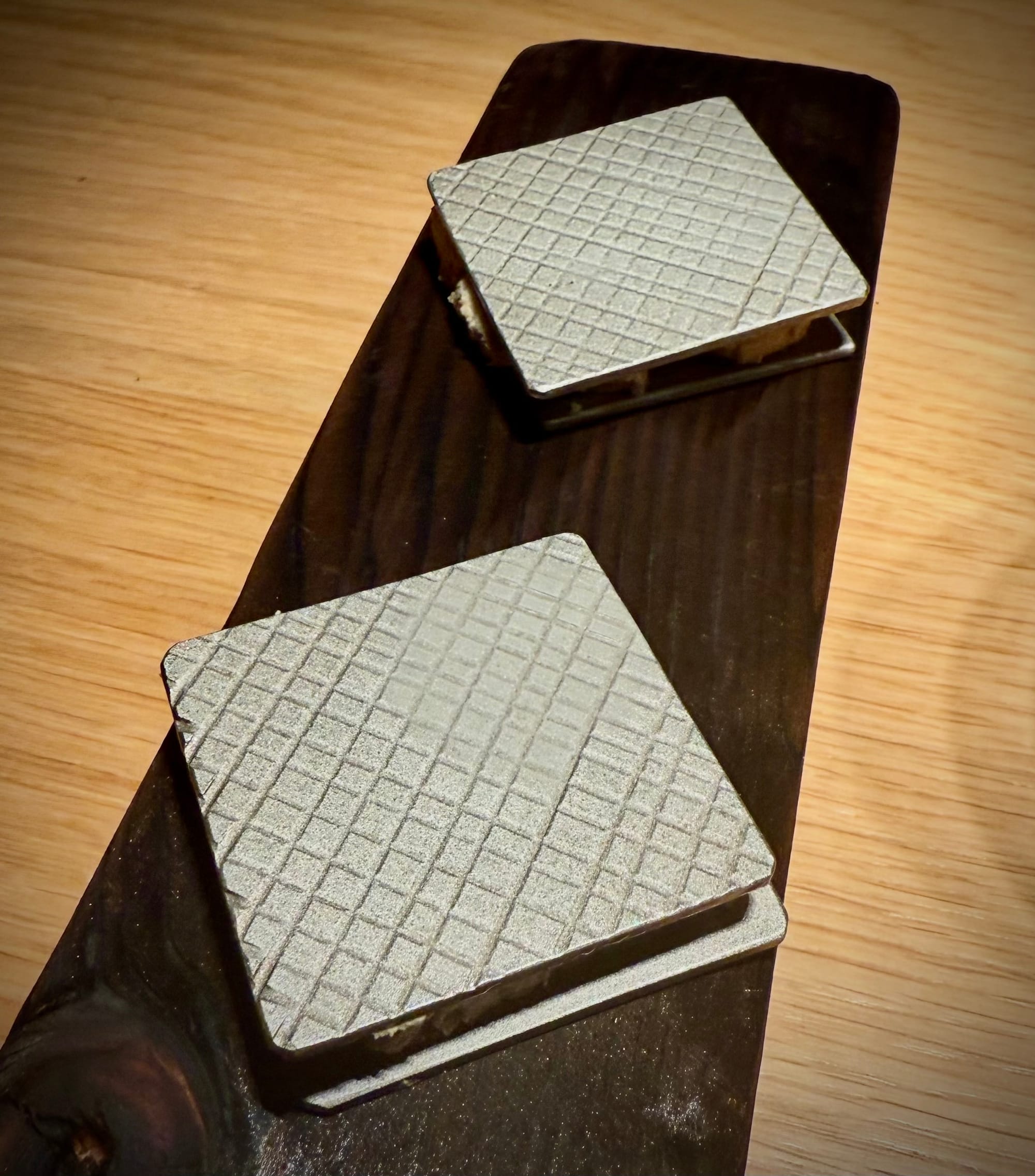
Bakea was friendly, weird, delicious, and exactly what we were looking for - an only-in-the-Basque country kind of fine dining experience, with a very reasonable price to boot. I'd highly suggest you try it if you've got an interest in the intersection of metal with food, want to sample Basque regional flavors, and have a high tolerance for being briefly but memorably reminded of historical atrocities during a good meal.
Bakea was our last meal in the Basque country, and the next day, we drove to the surfer towns of Atlantic France for our friend's wedding.
I'm grateful I got a chance to return to the Basque Country, and I'm also grateful that it's just as pleasant an experience as it was in 2009, despite everything that's changed in the intervening years. If you want to eat extremely well and simply, drive around looking at nice vistas and a lush green coastline, and to experience one of Europe's most unique cultures, I can think of few better places to visit. We will be back.
Restaurant Suggestions
Bakea, Muncia
Bodegon Sarasua, Orio
Elkano Txiki, Getaria
Casa Vergara 1948, San Sebastian
Bar Martinez, San Sebastian
Bar Txepetxa, San Sebastian