
What Can We Do About Drone Attacks on Civilians? Some Thoughts
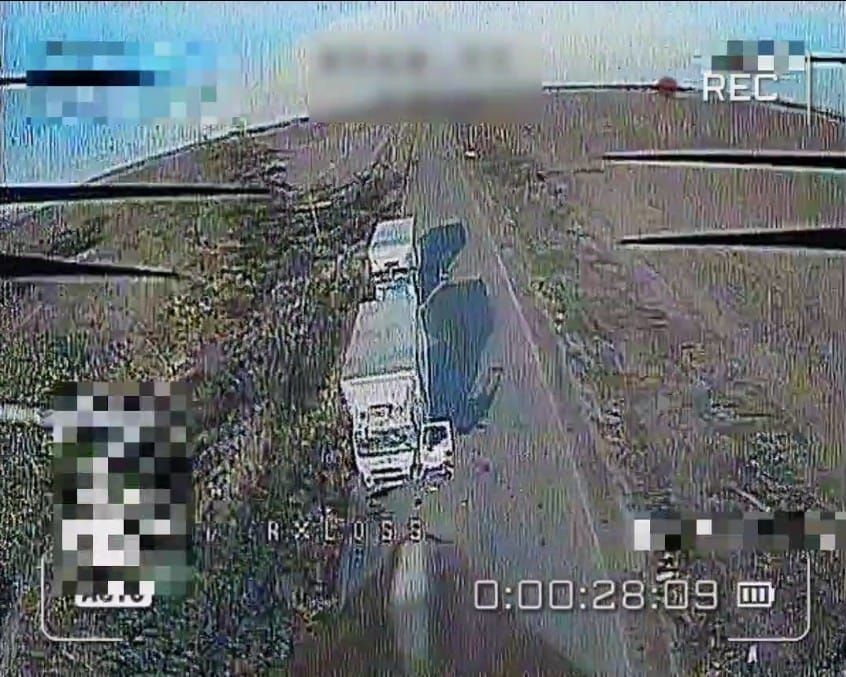
Lately, I've been spending a lot of time analyzing, reporting on, and researching the horrifying global uptick in the use of small, cheap, short-range drones to intentionally target and kill civilians - a a type of aerial violence that has become exponentially more common since early 2024.
I recently began cataloging global, open-source examples of attacks on civilians with small drones in a map-based database, which you can access here. Nor have I been doing this work in isolation: I've been talking to many other smart and dedicated people who are committed to finding ways to better protect the innocent from small drone threats.
With this chunk of context in mind, here are some of my thoughts and observations on what the humanitarian aid community, and everyone else concerned with protecting civilians, could and should be doing about attacks on civilians with small drones.
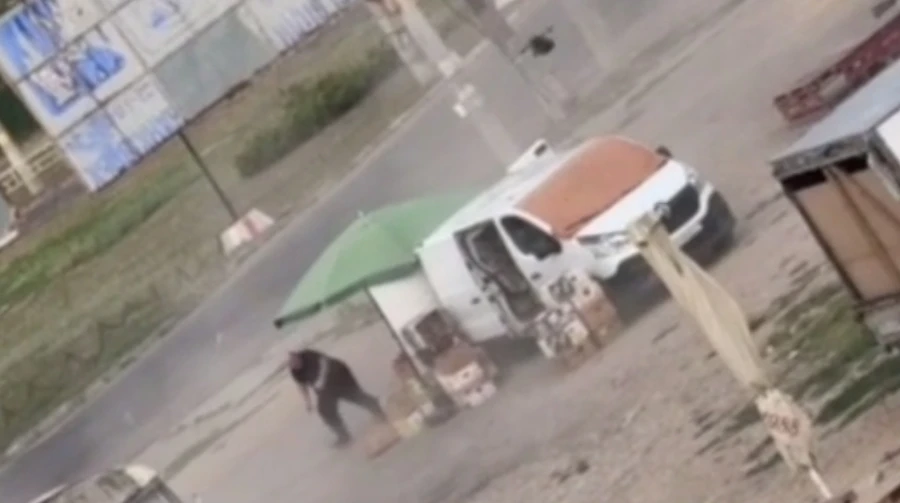
Video of a fiber-optic drone attack on a man selling vegetables at a market in Kherson, from August 2026
Drone Threats Move Astonishingly Quickly, and So Must Our Analysis
Per a possibly-apocryphal story, at one Ukrainian drone factory, they put out a cookie every time they roll out a new drone design. Once the cookie goes stale, they can assume that the drone design itself has gone stale, too.
Real or not, this story well-nigh-perfectly mirrors my own impressions. Since 2022, I've been closely monitoring the astonishingly rapid pace of drone tech development in the Ukraine War - a true arms-race that only continues to accelerate in intensity as the conflict continues.
The conflict in Ukraine has acted as a global accelerator of innovation and ingenuity in small drone warfare. While small, cheap consumer and custom-built "DIY" drones were already present on modern battlefields before Russian tanks first began to roll towards Kyiv in early 2022 (indeed, Ukraine had been using them against Russians since 2014), their total ubiquity in the most recent Ukraine conflict immediately caught the attention of fighters everywhere. Unlike the carefully-guarded and wildly-expensive weapons development processes of earlier conflicts, the development of small drone tech on Ukraine's battlefield has been, in many ways, an open-source and astonishingly publicly-legible practice.
Both Ukrainian and Russian combatants and tinkerers have spent the last four years posting a constant stream of videos, technical advice, open source software code, and rants on Telegram and other publicly-available social media networks - platforms that anyone on the planet with a vested interest in weaponizing drones can easily access and take inspiration from. At the same time, we know that Russian and Ukrainian drone experts, people with significant real-world combat experience, have already begun to loan out their expertise to other countries and to other armed groups.
Thanks to both online information and more hands-on consulting strategies, drone warfare tactics have rapidly spread around the world in recent years - and unfortunately, since early 2024, this process of information dissemination also appears to have contributed to a huge uptick in combatants using cheap drones to terrorize and kill unarmed civilians.
These very recent and very dramatic shifts in how drone warfare works have massive implications for aid organizations, journalists, health care workers, fires responders, average civilians, and every other non-combatant who lives and works in conflict areas.
Practically, it all boils down to this: drone threats must be monitored constantly - and strategies for protecting civilians must be reviewed constantly as well.
As should be obvious, civilian protection strategies that were developed with long-range War on Terror era drone technologies in mind are now highly outdated. Things have changed.And it's not enough anymore to revise our defensive and protection strategies on a yearly basis, or even a bi-yearly basis.
Moving this slowly will condemn us to missing crucial (and deadly) technological advances and tactical changes. I can think of multiple instances over the last four years where, thanks to a sudden and hard-to-anticipate technological shift, formerly sound advice about avoiding drones suddenly became not just obsolete but actively dangerous. If our information about drone threats is out-of-date and poorly technically informed, we run the very real risk of dispensing advice to vulnerable people that could get them killed.
So how do we analyze and respond to new drone threats more quickly, and what structures do we need to build to make that happen? Here's some suggestions.
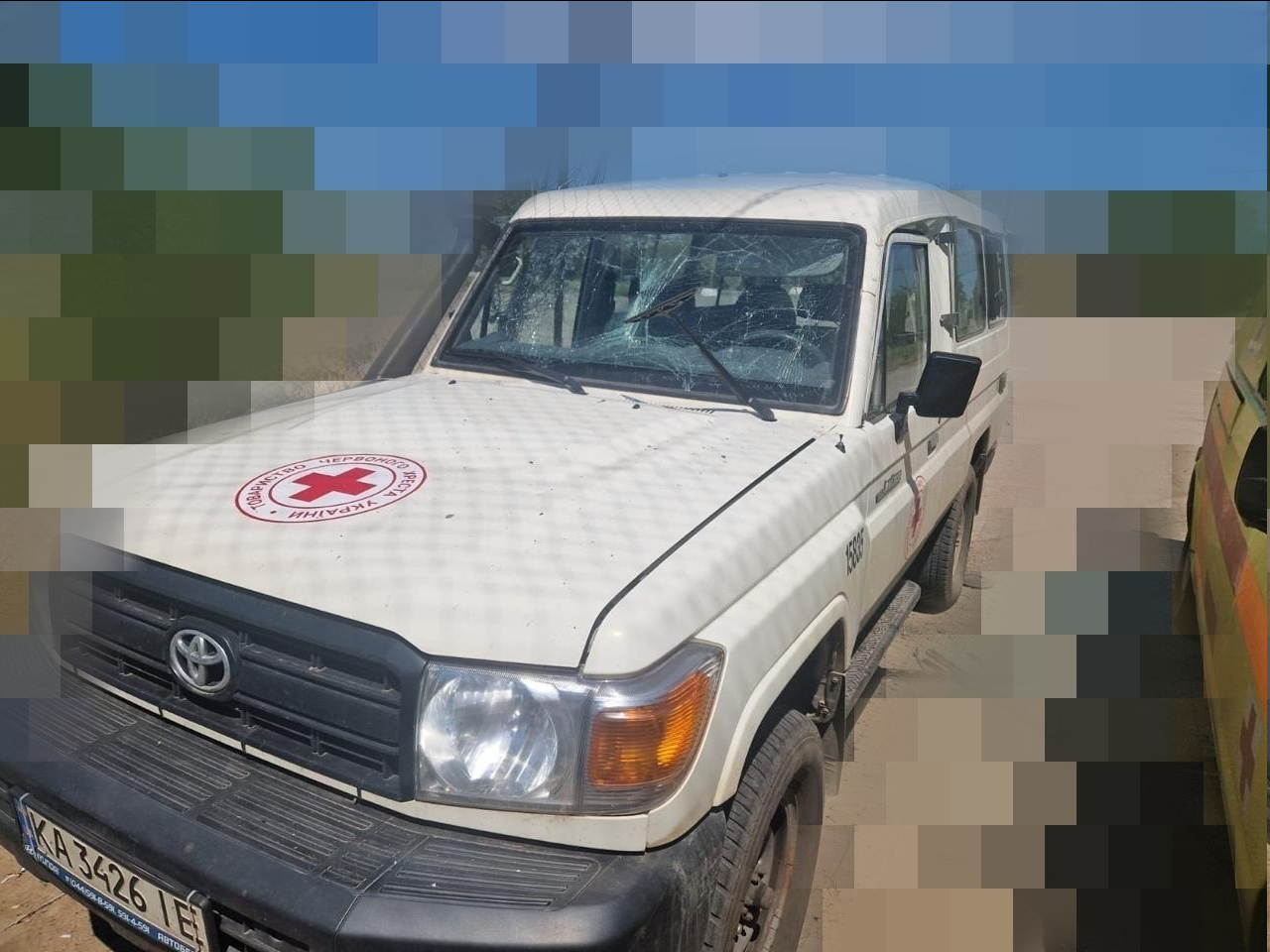
Yes, We Have to Provide Drone Survival Advice
For far too long, I've seen organizations cite the very real dangers of dispensing bad advice about drone threats and use it as a get-out-of-jail-free card.
The rationale goes something like this: "We don't know enough about new drone threats to responsibly advise people on how to survive them, so we're better off not commenting on them at all."
In 2026, as global deaths from small drone attacks continue to increase at staggering rates, this hyper-cautious and liability-focused attitude isn't good enough. Many people around the world are now at risk of death and injury from small drones: according to these people themselves (I've spoken with quite a few of them), they need far more expert-driven advice, guidance, and support than they are currently getting.
So where do we get that expert advice, and how do we connect it with the organizations and individuals who need it?
Monitoring Drone Threats Can't Be Left to the Intern
When I say "expert advice, " that's with special emphasis on the "expert" part.
Making sense of these constant changes in drone technology requires specialized, technical expertise. This means that monitoring drone threats is not a task that can be assigned to an intern, a junior employee without prior specific technical knowledge, or even to an experienced non-specialist who's also juggling a bunch of other tasks and demands on their time.
The people who are tasked with monitoring drone threats, investigating attacks, and developing protection strategies on that basis need to have a keen sense of exactly what they're looking at, the implications of what they're seeing, and the various nuances of the technologies that are involved. Without these skill-sets, they are likely to miss crucial information.
Of course, there aren't a lot of specialist experts on drone threats to go around. Which leads to my next point.
We Need Centralized Drone Threat Monitoring
We need to create an organization - or perhaps, a well-protected department within an existing organization - that focuses specifically on tracking, investigating, and providing advice on drone threats to civilians, aid workers, and journalists. The center would function as a key resource that other organizations and individuals could rely upon for drone safety advice.
Drone technology and civilian protection specialists working in this center would be in charge of tracking attacks, maintaining attack databases, producing safety recommendations, speaking to policy-makers and private industry, developing safety trainings, and compiling evidence for future prosecutions.
While there are existing entities and organizations out there that are specifically dedicated to studying and advising on drone dangers, these organizations tend to be either 1. focused primarily on risks to military personnel from drones (instead of civilians) or 2. focused on older models of War on Terror-type drone threats to civilians from major powers operating long-range drones, and who place much more limited emphasis on the new small-and-cheap drone platforms that are used by a vast range of actors to harm civilians today.
Valuable as these organizations are, they just aren't filling the current, ever-worsening gaps in civilian protection from new, small drone threats. Which means we need to create something different.
For the lack of a catchier acronym, let's call such an organization a Civilian Drone Threats Center of Excellence. (I'm awful at naming things - suggestions actively solicited).
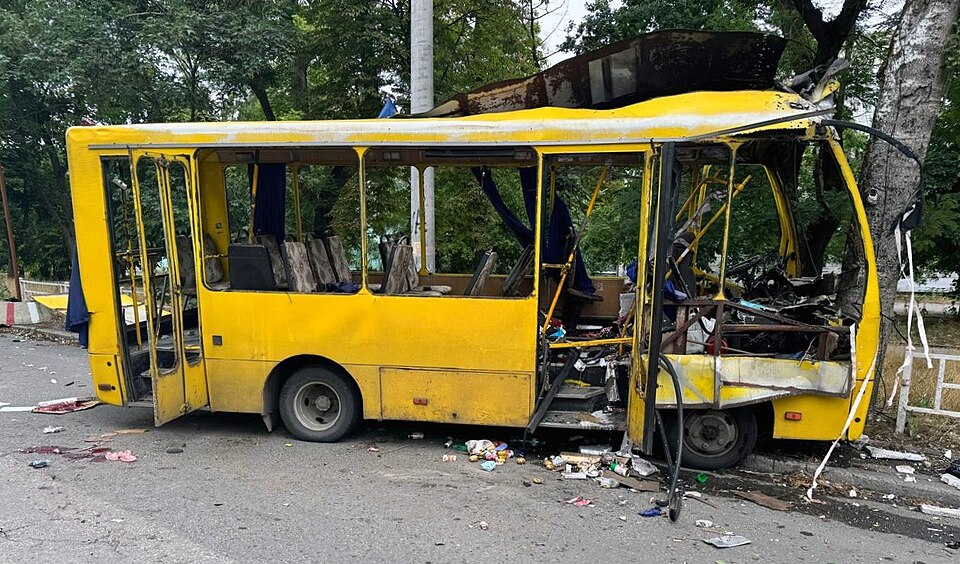
.jpg?ref=little-flying-robots.ghost.io)
...And Standardized Drone Attack Reporting
In addition to analyzing and providing advice on surviving drone threats, this Drone Threats Center of Excellence should also play a key role in collecting and investigating detailed reports of small drone attacks on civilians.
Currently, there is no single, standardized database that collects, evaluates, and investigates detailed reports of drone attacks on civilians on a truly global and real-time scale.
(I've tried to create an open-source prototype of such a database myself, but I am only one person: such a wide-ranging effort truly requires a team).
While there are certainly many laudable efforts out there to collect reputable information and incident reports on drone attacks on civilians (usually on a more regional or temporally-limited scale), these projects tend to collect too little detail on the specifics.
In many cases, these databases lump drone attacks in with other forms of aerial bombardment, making it very challenging to dis-aggregate the two - and making the information they collect less useful for analysts attempting to better understand drone specific dangers. These existing databases also rarely attempt to identify what kind of drone was used, or to distinguish between attacks by large drones and attacks by small drones.
This is a problem, because we need to collect this kind of detailed information if we want to create well-informed drone protection strategies for civilians.
...And More Collaboration on Investigating Small Drone War Crimes
We also need this kind of detailed information to investigate and (hopefully) prosecute war crimes committed using small drones.
As of this writing, there are still very few resources out there dedicated to applying detailed technical knowledge of small drone platforms to war crimes investigations. Insofar as I'm aware, there are also few - or no - resources available that might help first responders to drone attacks document potentially relevant information at the scene. And such technical knowledge would be very useful.
In my experience, it is often possible to connect crashed drone remains and media shot by drones to specific groups and individuals. It is time that we started to systematically build out the skill sets and information networks required to conduct these investigations into small-drone war crimes.
I know experts on drone forensics - people who primarily work on cases in the U.S. and Europe, and who have said they'd be very happy to contribute to war crimes investigations. I believe that we need to find ways to more efficiently plug such people into existing human rights investigative systems.
Perhaps the Drone Threats Center of Excellence could function as that bridge, connecting war crimes investigators and human rights experts with drone forensics specialists. Together, they would be able to develop investigative protocols, information sharing procedures, and other mechanisms focused on bringing the perpetrators of drone crimes to justice.
.jpg?ref=little-flying-robots.ghost.io)
We Can Train More People to Monitor Drone Threats. But We Need to be Intentional About It
To return to an earlier topic, it's true that experts on drone threats, especially novel small drone threats, are pretty thin on the ground. But this need not be the case forever. I believe it's entirely possible to train non-specialists to interpret and respond to drone threats. We just have yet to formalize this process, or produce a curriculum to do so.
We need funding and support to develop such a curriculum, dedicated to helping people better understand how drones work, how they're built, who flies them, and the dangers that they pose to civilians. This curriculum should be easy to translate and to adapt to local circumstances.
We should prioritize training people who live and work in communities who live with the risk of targeted drone attacks - people who have essential contextual information that experts at the centralized Drone Threats Center of Excellence won't.
As part of developing these trainings, we should also produce easy-to-translate and visually striking educational materials in various media formats, which could be posted online as well as widely distributed in areas subject to drone attacks.
Imagine something like a laminated bird-watching guide, printed with pictures of common small drones and crucial safety advice. Such a document (which could be used even in areas where Internet access is sporadic) could be paired with locally-specific interactive and regularly-updated online guides to the drone threats present in a given area, allowing people to rapidly access up to date information.
What's more, imagine social media channels, running across multiple platforms (like Telegram, YouTube, and TikTok) that regularly post well-produced and informative short form videos about staying safe from drones - therefore meeting modern, video-loving Internet users where they are.
We can also, potentially, build automated tools to help people evaluate drone threats.
For example, I'm working with my friend Konrad Iturbe to see if we can develop a way to use modern image-recognition technologies to automatically identify drone on-screen-displays from videos, based on research we previously published in Bellingcat. Such tools could potentially help non-specialists more quickly make sense of what they're looking at.
People Don't Know How IHL Applies to Small Drones in Practice
Civilians living under small drone threats are, increasingly, starting to fight back.
Famously, Ukrainian farmer Oleksandr Hordienko shot down dozens of drones over his farmland, before being killed by a drone himself. We know that some civilians are monitoring drone radio signals, than calling in that information to armed forces so that they can respond accordingly: others have used signal jammers to impede the movement of hostile drones.
Some organizations are now training reporters and civilians to use passive frequency analyzer devices to monitor drone radio signals, so that they can take evasive action. Volunteers from around the world, who are often located thousands of miles from combat zones, now use the Internet to provide technical advice and real-time drone technology support to combatants.
Many civilians now regularly shoot and upload video and photos of drone attacks to social media, where anyone can see it. In one famous case early on in the Ukraine war, a 15-year-old child used his own drone to report back on the movement of a Russian convoy to Ukrainian fighters, who destroyed it with artillery. In an even more famous early case, a Ukrainian woman said she took out a Russian drone with a well-aimed jar of pickles.
All of these actions can potentially cause a civilian to lose their noncombatant status under international humanitarian law. Which leads to a troubling question.
How many civilians know that?
Anecdotally, I suspect that the vast majority of civilians living with drone threats around the world are not aware of these legal details regarding their interactions with potentially hostile drones. And the same goes for aid workers and journalists.
International Arbiters of IHL Need to Help the Public Understand How It Applies to Small Drones
International humanitarian law is not known for moving rapidly, often for good reason. Some specialists (and I should note that I'm not one) claim that existing customary IHL is sufficient to cover modern drone warfare, and that we don't need to put forth radical measures to
While that may well be true, the arbiters of IHL still urgently need to take a far more active role in explaining exactly how the law applies to small drones to the public.
Consider this. During the War on Terror years, civilians in conflict areas had essentially no way to shoot down, obstruct, or monitor the movements of, say, a high-altitude U.S. government MQ-9 Reaper.
Today, civilians can take out a combatant's drone with a jar of pickled vegetables.
This is a big change: unarmed people on the ground now have options when it comes to dealing with drone attacks.
In 2026, civilians are capable of taking a far more active, and thus a far more legally complex, role in evading, monitoring, and defending themselves against drones.
What's more, existing customary IHL (as I've written about in detail before) was created with manned aircraft and very large military drones in mind. The most recent restatement of international humanitarian law applicable to air and missile warfare dates back to 2009, making it practically Jurassic by the standards of drone conflict in 2026.
As just one example, the IHL principle of distinction tends to assume that there is some way to tell the difference between aircraft flown by a combatant and that flown by a civilian. This is very much not the case for small drones. Today, we still have no widely-accepted or standardized way to tell drones flown by combatants apart from those flown by aid workers, journalists, and average civilians. This ambiguity means that people on the ground have little way to determine if a drone overhead is harmless or imminently deadly. The results of such uncertainty can be deadly.
With all these factors in mind, civilians need to know exactly what risks they may or may not be taking on when they decide to do something about the drones hovering menacingly over their communities. And right now, as I wrote above, I strongly suspect that the vast majority of civilians are unclear on those risks.
IHL experts and organizations need to take a much more leading, active role in producing materials, trainings, and public education efforts to clarify these concepts in the public mind.
Many lives hang in the balance.
So What Now?
Do you want to help build this Center for Drone Excellence? (I certainly want to build something like this, somewhere, somehow - and of course, find funding for it). Do you have thoughts, feedback, suggestions, or complaints about the ideas I've laid out here?
Please don't hesitate to get in touch with me.